What Is The Difference Between Water Softener Grain Capacity And Flow Rate?

The difference between water softener grain capacity and flow rate lies in their distinct functions:

  • Grain capacity is the total amount of hardness minerals a softener can remove before needing to regenerate (clean itself). This is typically measured in grains, with one grain equivalent to 1/7000th of a pound of calcium carbonate.
  • Flow rate is the amount of softened water the system can deliver per minute, usually expressed in gallons per minute (gpm). It determines how well the softener keeps up with your household’s water demand during peak usage.

Understanding both of these factors is crucial when choosing the right water softener for your home. Hard water, caused by elevated levels of minerals like calcium and magnesium, is a common problem across the United States, affecting an estimated 85% of households. It leads to issues like soap scum buildup, dry skin and hair, spotty dishes, and even shortened lifespans for water-using appliances. Water softeners, like those offered by reputable brands such as SoftPro, Culligan, Kinetico, and Fleck, address this problem by removing the hardness minerals through a process called ion exchange. However, not all water softeners are created equal. A softener with a large grain capacity but low flow rate may struggle to keep up with demand, leading to fluctuations in water pressure and potentially leaving you with hard water during peak usage times. Conversely, a softener with a high flow rate but low grain capacity may regenerate too often, consuming excess salt and increasing operating costs. At WaterSoftenerSizing.com, we understand the importance of finding the right balance between grain capacity and flow rate for your specific needs. Our expert team can help you determine the optimal size and features for your household, ensuring you enjoy the benefits of soft water without any compromises. In this article, we’ll delve deeper into grain capacity and flow rate, explaining how they work, why they matter, and how to choose the right values for your home. By the end, you’ll be equipped with the knowledge to make an informed decision and select a water softener that truly meets your needs.

What is Water Softener Grain Capacity?

Grain capacity is the total amount of hardness minerals a water softener can remove before it needs to regenerate. This is a critical factor in determining how often your softener will need to use salt and water to clean itself, a process also known as regeneration.

Understanding Grains as a Measurement

The grain capacity of a water softener is measured in grains. One grain is a unit of weight equivalent to 1/7000th of a pound of calcium carbonate. The higher the grain capacity, the more hardness minerals the softener can remove before needing regeneration. To put this in perspective, a softener with a 32,000-grain capacity can remove 32,000 grains of hardness minerals before it needs to regenerate. This is roughly equivalent to removing 4.57 pounds of calcium carbonate.

The Role of Resin in Grain Capacity

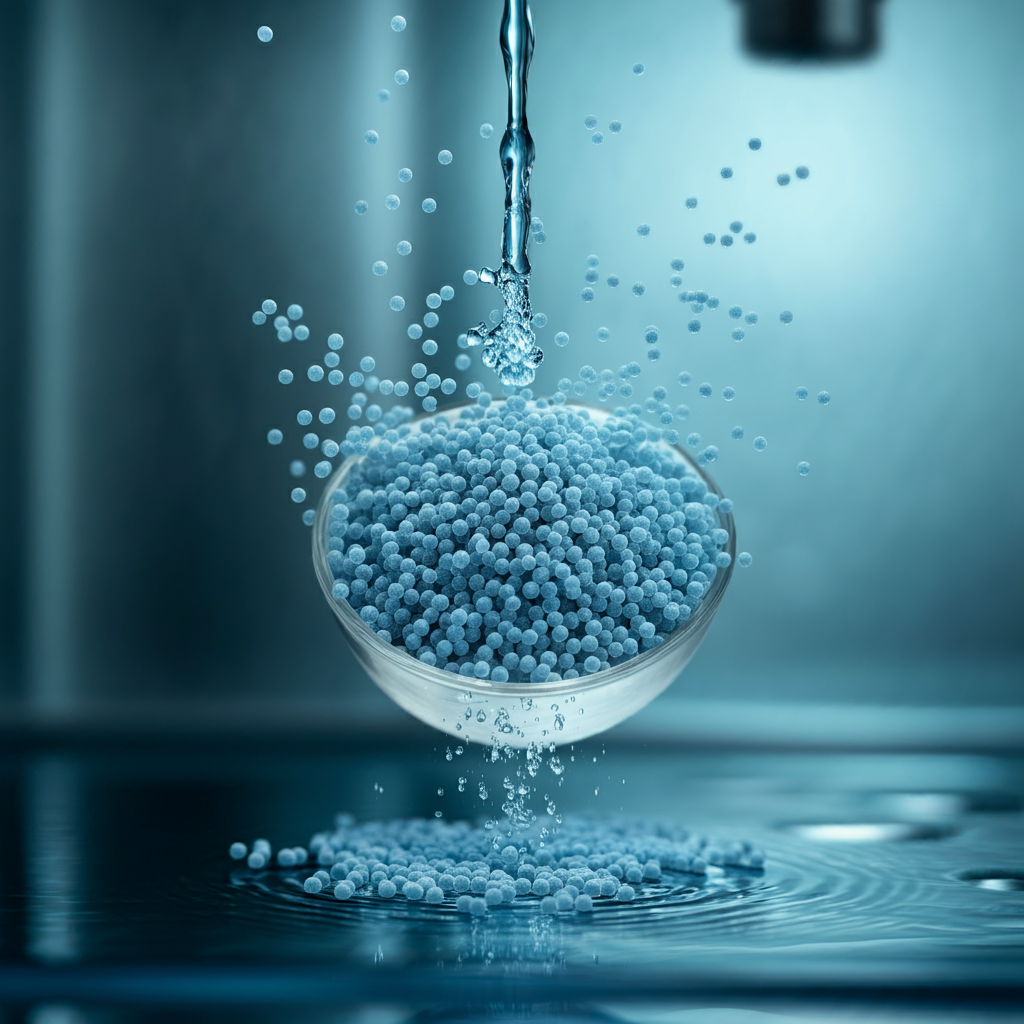
The grain capacity of a water softener is directly related to the amount and type of resin it contains. Resin, typically small plastic beads, is the heart of a water softener and facilitates the ion exchange process. During this process, the resin beads attract and hold onto the calcium and magnesium ions in your water, replacing them with sodium ions. As the resin beads fill up with calcium and magnesium, their ability to soften water decreases. Regeneration flushes these minerals out, restoring the resin’s capacity.

Factors Affecting Grain Capacity

Several factors influence the grain capacity of a water softener:

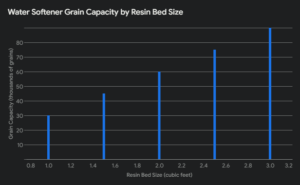
  1. Amount of resin: The more resin a softener contains, the higher its grain capacity. This is why larger households often require softeners with larger resin tanks.
  2. Type of resin: Different types of resin have varying levels of efficiency. High-capacity resin can remove more hardness minerals per regeneration cycle compared to standard resin.
  3. Regeneration settings: The salt dosage and frequency of regeneration can also impact the amount of hardness removed per cycle. Higher salt dosages can increase the amount of hardness removed, but can also lead to higher salt consumption.

By understanding these factors, you can choose a water softener with a grain capacity that matches your household’s water hardness and usage, minimizing the frequency of regeneration and optimizing salt efficiency.

Why Grain Capacity Matters

Choosing a water softener with the right grain capacity is crucial for several reasons:

  • Efficiency: A softener with insufficient grain capacity will regenerate too often, leading to wasted water and salt.
  • Effectiveness: Frequent regenerations can leave your home with hard water between cycles, negating the benefits of softened water.
  • Convenience: A properly sized softener will regenerate less frequently, requiring less maintenance and attention.
  • Cost: Oversized softeners can be more expensive upfront and may consume more salt than necessary, increasing operating costs.
Water softener resin beads for removing hard water minerals

How to Determine the Right Grain Capacity for Your Home

Choosing the correct grain capacity for your water softener is essential to ensure optimal performance and avoid unnecessary salt and water wastage. To make an informed decision, you need to consider two key factors: water hardness level and daily water usage.

Water Hardness Level

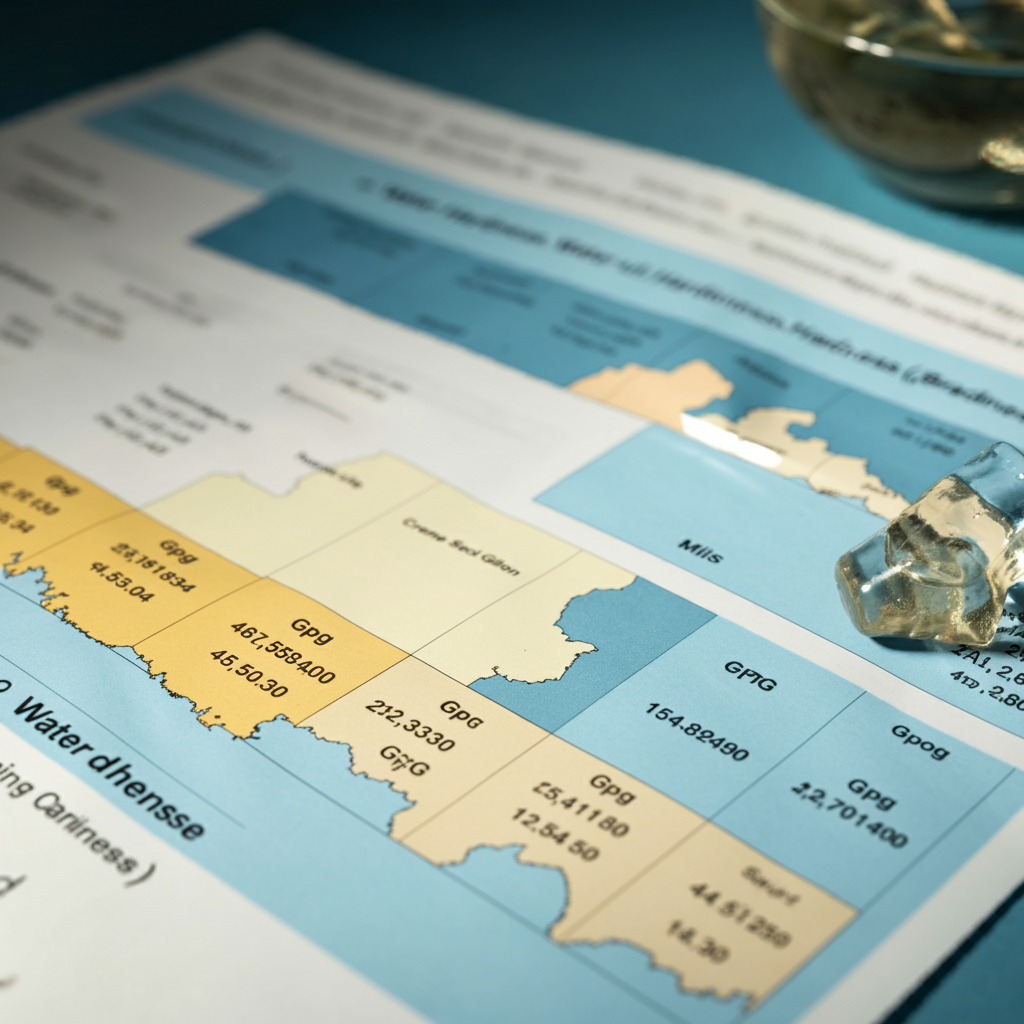
The first step is to determine the hardness of your water. This is typically measured in grains per gallon (gpg) or parts per million (ppm). Water hardness varies widely across the United States, with some regions experiencing levels as high as 30 gpg or more. You can test your water hardness using a home test kit or by contacting your local water utility or a water treatment professional. These tests will provide you with an accurate measurement of your water hardness, allowing you to calculate the appropriate grain capacity for your softener. Typical Grain Capacity Needs Based on Hardness and Household Size

Water Hardness (gpg) Household Size (people) Estimated Daily Water Usage (gallons) Minimum Grain Capacity Needed
1-3 1-2 50-100 10,000-20,000
4-7 2-3 100-150 20,000-30,000
8-10 3-4 150-200 30,000-40,000
11-15 4-5 200-250 40,000-50,000
16+ 5+ 250+ 50,000+

This table provides a general guideline, but it’s important to note that individual needs may vary. Factors like specific appliances, such as high-efficiency washing machines, or unusual water usage patterns can influence the required grain capacity.

Daily Water Usage

In addition to water hardness, your daily water usage plays a significant role in determining the necessary grain capacity. The more water your household uses, the higher the grain capacity you’ll need to avoid frequent regenerations. You can estimate your daily water usage by using online calculators or by referring to average household figures. The Water Quality Association (WQA), a leading industry organization, estimates that the average person uses approximately 80-100 gallons of water per day. By combining your water hardness level and estimated daily water usage, you can calculate the minimum grain capacity needed for your water softener. However, it’s often recommended to choose a softener with a slightly higher capacity than the minimum to account for fluctuations in usage and ensure optimal performance.

What is Water Softener Flow Rate?

The flow rate of a water softener refers to the amount of softened water it can deliver per minute. It is typically measured in gallons per minute (gpm) and indicates how effectively the softener can supply soft water to your home during periods of high demand.

Flow Rate and Water Pressure

Flow rate is closely linked to water pressure. Adequate flow rate ensures that you have sufficient water pressure even when multiple faucets or appliances are in use simultaneously. For instance, if you’re running the dishwasher, taking a shower, and washing clothes all at once, a high flow rate water softener will ensure that each of these activities receives enough water without a noticeable drop in pressure.

Factors Influencing Flow Rate

Several factors influence the flow rate of a water softener:

  1. Softener Design: The design and internal components of the softener play a significant role. Some models feature larger valve assemblies or bypass valves that allow for increased water flow.
  2. Pipe Size: The diameter of the pipes connecting your softener to your home’s plumbing system can impact flow rate. Smaller pipes can restrict water flow, even if the softener itself has a high flow rate capability.
  3. Water Pressure: The incoming water pressure from your municipality or well affects the softener’s flow rate. If you have naturally low water pressure, it can limit the softener’s ability to deliver water at a high flow rate.

Why Flow Rate Matters

Choosing a water softener with the right flow rate is essential for several reasons:

  • Water Pressure: Insufficient flow rate can lead to a noticeable drop in water pressure, particularly during peak usage times. This can be frustrating and inconvenient, especially in households with multiple occupants.
  • Appliance Performance: Some appliances, like dishwashers and washing machines, require a certain flow rate to function optimally. A low flow rate can hinder their performance and lead to longer cycle times or unsatisfactory results.
  • Comfort: A sufficient flow rate ensures a comfortable and enjoyable experience when using water in your home, whether you’re showering, washing your hands, or filling a bathtub.

By understanding the factors that influence flow rate and how it impacts your daily water usage, you can select a water softener that provides adequate flow to meet your household’s needs. Water_Softener_Grain_Capacity_by_Resin_Bed_Size
Choosing the Right Flow Rate for Your Home

To determine the appropriate flow rate for your water softener, consider the following factors:

  1. Household Size and Peak Demand: Larger households with multiple bathrooms and appliances typically require higher flow rates to accommodate simultaneous water usage. It’s important to estimate your peak demand, which is the maximum amount of water you’re likely to use at any given time. This can be calculated by adding up the flow rates of the appliances and fixtures you expect to use simultaneously.
  2. Water Pressure: Test your incoming water pressure using a pressure gauge. If you have low water pressure (below 40 psi), you may need a water softener with a higher flow rate or consider additional solutions like a booster pump to increase pressure.

As a general guideline, a flow rate of 8-12 gpm is sufficient for most households. However, if you have a larger home or anticipate high water usage, you may need a softener with a flow rate of 15 gpm or higher.

The Relationship Between Grain Capacity and Flow Rate

Grain capacity and flow rate are not independent of one another. They represent two sides of the same coin when it comes to water softener performance. While grain capacity determines how much hardness a softener can remove, flow rate dictates how quickly it can deliver softened water to your home.

Striking the Right Balance

The ideal water softener strikes a balance between these two factors. A softener with a large grain capacity but low flow rate may not be able to provide enough soft water during peak demand periods. For example, a family of five taking simultaneous showers may experience a drop in water pressure if their softener has insufficient flow rate, even if it has a high grain capacity. Conversely, a softener with a high flow rate but low grain capacity may regenerate too often. This can lead to increased salt and water usage, as well as potential interruptions in soft water availability between regeneration cycles. Imagine a household with moderate water hardness but high water usage due to multiple appliances and fixtures. If they choose a softener with a low grain capacity, it may need to regenerate every few days, consuming more salt and resources than necessary. On the other hand, a household with very hard water but low water usage may not need a high flow rate softener. A model with a lower flow rate but sufficient grain capacity would be more suitable for their needs, as they are less likely to experience peak demand scenarios.

Choosing the Right Combination

Finding the right combination of grain capacity and flow rate is essential for optimal water softener performance. At WaterSoftenerSizing.com, we can help you analyze your water hardness, daily usage, and peak demand to determine the ideal specifications for your home. For example, a family of four with moderately hard water (8 gpg) and average water usage (150 gallons per day) might require a softener with a 32,000-grain capacity and a flow rate of 10 gpm. This combination would ensure that the softener can handle their daily hardness removal needs while providing sufficient flow to meet peak demand. However, a larger household with very hard water (15 gpg) and high water usage (250 gallons per day) might need a softener with a 48,000-grain capacity and a 15 gpm flow rate. This larger capacity and higher flow rate would be necessary to maintain soft water availability and adequate pressure even during peak usage.

Additional Considerations When Choosing a Water Softener

While grain capacity and flow rate are essential considerations when choosing a water softener, they are not the only factors to consider. Additional features, such as the type of softener (salt-based or salt-free), regeneration type, and smart features, can also significantly impact the performance, convenience, and cost of your water softener.

Salt-Based vs. Salt-Free Water Softeners

  • Salt-Based Softeners: These are the most common type of water softeners and utilize an ion exchange process to remove hardness minerals. They require regular replenishment of salt, typically sodium chloride or potassium chloride, to regenerate the resin beads.
  • Salt-Free Softeners: Also known as water conditioners, these systems do not remove hardness minerals but instead alter their structure to prevent them from forming scale. They do not require salt but may not be as effective in softening water as salt-based softeners.

The choice between salt-based and salt-free softeners often depends on individual preferences and specific needs. Salt-based softeners are generally more effective in removing hardness minerals, while salt-free systems are a good option for those who wish to avoid adding sodium to their water or have concerns about salt discharge into the environment.

Regeneration Types

Water softeners regenerate, or clean themselves, using different methods:

  • Time-Initiated Regeneration: These softeners regenerate on a pre-set schedule, typically every few days. While convenient, they may not always be efficient as they may regenerate even if the resin is not fully exhausted.
  • Demand-Initiated Regeneration (DIR): DIR softeners monitor water usage and regenerate only when necessary, based on actual hardness removal. This can save salt and water, making them more efficient and cost-effective in the long run.

If you have a variable water usage pattern, a demand-initiated regeneration softener may be a better choice as it can adapt to your specific needs and avoid unnecessary regeneration cycles.

Smart Features

Many modern water softeners come equipped with smart features that enhance convenience, efficiency, and monitoring capabilities:

  • Wi-Fi Connectivity: This allows you to monitor and control your softener remotely using a smartphone app.
  • Usage Monitoring: Track your water usage patterns and receive alerts when the softener is approaching regeneration.
  • Salt Level Monitoring: Get notifications when the salt level is low and needs refilling.
  • Leak Detection: Some softeners can detect leaks and automatically shut off water flow to prevent damage.

These smart features can provide valuable insights into your water usage and softener performance, helping you optimize settings and identify potential issues early on.

Making the Right Choice: Your Path to Softer Water

Understanding the difference between water softener grain capacity and flow rate is crucial for selecting a system that effectively addresses your home’s hard water issues. Grain capacity determines how much hardness the softener can remove before regeneration, while flow rate ensures adequate water pressure during peak usage. By carefully considering your water hardness, daily usage, household size, and peak demand, you can find the perfect balance between these two factors. Choosing a softener with the right grain capacity and flow rate will ensure optimal performance, efficiency, and convenience, providing you with the benefits of soft water without any compromises.

Key Takeaways

  • Grain capacity is the total amount of hardness minerals a softener can remove before regeneration.
  • Flow rate is the amount of softened water the system can deliver per minute.
  • Water hardness and daily usage are the primary factors influencing grain capacity needs.
  • Household size and peak demand determine the required flow rate.
  • Salt-based softeners use salt to remove hardness minerals, while salt-free softeners condition water to prevent scale buildup.
  • Demand-initiated regeneration is more efficient than time-initiated regeneration as it regenerates only when necessary.
  • Smart features like Wi-Fi connectivity, usage monitoring, and salt level alerts enhance convenience and efficiency.

Choosing the right water softener is an investment in your home’s comfort, appliance longevity, and overall water quality. By understanding the key factors involved and seeking expert advice, you can make an informed decision and enjoy the benefits of soft water for years to come.

Ready to transform your water and your home?

Visit WaterSoftenerSizing.com today and utilize our free water softener sizing calculator to determine the ideal system for your needs. Our team of experts is also available to answer your questions and guide you through the selection process, ensuring you find the perfect softener for your unique requirements.
What Factors Affect Water Softener Sizing?

Choosing the correct size for your water softener is a critical step in ensuring soft, mineral-free water throughout your home or business. Several factors influence this decision, primarily water hardness, daily water usage, peak flow rate, and the number of people in your household. Each of these elements plays a significant role in determining the capacity and regeneration frequency needed for your specific situation.

Water hardness, the concentration of minerals like calcium and magnesium in your water, directly dictates the workload of your softener. Higher hardness levels require a larger capacity or more frequent regeneration cycles to effectively remove these minerals. Your daily water consumption, influenced by household size and habits, determines the amount of water the softener needs to treat. Peak flow rate, the maximum amount of water used simultaneously, ensures the softener can handle high-demand periods without compromising water softness.

At WaterSoftenerSizing.com, we understand that navigating these factors can be overwhelming. That’s why we offer expert guidance and personalized recommendations to help you find the perfect water softener size. Just as a tailor crafts a suit to fit perfectly, we ensure your water softener is tailored to your unique needs, providing you with the optimal balance of efficiency, performance, and cost-effectiveness.

Unlike other water treatment devices like filters that mainly remove sediment and chlorine, a water softener specifically targets and removes hardness minerals through a process called ion exchange. By investing in the right size water softener, you’re not just purchasing a product; you’re investing in the long-term health of your plumbing, appliances, and the overall comfort of your home.

Why Does Water Softener Sizing Matter?

Choosing the correct size for your water softener is not merely a matter of preference; it’s a crucial decision that directly impacts the effectiveness and efficiency of your water treatment system. An improperly sized unit can lead to a range of issues, negating the very benefits you seek from soft water.

Hard Water’s Impact: More Than Just an Inconvenience

Hard water, while safe to drink, can create a host of problems in your home. The high mineral content, primarily calcium and magnesium, leaves behind a scaly residue that builds up on faucets, showerheads, and inside pipes and appliances. This buildup, known as scale, not only looks unsightly but also reduces water flow, clogs pipes, and damages appliances over time.

In the bathroom, hard water can leave your skin feeling dry and itchy and your hair dull and lifeless. Soap doesn’t lather as well, leaving behind a filmy residue that’s difficult to rinse off. In the kitchen, dishes and glassware may come out of the dishwasher spotted and cloudy.

The impact of hard water extends beyond aesthetics and inconvenience. Scale buildup in your water heater can reduce its efficiency by up to 40%, leading to increased energy consumption and higher utility bills. It can also damage the heating element, requiring costly repairs or premature replacement. Similarly, scale buildup in washing machines and dishwashers can shorten their lifespan and lead to malfunctions.

Soft Water’s Benefits: A Transformative Experience

A properly sized water softener eliminates these hard water woes, transforming your water and enhancing your daily life. Soft water lathers easily, leaving your skin feeling soft and hydrated and your hair looking shiny and manageable. Clothes laundered in soft water feel softer and look brighter, while dishes and glassware sparkle without spots or streaks.

But the benefits extend beyond the surface. Soft water helps appliances run more efficiently, potentially extending their lifespan and saving you money on repairs and replacements. It also reduces soap and detergent usage, as you won’t need as much to create a lather. With less soap scum to clean, you’ll spend less time scrubbing and more time enjoying your home.

In essence, a properly sized water softener is an investment in your home’s comfort, efficiency, and longevity. It’s about more than just enjoying softer water; it’s about protecting your plumbing, appliances, and your wallet.

Water softener resin beads for removing hard water minerals

Key Factors Influencing Water Softener Size

Choosing the right water softener involves understanding the interplay of several key factors. At WaterSoftenerSizing.com, we believe in empowering you with knowledge so you can make informed decisions about your water treatment system. Let’s dive into the details of these factors:

Water Hardness: The Bedrock of Sizing

Water hardness is the cornerstone of water softener sizing. It refers to the concentration of dissolved minerals, primarily calcium and magnesium, in your water supply. These minerals are harmless to ingest but can cause numerous problems in your home, as we discussed earlier.

Water hardness is typically measured in grains per gallon (GPG) or milligrams per liter (mg/L). The higher the number, the harder your water is. Understanding your water’s hardness level is essential because it directly dictates the size and capacity of the water softener you’ll need.

Testing Your Water: The First Step

Fortunately, determining your water hardness is straightforward. Your local water utility often includes this information in your water bill or publishes it in annual water quality reports. If you have a private well, you can purchase a home test kit or send a sample to a certified laboratory like those accredited by the Water Quality Association (WQA) for accurate analysis.

How Hardness Affects Sizing: A Direct Relationship

The relationship between water hardness and softener size is simple: the harder your water, the larger the softener you’ll need. This is because a larger unit has more resin beads, the media responsible for removing hardness minerals.

For example, if your water hardness measures 10 GPG, you’ll need a softener with a higher capacity than someone with 5 GPG hardness. A higher capacity softener will be able to treat more water before needing regeneration, ensuring a consistent supply of soft water even in areas with very hard water.

Remember, choosing a softener based solely on price or brand without considering your water hardness is a recipe for disappointment. An undersized unit will struggle to keep up with the demand, resulting in hard water breakthroughs and the associated problems.

Daily Water Usage: Measuring Your Needs

While water hardness sets the stage, your household’s daily water consumption is equally crucial in determining the right water softener size. The more water you use, the more work your softener needs to do, and the larger its capacity should be.

Estimating Usage: A Simple Calculation

Estimating your daily water usage involves considering the number of people in your household and their water-consuming habits. A general rule of thumb is to allocate 75 gallons of water per person per day. However, this is just an average, and your actual usage may vary.

For a more accurate estimate, consider the following factors:

  • Number of bathrooms: More bathrooms typically mean more showers and baths, increasing water usage.
  • Shower vs. bath frequency: Showers generally use less water than baths.
  • Laundry habits: How often do you do laundry, and what size loads do you wash?
  • Dishwasher usage: How often do you run the dishwasher?
  • Outdoor water use: Do you water your lawn or garden regularly? Do you have a swimming pool?

By adding up the estimated water usage for each person and activity, you can get a fairly accurate idea of your household’s daily water consumption. For example, a family of four with two bathrooms, regular showers, and daily laundry might use around 300 gallons of water per day.

The Link to Softener Size: Capacity and Regeneration

Your daily water usage directly influences the softener’s capacity, measured in grains. The capacity represents the amount of hardness the softener can remove before needing regeneration. A higher capacity is necessary for households with high water usage to avoid running out of soft water and experiencing hard water issues.

For instance, if your household uses 300 gallons of water per day and your water hardness is 10 GPG, you’ll need a softener with a capacity of at least 3,000 grains (300 gallons x 10 GPG). However, to ensure optimal performance and account for occasional peak usage, it’s generally recommended to choose a softener with a slightly higher capacity than your daily requirement.

The frequency of regeneration is also intertwined with water usage. A smaller softener will regenerate more frequently to keep up with demand, while a larger softener can go longer between regenerations. Your water usage will help determine the ideal balance between softener size and regeneration frequency.

Peak Flow Rate: Meeting High Demand

While understanding your average daily water usage is crucial, equally important is factoring in your peak flow rate. This represents the maximum amount of water your household uses simultaneously, typically during busy mornings or evenings when multiple people are showering, washing dishes, or doing laundry.

What is Peak Flow Rate?

Peak flow rate is the rate at which water flows through your plumbing system at any given moment. It’s measured in gallons per minute (GPM). Every plumbing fixture and appliance has a specific flow rate, and these flow rates add up when multiple devices are used simultaneously.

For example, a standard showerhead might have a flow rate of 2.5 GPM, while a washing machine could use 4 GPM. If both are running simultaneously, your peak flow rate would be 6.5 GPM.

Estimating Peak Flow: A Practical Approach

Calculating your exact peak flow rate can be complex, as it involves considering the flow rates of all your fixtures and appliances and the probability of them being used at the same time. However, you can get a reasonable estimate by considering the following:

  • Number of bathrooms: Each bathroom typically has a shower, sink, and toilet, each with its own flow rate. The more bathrooms you have, the higher your potential peak flow rate.
  • Water-using appliances: Consider appliances like dishwashers, washing machines, and water softeners themselves, which can contribute significantly to peak flow.
  • Simultaneous usage: Think about how many people in your household typically use water at the same time and for what activities. For example, a family with multiple teenagers might have a higher peak flow rate during the morning rush.

Why Peak Flow Rate Matters for Sizing

Your water softener must be able to handle your peak flow rate to ensure a continuous supply of soft water throughout your home. An undersized softener may struggle to keep up with demand during peak times, resulting in hard water bypassing the system and causing issues.

For example, if your estimated peak flow rate is 10 GPG and your softener can only handle 8 GPM, you might experience hard water during peak usage. Therefore, it’s crucial to choose a softener with a flow rate capacity that matches or exceeds your estimated peak flow.

Household Size: A Useful Starting Point

While not a direct factor like water hardness or usage, household size plays an indirect role in water softener sizing. Larger households generally use more water, which in turn requires a larger softener to meet the increased demand.

However, household size is just a starting point. Individual water usage habits can vary significantly, so it’s essential to consider those as well. For instance, a two-person household where both individuals take long showers and frequently run the dishwasher will likely need a larger softener than a four-person household where water usage is more conservative.

Additional Factors to Consider for Precise Sizing

While water hardness, daily usage, and peak flow rate are the primary drivers of water softener sizing, several other factors warrant consideration for a truly tailored solution. At WaterSoftenerSizing.com, we believe in a holistic approach that accounts for all the nuances of your water and lifestyle.

Type of Water Softener: Salt-Based vs. Salt-Free

The type of water softener you choose can influence the required size. Salt-based softeners are the most common and use sodium chloride (salt) to regenerate the resin beads that remove hardness minerals. They typically have larger capacities than salt-free softeners, which use alternative technologies like potassium chloride or template-assisted crystallization (TAC) to condition water without removing minerals.

  • Salt-Based Softeners: If you have very hard water or a large household with high water usage, a salt-based softener with its higher capacity might be the best choice.
  • Salt-Free Softeners: These are suitable for smaller households with moderate water hardness or those who prefer to avoid adding sodium to their water. Keep in mind that salt-free softeners don’t remove hardness minerals, but rather change their form to prevent scale buildup.

Regeneration Frequency: Finding the Right Rhythm

Water softeners don’t work indefinitely. They need to regenerate periodically to flush out the accumulated hardness minerals and recharge the resin beads with sodium ions (in the case of salt-based systems). The frequency of regeneration depends on several factors, including:

  • Softener Capacity: A larger capacity softener can go longer between regenerations because it has more resin to absorb minerals.
  • Water Hardness: Harder water will require more frequent regeneration than softer water.
  • Water Usage: Higher water usage will deplete the softener’s capacity faster, necessitating more frequent regeneration.

The ideal regeneration frequency strikes a balance between efficiency and convenience. Too frequent regeneration wastes water and salt, while infrequent regeneration may lead to hard water breakthroughs. A properly sized softener will regenerate at an appropriate interval, ensuring a consistent supply of soft water without unnecessary wastage.

Iron and Manganese Content: Addressing Additional Challenges

While water softeners primarily target calcium and magnesium, other minerals like iron and manganese can also be present in your water supply. These minerals can stain fixtures and clothing and even interfere with the softener’s operation.

If your water contains high levels of iron or manganese, a standard water softener may not be sufficient. You might need a specialized softener designed to handle these minerals or additional filtration systems to remove them before the water enters the softener.

Ignoring iron and manganese can lead to clogged resin beds, reduced softener efficiency, and even premature failure. Therefore, it’s crucial to test your water for these minerals and choose a system that can effectively address them alongside hardness.

At WaterSoftenerSizing.com, we can help you identify the specific challenges in your water and recommend the most appropriate solutions, whether it’s a specialized softener, a combination of systems, or additional filtration.

How to Choose the Right Size Water Softener

Now that we understand the key factors influencing water softener sizing, let’s explore how to translate this knowledge into choosing the perfect unit for your home or business. At WaterSoftenerSizing.com, we believe that informed decision-making is key to a successful water softening experience.

Professional Consultation: The Gold Standard

The most accurate and reliable way to determine the right water softener size is to consult with a qualified professional. Plumbers and water treatment specialists, like those certified by the Water Quality Association (WQA), have the expertise and tools to assess your specific needs.

They can perform a comprehensive water analysis to determine not only the hardness level but also other factors like iron and manganese content, pH levels, and total dissolved solids (TDS). Armed with this information, they can recommend the ideal softener size and type for your unique situation.

Online Sizing Calculators: A Helpful Tool

While professional consultation is the gold standard, online sizing calculators can offer a convenient starting point. Several reputable brands, such as SoftPro, Kinetico, EcoWater Systems, and Culligan, offer calculators on their websites.

These calculators typically ask for information like your water hardness, household size, daily water usage, and peak flow rate. By inputting your data, you can get an estimated softener size range. However, keep in mind that these are just estimates and may not account for all the nuances of your water and usage patterns.

General Sizing Chart: A Quick Reference

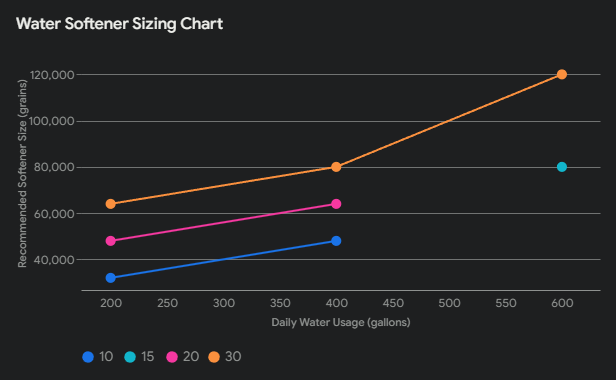
For a quick reference, you can consult a general sizing chart that provides recommendations based on water hardness and daily water usage. These charts are readily available online and in water softener brochures. However, they should be used as a guideline rather than a definitive answer.

The Importance of Oversizing: Planning for the Future

It’s generally recommended to slightly oversize your water softener, typically by 10-20%, to accommodate fluctuations in water usage, occasional peak demands, and potential future needs like an expanding family or increased water consumption.

For example, if your calculations suggest a 32,000-grain softener, you might opt for a 40,000-grain unit for added flexibility. Oversizing ensures that your softener can handle unexpected spikes in demand and won’t be overwhelmed as your needs evolve.

Manufacturer Recommendations: Valuable Insights

Water softener manufacturers often provide sizing recommendations for their specific models. These recommendations are based on the unit’s design, capacity, and regeneration capabilities. Be sure to consult the manufacturer’s guidelines when choosing a softener to ensure it aligns with your needs.

Our Expertise at WaterSoftenerSizing.com: Your Partner in Softening

At WaterSoftenerSizing.com, we’re dedicated to helping you navigate the complexities of water softener sizing. Our team of water treatment experts can provide accurate sizing calculations, personalized recommendations, and connect you with reputable manufacturers and installers.

We understand that every home and business is unique, and we’re committed to finding the perfect water softening solution for you. Contact us today to experience the difference of soft water and enjoy a more comfortable, efficient, and cost-effective lifestyle.

Benefits of soft water for hair and skin

Your Path to Perfectly Sized Water Softening

Choosing the right water softener size is a crucial step in ensuring your home or business enjoys the full benefits of soft water. By understanding the interplay of key factors like water hardness, daily usage, peak flow rate, household size, and additional considerations like softener type and mineral content, you can confidently select a system that meets your unique needs.

Remember, a properly sized water softener is an investment that pays off in multiple ways. It protects your plumbing and appliances, extends their lifespan, reduces energy consumption, lowers soap and detergent usage, and enhances your overall comfort and well-being. Don’t leave this important decision to chance.

Key Takeaways:

  • Water hardness is the foundation of sizing: The harder your water, the larger the softener you need.
  • Daily water usage drives capacity: The more water you use, the higher the softener’s capacity should be.
  • Peak flow rate ensures continuous soft water: Your softener must handle peak demand to avoid hard water breakthroughs.
  • Household size offers a starting point: Larger households generally need larger softeners, but individual habits also matter.
  • Additional factors refine your choice: Consider softener type, regeneration frequency, and the presence of iron or manganese in your water.
  • Professional guidance is invaluable: Consult a plumber or water treatment specialist for personalized recommendations.

Your Next Steps to Soft Water Bliss

Are you ready to transform your water and your life? At WaterSoftenerSizing.com, we’re here to help you every step of the way. Use our free online calculator for a preliminary size estimate, explore our comprehensive resources to learn more about water softening, or contact our team of experts for personalized assistance.

Don’t settle for hard water woes. Take control of your water quality and experience the difference a perfectly sized water softener can make!

What is a Water Softener & Why Do I Need It?

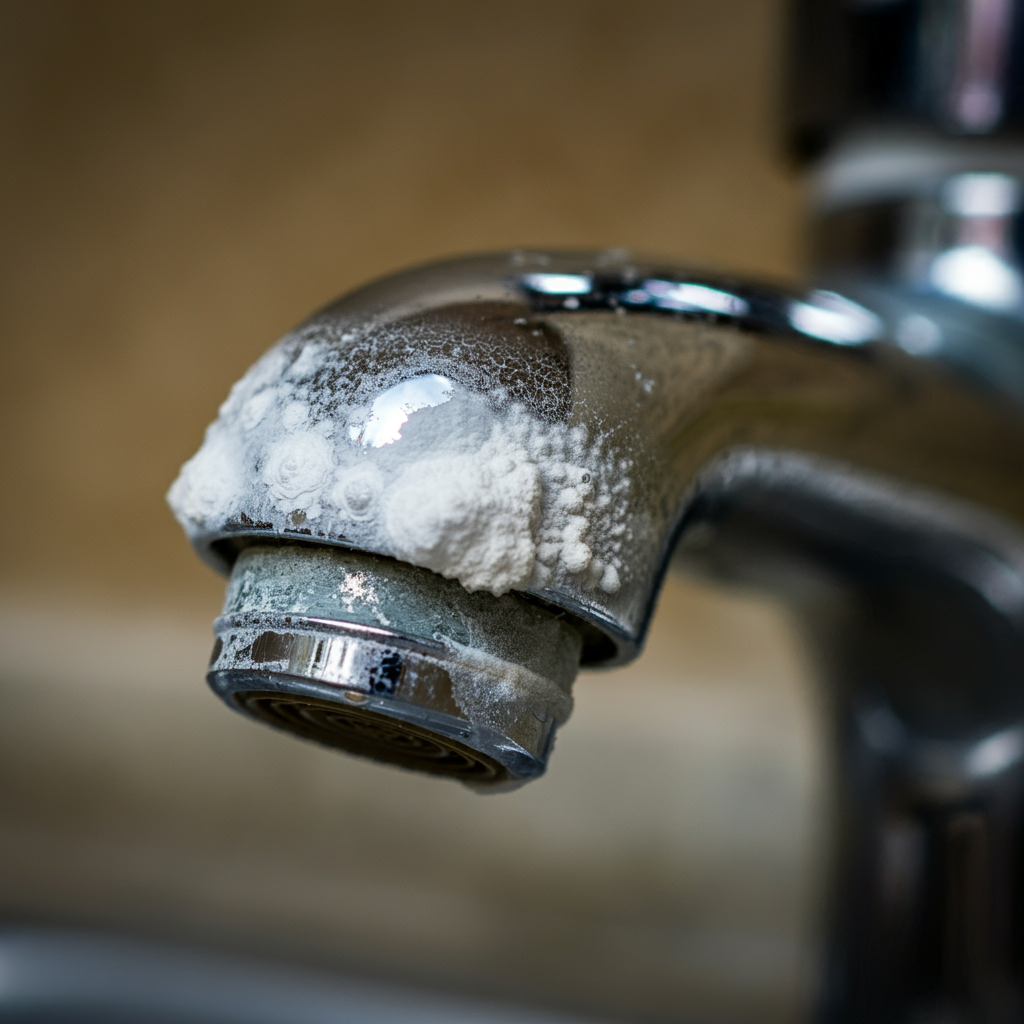
A water softener is a device that removes minerals like calcium and magnesium from your home’s water supply. These minerals are the culprits behind “hard water,” a common issue that can lead to a host of frustrating problems in your daily life. At WaterSoftenerSizing.com, we understand the impact hard water can have on your home and well-being. From unsightly soap scum and dingy laundry to clogged pipes and malfunctioning appliances, the consequences can be costly and time-consuming to address. That’s why we’re dedicated to helping you find the perfect water softener solution to transform your water and, ultimately, your quality of life. Unlike other water filtration systems, water softeners specifically target the dissolved minerals that cause water hardness. Through a process called ion exchange, they replace these minerals with sodium or potassium ions, resulting in soft water that lathers easily, leaves your skin and hair feeling silky smooth, and protects your appliances from harmful buildup. Imagine stepping into a shower where the water feels luxurious and leaves your skin feeling truly clean, or noticing how your dishes sparkle without the need for harsh scrubbing. With a properly sized and maintained water softener, these benefits can become your reality. In the following sections, we’ll delve deeper into the science behind hard water, the different types of water softeners available, the importance of proper sizing, and the numerous advantages of enjoying soft water in your home. We’ll also address common concerns and guide you through assessing your water quality to determine if a water softener is the right solution for you. Limescale buildup on a faucet caused by hard water

Understanding Hard Water

Hard water is water with a high mineral content, primarily calcium and magnesium. These minerals are naturally occurring and dissolve into groundwater as it passes through rocks and soil. The degree of hardness is measured in grains per gallon (gpg) or parts per million (ppm), with levels above 7 gpg or 120 ppm generally considered hard. While hard water is not a health hazard, it can cause a variety of problems in your home. The dissolved minerals tend to precipitate out of solution when water is heated or evaporates, leaving behind a chalky, white substance known as limescale. This limescale buildup can clog pipes, damage appliances, and make cleaning a constant chore.

Negative Effects of Hard Water

  1. Limescale Buildup: This is the most visible sign of hard water. Limescale deposits can accumulate on faucets, showerheads, and other plumbing fixtures, leaving unsightly stains and reducing water flow. Inside appliances, limescale can coat heating elements and reduce their efficiency, leading to higher energy bills and premature failure.
  2. Soap Scum: Hard water reacts with soap to form a sticky, insoluble residue called soap scum. This scum can leave a film on your skin, making it feel dry and itchy, and leave your hair feeling dull and lifeless. Soap scum can also accumulate on shower doors, bathtubs, and tiles, making cleaning a frustrating task.
  3. Reduced Cleaning Effectiveness: Hard water makes it difficult for soap and detergent to lather properly, meaning you need to use more product to achieve the same level of cleanliness. This can be costly and time-consuming, and it can also leave behind a residue on your dishes and laundry.
  4. Appliance Damage: The limescale buildup inside appliances like water heaters, washing machines, and dishwashers can significantly reduce their efficiency and lifespan. In fact, hard water can shorten the lifespan of a water heater by up to 40%.
  5. Clogged Pipes and Plumbing Issues: Over time, limescale deposits can accumulate inside pipes, restricting water flow and eventually leading to clogs and leaks. This can result in costly plumbing repairs.

Real-World Examples of Hard Water Issues

  • You notice a white, crusty buildup on your faucets and showerheads that is difficult to remove, even with vigorous scrubbing.
  • Your dishes and glasses come out of the dishwasher covered in spots and streaks, even after using a rinse aid.
  • Your clothes feel stiff and scratchy after washing, and the colors may appear faded.
  • Your skin feels dry and itchy after showering, and your hair feels dull and tangled.
  • You hear a rattling sound from your water heater, and your energy bills seem higher than usual.

These are just a few examples of the many problems that hard water can cause in your home. If you’re experiencing any of these issues, it’s time to consider a solution that can transform your water and your daily life.

How Does a Water Softener Work? The Science of Softening

A water softener operates on a simple yet effective principle called ion exchange. This process targets and removes the calcium (Ca2+) and magnesium (Mg2+) ions, the primary culprits behind water hardness.

Ion Exchange Process

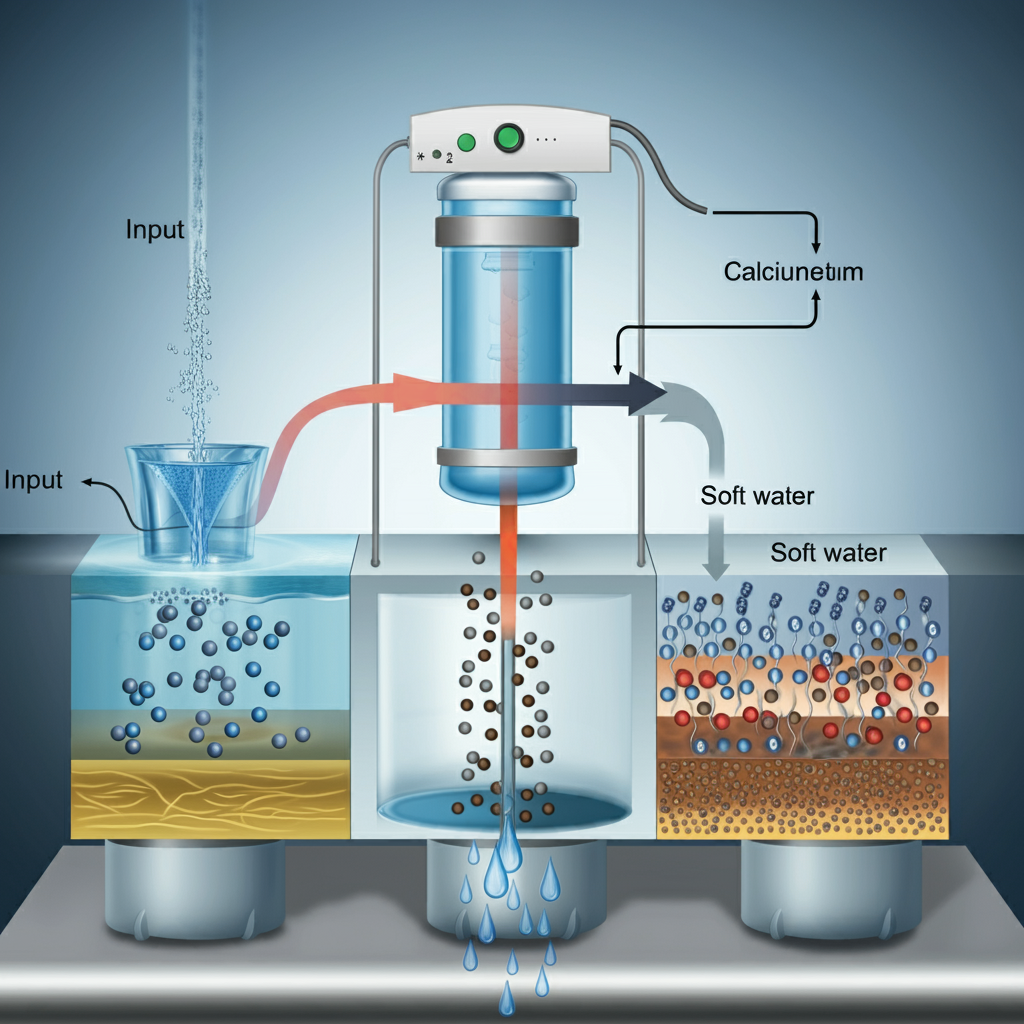
At the heart of every water softener lies a resin tank filled with small, negatively charged resin beads. As hard water flows through this tank, the positively charged calcium and magnesium ions are naturally attracted to and bind with the negatively charged resin beads. In a simultaneous exchange, the resin releases sodium (Na+) or potassium (K+) ions, which are less likely to cause hardness issues, into the water. This exchange effectively “softens” the water by removing the troublesome minerals.

Regeneration Cycle

Over time, the resin beads become saturated with calcium and magnesium, and their softening capacity diminishes. To restore their effectiveness, water softeners initiate a regeneration cycle. During this cycle, a highly concentrated brine solution (saltwater) is flushed through the resin tank. The high concentration of sodium or potassium ions in the brine dislodges the calcium and magnesium ions, allowing them to be rinsed away as wastewater. The resin beads are then recharged with sodium or potassium ions, ready to soften water once again.

Salt-Based vs. Salt-Free Water Softeners

  • Salt-Based Water Softeners: These systems are the most common type of water softener and rely on sodium chloride (salt) to regenerate the resin beads. They are highly effective at removing minerals and are relatively inexpensive to operate. However, they do require periodic salt replenishment and may not be the best choice for individuals on sodium-restricted diets.
  • Salt-Free Water Softeners: Also known as water conditioners, these systems do not remove minerals from the water. Instead, they alter the structure of the calcium and magnesium crystals, preventing them from forming limescale deposits. Salt-free systems are a more eco-friendly option as they do not discharge salt into the environment. However, they may not be as effective at softening water with very high mineral content.

Understanding the ion exchange process and the difference between salt-based and salt-free systems empowers you to make an informed decision when choosing a water softener that best suits your needs and priorities.

Types of Water Softeners: Choosing the Right System for Your Needs

Choosing the right water softener involves understanding the different types available and their unique characteristics. The two primary categories are salt-based and salt-free water softeners, each with its own advantages and considerations.

Salt-Based Water Softeners

Salt-based water softeners are the most common type found in homes and businesses. They use sodium chloride (common salt) to regenerate the resin beads during the ion exchange process. These softeners are known for their efficiency and effectiveness in removing high levels of calcium and magnesium from water. Key Features of Salt-Based Water Softeners:

  • Efficient Removal of Minerals: Salt-based systems excel at removing a wide range of hardness minerals, making them suitable for areas with very hard water.
  • Widely Available and Affordable: They are readily available in various sizes and capacities to accommodate different households and budgets.
  • Low Maintenance: While they require periodic salt replenishment, the maintenance is relatively simple and straightforward.

However, salt-based softeners do have some drawbacks:

  • Salt Usage: They consume salt during regeneration, which can be a concern for individuals on low-sodium diets or those concerned about environmental impact.
  • Wastewater Discharge: The brine solution produced during regeneration is discharged into the wastewater system.

Salt-Free Water Softeners

Salt-free water softeners, also known as water conditioners, take a different approach to addressing hard water. Instead of removing minerals, they alter their structure, preventing them from forming scale deposits. This is typically achieved through Template Assisted Crystallization (TAC) or Nucleation Assisted Crystallization (NAC) technologies. Key Features of Salt-Free Water Softeners:

  • Eco-Friendly: They do not use salt, making them a more environmentally conscious choice.
  • No Wastewater Discharge: They do not produce brine discharge, eliminating concerns about sodium or chloride levels in wastewater.
  • Healthier Option: They maintain the beneficial minerals in water, which can be important for individuals on restricted diets.

However, salt-free systems have some limitations:

  • Not True Softening: They do not remove minerals, so water may still feel hard and leave behind some residue.
  • Limited Effectiveness: Their effectiveness may decrease in areas with extremely hard water.

Water Softener Sizing: The Key to Optimal Performance

Regardless of the type you choose, proper sizing is crucial for the efficient and effective operation of your water softener. A softener that is too small will not effectively remove minerals, while one that is too large will waste water and salt during regeneration. At WaterSoftenerSizing.com, we specialize in calculating the precise size of water softener you need based on your water hardness, daily water usage, and household size. Our expert team utilizes advanced tools and industry knowledge to ensure you invest in a system that delivers optimal performance and cost savings.

Leading Water Softener Brands: Making an Informed Decision

Choosing a water softener is an investment in your home and quality of life, so it’s crucial to select a reputable brand known for quality, performance, and longevity. We at WaterSoftenerSizing.com recognize the importance of this decision, and we’re here to guide you through the landscape of top water softener brands.

SoftPro: The Trusted Name in Water Treatment

SoftPro, a global leader in water treatment solutions, offers a comprehensive range of water softeners designed to tackle various levels of water hardness. Renowned for their commitment to innovation and customer service, SoftPro has been a household name for years. Their product lineup includes both salt-based and salt-free softeners, catering to diverse needs and preferences. SoftPro water softeners have garnered recognition for their advanced technology, high-efficiency operation, and sleek design.

Kinetico: Pioneering Non-Electric Water Softeners

Kinetico sets itself apart with its patented non-electric, twin-tank water softener design. This innovative approach eliminates the need for electricity, reducing operating costs and minimizing environmental impact. Kinetico’s twin-tank system allows for continuous soft water availability, even during regeneration cycles. The brand is also known for its durable construction and high-performance resin, ensuring long-lasting and efficient water softening.

Fleck: Empowering DIYers with Customizable Options

Fleck water softeners are a popular choice among homeowners who prefer a do-it-yourself approach. These systems are known for their user-friendly design, customizable settings, and compatibility with various control valves. Fleck offers a wide range of softener models, allowing you to tailor the system to your specific water hardness level and household needs. With their reliable performance and competitive pricing, Fleck softeners provide excellent value for DIY enthusiasts.

GE Appliances: Reliable Softeners for Everyday Use

GE Appliances, a trusted name in household appliances, extends its expertise to water softeners. Their softener lineup features a variety of models with different capacities, making it easy to find the right fit for your home. GE softeners are designed for easy installation and maintenance, making them a convenient choice for homeowners seeking a dependable solution to hard water problems.

Water Quality Association (WQA) Certification: The Gold Standard

When choosing a water softener, it’s essential to look for the Water Quality Association (WQA) Gold Seal mark. The WQA is a non-profit organization that sets industry standards for water treatment products and certifies those that meet rigorous quality and performance criteria. A WQA Gold Seal certification ensures that the softener has been tested and proven to effectively reduce hardness minerals, adhere to safety standards, and meet specific efficiency requirements. This certification gives you confidence that you’re investing in a reliable and high-quality product. The WQA Gold Seal is not merely a logo; it’s a symbol of trust and assurance in the water treatment industry. It signifies that the product has undergone thorough testing and evaluation by an independent third party, verifying its claims and performance. When you see the WQA Gold Seal on a water softener, you can rest assured that you’re making a wise investment in your home’s water quality.

The Benefits of Soft Water: Enhancing Your Home and Well-being

The advantages of soft water extend far beyond just a cleaner bathroom. Let’s explore the multitude of benefits that softer water can bring to your home, your appliances, and even your personal care routine.

Softer Skin and Hair

Hard water’s minerals can leave your skin feeling dry, itchy, and irritated. The calcium and magnesium ions in hard water react with soap to form a filmy residue that clings to your skin, stripping away its natural oils. This can exacerbate conditions like eczema and psoriasis. Soft water, on the other hand, allows soap to lather richly and rinse away cleanly, leaving your skin feeling soft, smooth, and hydrated. The same applies to your hair. Hard water can leave your hair feeling dry, brittle, and dull. The minerals can build up on your scalp, leading to flakiness and irritation. With soft water, your hair will feel softer, more manageable, and have a healthier shine.

Cleaner Appliances and Fixtures

Hard water is notorious for leaving behind unsightly limescale deposits on faucets, showerheads, and other fixtures. These deposits are not only difficult to clean but also detract from the aesthetics of your bathroom and kitchen. Soft water eliminates the formation of limescale, keeping your fixtures gleaming and like-new. The benefits extend to your appliances as well. Dishwashers and washing machines operate more efficiently with soft water, as there’s no mineral buildup to hinder their performance. Your dishes will come out sparkling clean, and your laundry will be softer and brighter.

Cost Savings

While the initial investment in a water softener may seem significant, the long-term savings can be substantial. Soft water can extend the lifespan of your appliances, saving you from costly repairs or replacements. The U.S. Department of Energy states that a water softener can increase the lifespan of a water heater by up to 30%, a significant saving considering the average cost of a new water heater is around $1,000. Additionally, soft water allows soap and detergent to lather more effectively, meaning you’ll use less of these products. This can translate to considerable savings on your household cleaning supplies over time.

Environmental Benefits

The benefits of soft water also extend to the environment. Studies have shown that households using soft water consume up to 50% less soap and detergent compared to those using hard water. This reduction in chemical usage translates to less pollution entering our waterways. Furthermore, softened water requires less energy to heat, leading to lower energy consumption and a smaller carbon footprint. By opting for a water softener, you’re not only improving your home’s water quality but also contributing to a more sustainable future. Diagram illustrating the ion exchange process in a water softener

Addressing Common Concerns: Salt Usage, Maintenance, and More

While water softeners offer numerous benefits, it’s important to address some common concerns that potential buyers may have, particularly regarding salt usage, maintenance requirements, and cost considerations.

Salt Usage and Environmental Impact

Salt-based water softeners, as the name suggests, utilize salt to regenerate the resin beads. The amount of salt used varies depending on the hardness of your water and the size of your household. A typical household might use anywhere from 2 to 8 bags of salt per year. While salt is a natural mineral, excessive salt discharge into the environment can be a concern in certain areas. The sodium and chloride ions from the brine solution can potentially impact local ecosystems and water sources. However, studies have shown that the environmental impact of home water softeners is relatively small compared to other sources of sodium and chloride pollution, such as agricultural runoff and industrial wastewater. Alternatives to Sodium Chloride If you are concerned about sodium intake or environmental impact, potassium chloride can be used as an alternative to sodium chloride. Potassium chloride is a naturally occurring salt that is often recommended for individuals on low-sodium diets. It functions similarly to sodium chloride in the regeneration process but does not contribute to sodium levels in the softened water.

Maintenance Requirements

Water softeners require regular maintenance to ensure optimal performance and longevity. The most common maintenance tasks include:

  • Salt Replenishment: Salt levels in the brine tank should be checked regularly and replenished as needed. The frequency of replenishment will depend on your water usage and the size of the softener.
  • Cleaning the Brine Tank: The brine tank should be cleaned periodically to remove any salt bridges or residue that can impede the regeneration process. This usually involves removing any solid buildup and rinsing the tank with fresh water.
  • Checking for Leaks: Inspect the softener and its connections for any leaks, which can waste water and salt.
  • Regularly Scheduled Maintenance: Consider having a professional service your softener annually to ensure it’s operating efficiently.

Cost Considerations

The cost of a water softener can vary significantly depending on the type, size, brand, and features. Salt-based softeners are generally more affordable upfront, while salt-free systems tend to have higher initial costs. However, salt-free softeners may save you money in the long run due to their lower operating costs and lack of salt usage. In addition to the initial purchase price, consider the ongoing costs of salt, maintenance, and repairs. It’s also important to factor in the potential savings on soap and detergent, energy bills, and plumbing repairs that come with using softened water. While the upfront cost of a water softener may seem like a significant investment, the long-term benefits and savings often outweigh the initial expense. Soft water not only improves your daily life but also protects your home and appliances from the damaging effects of hard water, ultimately saving you money and hassle in the long run.

Do You Need a Water Softener? Assessing Your Water Quality

While hard water is a prevalent issue, its severity varies from region to region and even from one home to another. How can you determine if a water softener is necessary for your specific situation? The first step is to identify the signs of hard water in your home and then accurately assess your water hardness.

Signs of Hard Water

Hard water often leaves noticeable clues throughout your home. Keep an eye out for these common indicators:

  • Soap Scum: A white, filmy residue on bathtubs, showers, sinks, and faucets is a classic sign of hard water. This scum is formed when soap reacts with the calcium and magnesium in the water, making it difficult to lather and rinse off.
  • Dry, Itchy Skin and Dull Hair: If your skin feels dry and tight after showering or your hair feels rough and tangled, hard water could be the culprit. The minerals in hard water can strip away natural oils, leaving your skin and hair feeling less than their best.
  • Spotty Dishes and Glassware: Even after washing, dishes and glassware may come out of the dishwasher with spots or a cloudy film due to the mineral deposits left behind by hard water.
  • Fading Laundry: Hard water can cause colors to fade and fabrics to feel stiff and scratchy. Over time, it can even shorten the lifespan of your clothes.
  • Reduced Water Pressure: If you notice a decrease in water pressure throughout your home, it could be due to limescale buildup in your pipes.
  • Appliance Issues: Hard water can damage appliances that use water, such as washing machines, dishwashers, and water heaters. You may notice a decrease in efficiency or even premature failure of these appliances.

Testing Your Water Hardness

If you suspect you have hard water, it’s important to confirm your suspicions with a water hardness test. There are two main ways to test your water:

  1. Home Test Kits: These are simple, DIY kits that you can purchase online or at home improvement stores. They typically involve adding a few drops of solution to a water sample and comparing the color change to a chart to determine the hardness level. While convenient, home test kits may not always be as accurate as professional testing.
  2. Professional Water Testing: For a more precise and comprehensive analysis, consider hiring a professional water testing service. They will collect a sample of your water and analyze it in a laboratory, providing you with a detailed report on the mineral content and overall water quality. This information is essential for selecting the right water softener and ensuring optimal performance.

Interpreting Water Hardness Levels

Water hardness is typically measured in grains per gallon (gpg) or parts per million (ppm). The Water Quality Association (WQA) provides the following guidelines for classifying water hardness:

  • Soft: 0-3.5 gpg (0-60 ppm)
  • Slightly Hard: 3.5-7 gpg (60-120 ppm)
  • Moderately Hard: 7-10.5 gpg (120-180 ppm)
  • Hard: 10.5-14 gpg (180-250 ppm)
  • Very Hard: Over 14 gpg (Over 250 ppm)

If your water tests moderately hard or higher, a water softener is likely a worthwhile investment to protect your home, appliances, and personal well-being. Water hardness varies greatly across the United States. For example, Indianapolis, Indiana is known for having some of the hardest water in the country, while cities like Denver, Colorado have naturally soft water. Knowing the hardness level of your local water supply can give you a better idea of whether or not you may need a water softener. At WaterSoftenerSizing.com, we can help you assess your water hardness and determine the ideal water softener size for your specific needs. Our expert team is dedicated to ensuring you have the information and resources necessary to make an informed decision about improving your home’s water quality.

Your Path to Softer Water: Is a Water Softener the Right Choice for You?

Hard water, while not a health hazard, can significantly impact your daily life and the longevity of your household appliances. From unsightly soap scum and dry skin to costly appliance repairs and increased energy bills, the consequences of hard water can be far-reaching. Water softeners offer a reliable and effective solution to combat these issues. By removing or altering the minerals responsible for hardness, they transform your water into a soft, luxurious resource that enhances your well-being and protects your home.

Key Takeaways

  • Hard water, characterized by high mineral content, can lead to a variety of problems, including limescale buildup, soap scum, dry skin, and appliance damage.
  • Water softeners work by removing or altering hardness minerals through ion exchange or other methods.
  • Salt-based softeners are the most common type and use salt for regeneration, while salt-free softeners are eco-friendly alternatives.
  • Proper water softener sizing is crucial for optimal performance and water conservation.
  • Reputable brands like SoftPro, Kinetico, Fleck, and GE Appliances offer a variety of water softeners to suit different needs.
  • Soft water offers numerous benefits, including softer skin and hair, cleaner appliances, cost savings, and environmental advantages.

If you’re experiencing the telltale signs of hard water or have confirmed high mineral levels through testing, a water softener could be a transformative addition to your home. By choosing the right type and size for your needs, you can enjoy the benefits of soft water for years to come.

Take the Next Step Towards Softer Water

Ready to experience the difference soft water can make? At WaterSoftenerSizing.com, we’re committed to helping you find the perfect water softener solution. Our expert team can provide personalized sizing recommendations and connect you with trusted installers to ensure a seamless and successful water softening experience. Don’t let hard water continue to wreak havoc on your home and daily life. Visit our website or contact us today to discover the perfect water softener for your needs and take the first step towards softer, healthier, and more enjoyable water.

How Does a Water Softener Size Impact Its Efficiency?

The size of a water softener directly impacts its efficiency. An undersized unit will struggle to keep up with your household’s demand, leading to frequent regeneration cycles, wasted resources, and the risk of hard water sneaking through. Conversely, an oversized softener will needlessly consume salt and water, driving up your bills without providing any additional benefits. At WaterSoftenerSizing.com, we understand that choosing the right water softener can feel like navigating a maze of technical jargon and conflicting advice. That’s why we’re committed to making the process simple and straightforward. We believe that everyone deserves the luxury of soft water, and proper sizing is the cornerstone of achieving that goal. A properly sized water softener, like those certified by the Water Quality Association (WQA), operates at peak efficiency, providing you with consistently soft water while minimizing salt and water consumption. This translates to lower operating costs, extended appliance lifespan, and a reduced environmental footprint. Think of it like Goldilocks and the three bears: you don’t want a softener that’s too big or too small, but one that’s “just right.” The sweet spot lies in matching the softener’s grain capacity – the amount of hardness it can remove before needing regeneration – to your household’s specific water usage and hardness level. In this comprehensive guide, we’ll walk you through the intricacies of water softener sizing, debunk common misconceptions, and equip you with the knowledge you need to make an informed decision. Whether you’re a homeowner battling stubborn soap scum or a business owner seeking to protect your investment in plumbing and appliances, we’ll help you find the perfect fit. Let’s dive in and discover how a properly sized water softener can transform your water – and your life.

Efficiency 101: What Makes a Water Softener Truly Efficient?

When we talk about water softener efficiency, we’re not just referring to its ability to transform hard water into soft water. True efficiency encompasses how well the softener performs this task while minimizing resource consumption and operating costs. Let’s break down the key metrics that define a truly efficient water softener:

  1. Grain Capacity: This is the total amount of hardness minerals (measured in grains) a water softener can remove before it needs to regenerate. It’s like the size of a fuel tank – a larger capacity means you can go longer between refills (or in this case, regeneration cycles).
  2. Regeneration Frequency: This refers to how often your softener needs to clean itself and recharge its ability to remove hardness. A more efficient softener will regenerate less frequently, saving you money on salt and water.
  3. Salt Efficiency: This measures how much salt is used per grain of hardness removed. A high salt efficiency means your softener is using salt wisely, reducing waste and minimizing environmental impact.
  4. Water Usage: The amount of water used during the regeneration process is also a factor in overall efficiency. Efficient softeners use less water during regeneration, helping you conserve this precious resource.

These metrics are interconnected. For example, a softener with a high grain capacity might regenerate less often, but if it uses a lot of salt and water per regeneration, it might not be as efficient overall as a smaller unit with better salt and water usage.

The Hidden Costs of Inefficiency

An inefficient water softener can lead to a cascade of problems, some of which may not be immediately apparent. Frequent regeneration cycles, for instance, not only waste salt and water but also put extra wear and tear on the system, potentially shortening its lifespan. This translates to higher maintenance costs and the need for premature replacement. Moreover, inefficient softeners can fail to fully remove hardness minerals, leading to “hard water breakthroughs.” This means that during periods of high water usage, some untreated hard water can still enter your plumbing system, causing scale buildup, soap scum, and even damage to appliances like water heaters and dishwashers. In contrast, a highly efficient water softener, as certified by organizations like the Water Quality Association (WQA), can save you money in the long run. By optimizing salt and water usage, you’ll see a noticeable reduction in your utility bills. Plus, by effectively removing hardness minerals, you’ll protect your plumbing, appliances, and even your skin and hair from the damaging effects of hard water. To illustrate, consider a study published in the Journal of the American Water Works Association, which found that hard water can reduce the efficiency of water heaters by up to 24%. By investing in an efficient water softener, you can ensure that your appliances operate at their peak performance, saving you energy and money.

Undersized vs. Oversized: The Hidden Costs of Getting it Wrong

Choosing the right size water softener is crucial. Selecting a unit that’s either too small or too large can lead to a host of issues that impact not only the efficiency of the softener but also your wallet and the environment. Let’s delve deeper into the problems associated with undersized and oversized water softeners.

Undersized Softeners: The Constant Struggle

Imagine a water softener as a hardworking employee. An undersized softener is like an employee constantly working overtime, struggling to keep up with the workload. It continuously regenerates, consuming excessive amounts of salt and water, and ultimately wearing itself out prematurely. This results in:

  1. Frequent Regeneration Cycles: An undersized softener can’t handle the amount of hardness minerals your household produces, forcing it to regenerate far more often than necessary. This not only wastes resources but also puts a strain on the system, reducing its lifespan.
  2. Higher Salt and Water Bills: Each regeneration cycle requires salt and water. With an undersized softener, you’ll be refilling the salt tank more often and using more water than you should, leading to higher utility bills.
  3. Hard Water Breakthrough: During peak usage periods, like morning showers or laundry days, an undersized softener might not be able to keep up with the demand. This can result in hard water bypassing the system and entering your plumbing, leading to scale buildup and appliance damage.

Case Study: The Smith Family’s Struggle The Smith family of five, living in an area with moderately hard water, initially opted for a smaller water softener to save on upfront costs. However, they soon realized their mistake. Their softener regenerated almost daily, consuming bags of salt and driving up their water bill. Additionally, they noticed a white film on their dishes and shower doors, a telltale sign of hard water breakthrough. This experience led them to invest in a properly sized softener, resulting in significant savings and consistently soft water.

Oversized Softeners: The Silent Money Pit

On the other end of the spectrum, an oversized softener is like an employee who’s overqualified for their job – they’re capable of doing more, but they’re not being utilized to their full potential. This scenario leads to:

  1. Wasted Resources: An oversized softener uses more salt and water than necessary during each regeneration cycle, even though it could effectively soften the same amount of water with less. This translates to wasted money and a negative environmental impact due to excessive salt discharge.
  2. Financial Burden: Larger softeners typically come with higher price tags, both upfront and in terms of ongoing maintenance. Investing in an oversized unit means paying more for features and capacity you don’t actually need.
  3. Underutilization: An oversized softener rarely operates at full capacity, which can lead to issues like bacterial growth within the system due to stagnant water.

Example: The Joneses’ Surprise Water Bill The Joneses, an older couple with a relatively low water usage, were persuaded to purchase a high-capacity softener with all the bells and whistles. They were assured that bigger was better. However, their excitement quickly turned to dismay when their water bill arrived. The oversized softener was using far more water than their household needed, leading to an unexpectedly high bill. They eventually downsized to a more appropriately sized unit, which not only saved them money but also performed just as effectively.

Finding Your Perfect Fit: How to Size a Water Softener for Optimal Efficiency

Choosing the right water softener size is like finding the perfect pair of shoes – it needs to fit your specific needs and lifestyle. Fortunately, determining the ideal size for your home doesn’t require a crystal ball. It’s a matter of gathering a few key pieces of information and applying a simple calculation. At WaterSoftenerSizing.com, we’ve streamlined this process to make it as easy as possible for you. Water_Softener_Sizing_Chart

Know Your Numbers

Before you start shopping for a water softener, you’ll need to gather some essential data:

  1. Water Hardness: This is the first and most crucial piece of the puzzle. Water hardness is measured in grains per gallon (gpg) or milligrams per liter (mg/L) and indicates the concentration of calcium and magnesium minerals in your water. You can obtain this information from your local water utility or by conducting a simple water hardness test at home.
  2. Daily Water Usage: The next step is to determine how much water your household uses on an average day. This can be estimated based on the number of people in your home and their typical water-consuming activities (showers, laundry, dishwashing, etc.). According to the U.S. Geological Survey, the average person uses about 80-100 gallons of water per day.
  3. Household Size: The number of people living in your home directly impacts your water usage and, consequently, the size of the water softener you’ll need. Larger households naturally use more water, requiring a softener with a higher grain capacity.

The Calculation (Simplified)

Once you have these numbers, you can use our handy water softener sizing calculator to determine the ideal capacity for your needs. Here’s a simplified version of the calculation:

  1. Daily Softening Capacity (Grains): Multiply your daily water usage (in gallons) by your water hardness level (in gpg). For example, if your household uses 300 gallons of water per day and your water hardness is 10 gpg, your daily softening capacity would be 3,000 grains.
  2. Household Adjustment: Multiply the daily softening capacity by the number of people in your household. If your household has 4 people, you’d need a softener with a capacity of 12,000 grains (3,000 grains/day * 4 people).

Our water softener sizing calculator takes into account additional factors like reserve capacity and regeneration frequency to provide you with the most accurate recommendation.

Beyond the Basics: Additional Considerations

While the basic calculation gives you a good starting point, there are a few additional factors to consider when choosing a water softener size:

  • High Iron Content: If your water has a high iron content, you’ll need a softener with a larger capacity or one specifically designed to handle iron removal.
  • Multiple Bathrooms: Homes with multiple bathrooms might experience simultaneous water usage, requiring a softener with a higher flow rate to maintain consistent water pressure.
  • Appliance Usage: If you have high-demand appliances like washing machines or dishwashers, you may need a larger softener to accommodate their water usage.
  • Future Expansion: If you plan on adding to your family or increasing your water usage in the future, it’s wise to choose a softener with some extra capacity to accommodate these changes.

Beyond Size: Additional Factors for Maximizing Efficiency

While proper sizing is the cornerstone of an efficient water softener, it’s not the only factor to consider. Several other elements can influence the overall performance and resource consumption of your system. Let’s explore these additional factors to ensure you’re getting the most out of your water softener investment.

Types of Water Softeners: Salt-Based vs. Salt-Free

The two main types of water softeners available on the market are:

  1. Salt-Based Water Softeners: These are the most common type of water softeners, using sodium chloride (salt) or potassium chloride to regenerate the resin bed and remove hardness minerals. Salt-based softeners are known for their effectiveness in removing high levels of hardness, but they do require regular replenishment of salt and have a slight impact on wastewater due to salt discharge.
  2. Salt-Free Water Conditioners: These systems don’t actually remove hardness minerals from the water. Instead, they alter their chemical structure, preventing them from forming scale buildup. Salt-free conditioners are a good option for individuals on low-sodium diets or those concerned about the environmental impact of salt. However, they may not be as effective in areas with very hard water.

Choosing the Right Type: The best type of water softener for you depends on your specific needs and preferences. If you have moderately hard water and don’t mind the occasional salt replenishment, a salt-based softener is a reliable choice. However, if you have dietary restrictions or environmental concerns, a salt-free conditioner might be a better fit.

Advanced Features: Boosting Efficiency and Convenience

Modern water softeners come equipped with a range of advanced features designed to optimize efficiency, reduce resource consumption, and enhance user experience:

  1. Demand-Initiated Regeneration (DIR): Traditional softeners regenerate on a fixed schedule, regardless of actual water usage. DIR technology, on the other hand, monitors water consumption and only initiates regeneration when necessary. This can significantly reduce salt and water usage, as well as extend the lifespan of the softener.
  2. High-Efficiency Resin: The resin bed inside a water softener is responsible for removing hardness minerals. High-efficiency resin beads require less salt to regenerate, resulting in lower salt consumption and reduced environmental impact.
  3. Twin Tank Systems: These systems consist of two resin tanks that work in tandem. While one tank is softening water, the other is regenerating, ensuring a continuous supply of soft water even during the regeneration process. This eliminates the risk of hard water breakthrough and provides uninterrupted soft water access.

These features, while not essential, can significantly enhance the efficiency and convenience of your water softener. When choosing a model, consider your budget, water usage patterns, and environmental concerns to determine which features best suit your needs. Water softener with a flow meter to monitor water usage and optimize efficiency

Your Water Softening Journey: Partner with WaterSoftenerSizing.com

Choosing and sizing a water softener is a significant decision. At WaterSoftenerSizing.com, we’re dedicated to guiding you through the process, ensuring you achieve the best possible results for your home or business.

Why Trust WaterSoftenerSizing.com?

Our team of water treatment professionals brings years of experience and expertise to the table. We understand the intricacies of water softening technology and are passionate about helping our clients achieve optimal water quality. But don’t just take our word for it – our satisfied customers speak volumes about our commitment to excellence: “WaterSoftenerSizing.com made choosing the right softener a breeze. Their calculator was incredibly helpful, and their customer service was top-notch. I highly recommend them!” – Sarah L., Homeowner “As a business owner, I rely on WaterSoftenerSizing.com to ensure my water softening system is efficient and cost-effective. Their expertise has saved us thousands of dollars in maintenance and repairs.” – John M., Restaurant Owner

Free Resources at Your Fingertips

We believe that knowledge is power. That’s why we offer a wealth of free resources to empower you in your water softening journey:

  • Water Softener Sizing Calculator: Our user-friendly calculator takes the guesswork out of sizing. Simply input your water hardness, daily usage, and household size, and we’ll provide a personalized recommendation for the ideal softener capacity.
  • Educational Articles & FAQs: Our website is packed with informative articles and frequently asked questions about water softeners. We cover everything from the basics of how softeners work to in-depth comparisons of different models and technologies.

Contact Us for Personalized Assistance

We understand that every home and business is unique. If you have specific questions or concerns, our team is here to help. Contact us for personalized guidance and support, and we’ll work with you to find the perfect water softener solution that fits your needs and budget. At WaterSoftenerSizing.com, we’re more than just a website; we’re your partners in water softening success. Let us help you transform your water – and your life.

Your Softer Water Solution Starts with the Right Size

The size of your water softener plays a pivotal role in its overall efficiency, impacting not only your water quality but also your wallet and the environment. An undersized unit will struggle to keep up with demand, leading to frequent regeneration, increased resource consumption, and the potential for hard water breakthrough. On the other hand, an oversized softener will waste salt and water, resulting in unnecessary expenses and environmental impact. By understanding the factors that influence water softener efficiency and following our expert guidance, you can confidently select the right size for your home or business. Remember, the goal is to find the “Goldilocks” softener – one that perfectly balances capacity with efficiency, providing consistent soft water while minimizing waste.

Key Takeaways

  • Efficiency is Key: Water softener efficiency goes beyond just softening water; it encompasses resource conservation and cost-effectiveness.
  • Size Matters: Both undersized and oversized softeners lead to inefficiency and increased expenses.
  • Know Your Numbers: Accurately determining your water hardness, daily usage, and household size is crucial for proper sizing.
  • Choose Wisely: Consider both salt-based and salt-free options, as well as advanced features like demand-initiated regeneration, when selecting your softener.
  • Partner with Experts: WaterSoftenerSizing.com is your trusted resource for expert advice, personalized recommendations, and free tools to simplify the sizing process.

Ready to take the next step towards softer, healthier water? Utilize our free water softener sizing calculator and explore our comprehensive resources to find the perfect solution for your needs. Your journey to optimal water quality begins with the right size.