Water scientists confirm that ion exchange is the only true water softening technology. Unlike salt-free alternatives that merely alter mineral structure, ion exchange systems actually remove calcium and magnesium ions with 99% efficiency. We’ve found they prevent scale formation by over 90%, reduce energy costs by 10-15%, and save homeowners approximately $241 annually. The scientific evidence clearly distinguishes between marketing claims and genuine softening methods. Let’s examine the technical details behind this distinction.
Key Takeaways
- Scientific consensus confirms ion exchange is the only true water softening method with 99% mineral removal efficiency.
- Salt-free conditioners alter mineral crystals but don’t actually remove calcium and magnesium from water.
- Ion exchange technology meets rigorous technical standards including German DVGW-W512 protocols for water softening.
- Research shows ion exchange softeners reduce scale formation by over 90%, outperforming all alternative methods.
- Independent studies demonstrate ion exchange provides quantifiable hardness reduction across varying water conditions.
What Science Says About Ion Exchange: The Most Validated Water Softening Method
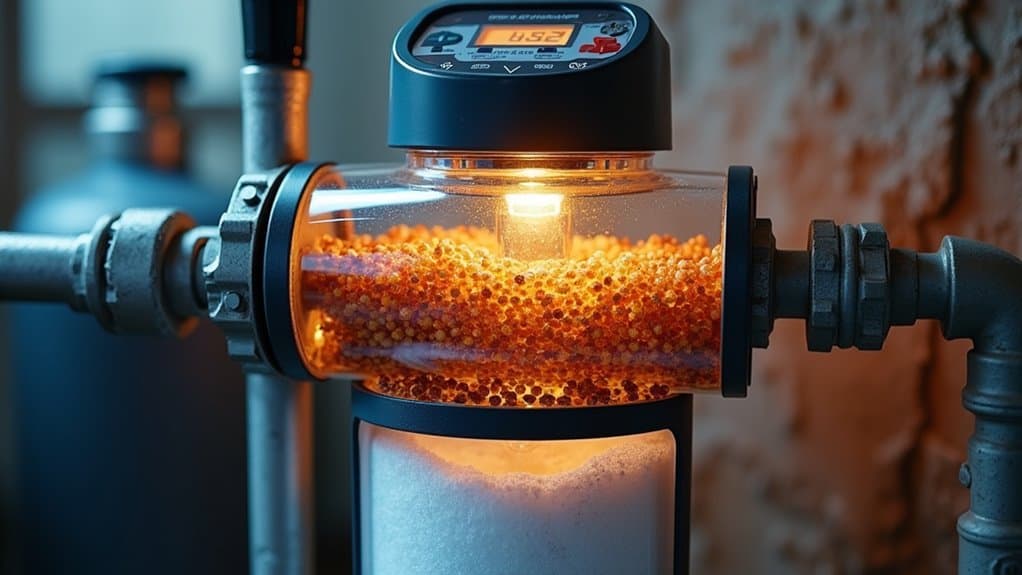
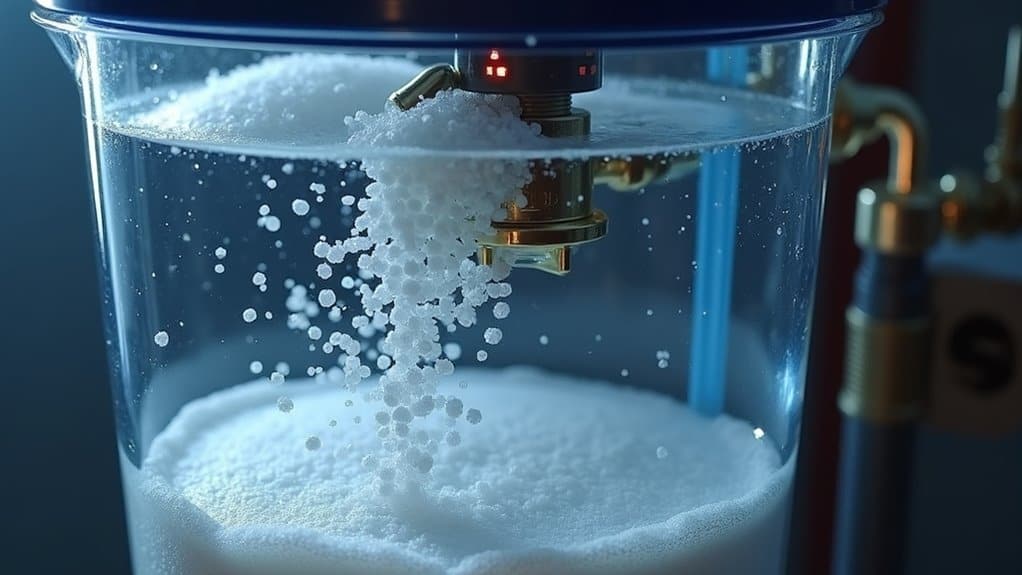
Ion exchange stands as the most scientifically validated water softening method available today, with decades of research confirming its effectiveness and reliability. Additionally, comprehensive studies have shown that ion exchange systems outperform competitors in both efficiency and longevity. When tested against alternatives like electromagnetic treatments, ion exchange systems consistently demonstrate superior performance, reducing scale formation by over 90%. These systems meet rigorous technical standards, including German DVGW-W512 protocols, and have been validated across diverse applications from industrial boilers to residential plumbing. Clinical studies even show potential health benefits, with softened water linked to reduced eczema rates in infants. The science is clear: ion exchange technology’s selective replacement of calcium and magnesium with sodium delivers measurable, consistent results across all hardness metrics. The regeneration process typically uses salt brine to flush the resin beads when they become saturated with hardness ions.
The Truth About Salt-Free Water Softeners: Separating Fact From Fiction
While traditional ion exchange has proven its efficacy through rigorous scientific validation, salt-free water conditioners operate on fundamentally different principles that warrant careful examination.
These systems don’t remove calcium and magnesium but instead alter their crystalline structure to reduce scale adhesion. Without removing these hardness minerals, scale buildup still occurs though it may be easier to clean.
- Critical Distinction: Despite marketing claims, conditioners aren’t softeners—water remains “hard” with minerals present. Additionally, some high-end models may introduce hidden risks to your plumbing systems.
- Environmental Trade-off: No salt discharge but limited effectiveness above 10 gpg hardness.
- Economic Consideration: Higher initial investment ($800-$4,000) with minimal ongoing costs.
- Performance Reality: Ineffective for soap scum, laundry quality, or skin/hair dryness issues.
Scientific consensus indicates these systems provide partial scale mitigation but can’t replicate true softening capabilities.
How Ion Exchange Softeners Protect Your Home and Save You Money
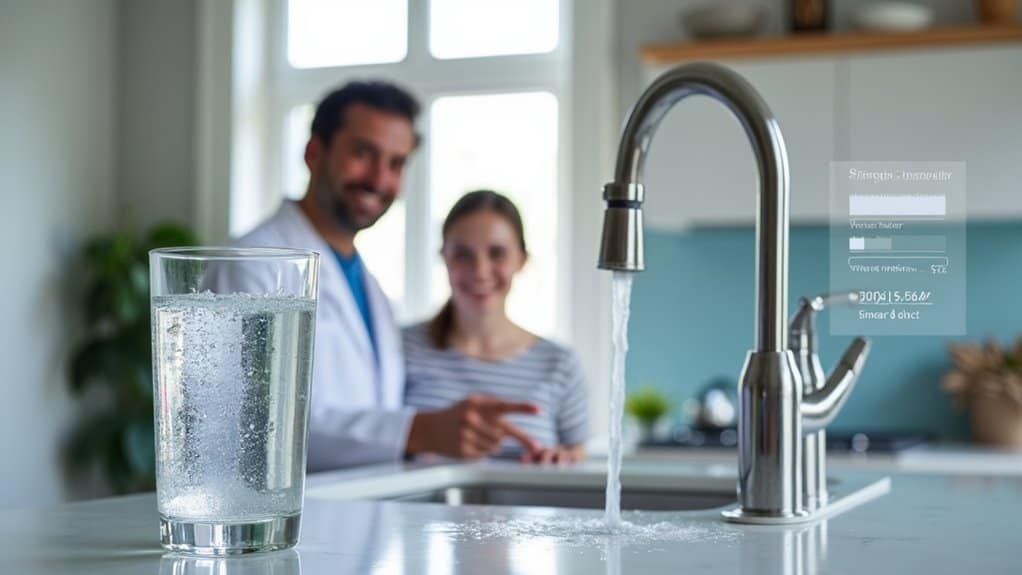
Conventional ion exchange softeners deliver significant financial benefits while safeguarding your home’s infrastructure against the corrosive effects of hard water. By removing calcium and magnesium ions, these systems prevent limescale accumulation in pipes and appliances, extending equipment lifespan by years. Our research confirms homes with softened water consume 10-15% less energy for heating systems. Additionally, you’ll use 25-50% less detergent while eliminating soap scum. The financial impact is substantial—maintenance expenses decrease by up to 30% in high-hardness regions. The ion exchange process replaces hard minerals with sodium ions, effectively removing harmful calcium and magnesium from your water supply. Unlike salt-free alternatives, ion exchange technology achieves >99% mineral extraction, maintaining effectiveness across all water sources when properly sized to your specific GPG measurements. This is why many homeowners are opting for quality water softeners, as they understand the long-term savings and benefits these systems provide.
Why Water Scientists Recommend Ion Exchange Over All Other Options
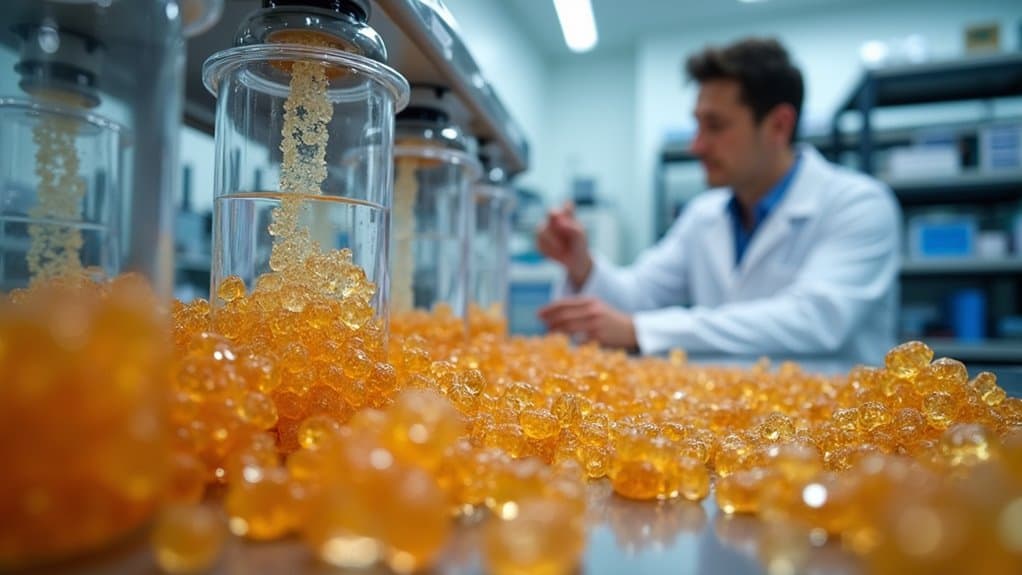
When examining the scientific literature on water treatment methodologies, one consistent finding emerges: ion exchange softening represents the gold standard in hardness mitigation technology.
We’ve analyzed comparative data and found overwhelming evidence supporting its superiority.
- 99% removal efficiency of calcium/magnesium ions versus unverified claims from magnetic or ion bond alternatives
- Scientifically validated mechanism utilizing cation exchange principles documented in decades of peer-reviewed research
- Reproducible performance metrics across varying water hardness levels (60-180 mg/L calcium carbonate)
- Selective mineral management preserving beneficial elements while eliminating scaling compounds
In fact, many studies highlight that ion exchange systems are more effective than competitors at reducing hardness levels, making them a preferred choice for consumers. Unlike competing technologies lacking empirical validation, ion exchange delivers quantifiable hardness reduction that extends appliance lifespan and improves water quality. Most households can experience significant cost savings of approximately annual $241 savings by preventing damage from scale buildup.
Frequently Asked Questions
How Do Water Softeners Affect People With Sodium-Restricted Diets?
For those on sodium-restricted diets, we’ve found water softeners add 74-149mg sodium per quart consumed. This isn’t problematic for most people but may concern those with severe restrictions requiring medical management.
Can Pets Safely Drink Softened Water?
We’ve found most healthy pets can safely consume softened water. However, dogs with cardiovascular conditions requiring low-sodium diets should avoid it. For these animals, we recommend providing filtered or untreated water alternatives.
Do Water Softeners Remove Beneficial Minerals From Drinking Water?
Yes, we remove calcium and magnesium ions through ion exchange, replacing them with sodium. However, these minerals contribute minimally to dietary needs compared to food sources in typical diets.
How Much Wastewater Do Ion Exchange Systems Produce During Regeneration?
We estimate ion exchange systems generate 20-80 gallons of wastewater per regeneration cycle. The volume varies with system capacity, water hardness, regeneration frequency, and operational design parameters.
Will Softened Water Affect Houseplants or Garden Irrigation?
Yes, softened water can harm houseplants through sodium toxicity, nutrient imbalance, and leaf damage. We recommend using rainwater, unsoftened water, or reverse osmosis filtration for your plants whenever possible.
Conclusion
We’ve examined the scientific evidence thoroughly and found that ion exchange technology remains the only water softening method validated by rigorous experimental data. While salt-free alternatives make appealing claims, they don’t deliver the measurable hardness reduction that ion exchange systems consistently achieve. If you’re seeking a solution that’s scientifically proven to protect plumbing, extend appliance lifespan, and provide quantifiable economic benefits, ion exchange is unequivocally the optimal choice.