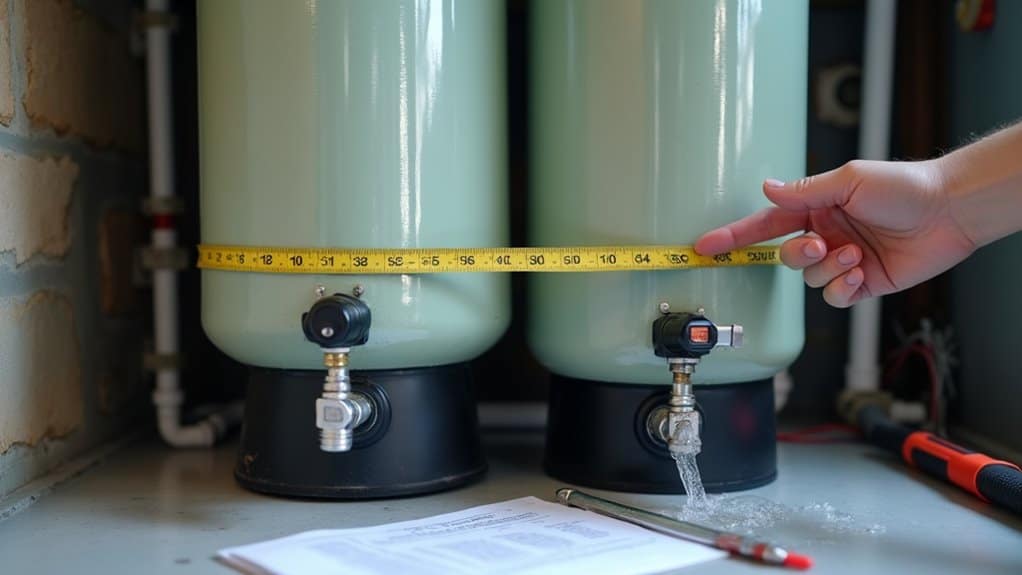
The Water Softener Size Secret That Plumbers Don’t Want You to Know

Hidden water softener sizing tricks save thousands on equipment and salt that plumbers won’t reveal to protect profits.

Most water softener systems are deliberately oversized by plumbers, costing homeowners thousands in wasted equipment and salt. Instead of sizing based on your specific needs, professionals default to worst-case scenarios that boost their profits. To determine your actual requirement, multiply household size by daily water usage (75-100 gallons per person) and your water hardness level in grains per gallon. Our simple calculations below will save you significant money on equipment, salt, and wastewater.

Key Takeaways

  • Most plumbers unnecessarily oversize water softeners, installing units with 2-3 times more capacity than households actually need.
  • Oversized water softeners waste salt, using 15 pounds per regeneration cycle instead of the 6 pounds truly needed.
  • Calculate your true needs by multiplying household size, daily water usage, and water hardness level in grains per gallon.
  • Properly sized softeners should regenerate every 7-10 days for optimal efficiency, not based on standardized assumptions.
  • Accurate peak flow rate measurements, not inflated Hunter’s Curve calculations, prevent paying for excessive system capacity.

Why Most Homes Have Oversized Water Softeners (And Pay Too Much)
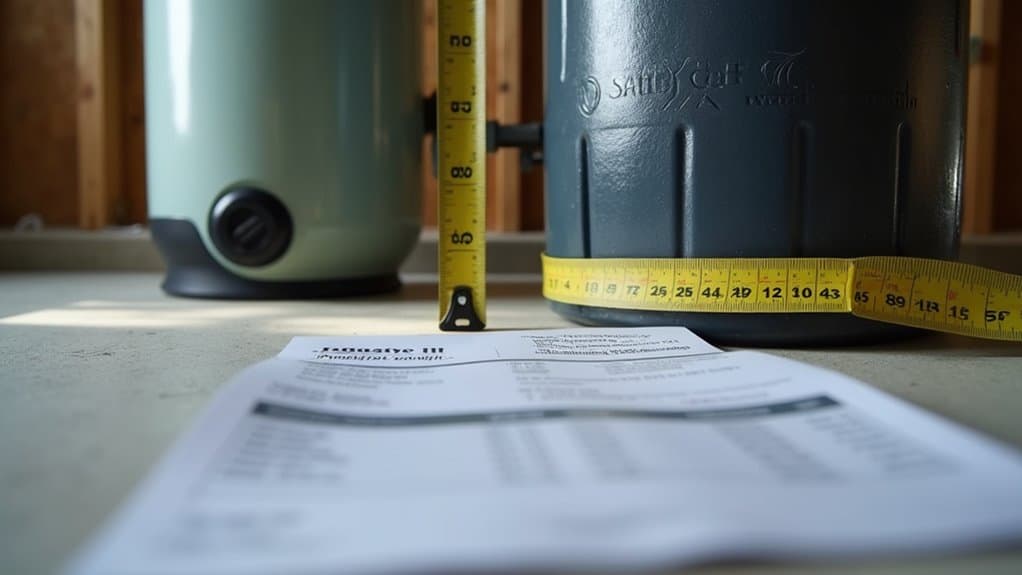
oversized water softeners costs

When homeowners install water softeners, they routinely end up with systems far larger than necessary for their actual needs. This oversizing stems from inconsistent industry practices that ignore critical variables. Plumbers typically apply standardized assumptions rather than calculating specific household requirements based on actual water usage, hardness levels, and flow rates. They frequently overestimate reserve capacity and recommend excessive salt settings (15 lbs/cycle vs. efficient 6 lb alternatives).

The typical reliance on standardized sizing methods often leads to unnecessary costs and inefficiencies. Sizing decisions emphasize maximum capacity for rare peak-usage scenarios instead of average daily consumption. These oversized systems require less frequent regeneration cycles, but ultimately waste salt and water during each regeneration. The result? Homeowners pay more upfront and waste resources on systems designed for water demands they’ll rarely experience.

The Real Math Behind Water Softener Sizing Your Plumber Won’t Explain

water softener sizing explained

Understanding the precise mathematics behind water softener sizing reveals why most plumbers’ recommendations lead to unnecessary expenses. The sizing formula is straightforward: multiply your total daily water consumption by your water’s hardness level measured in grains per gallon. For a family of four using 75-100 gallons per person daily, that’s 300-400 gallons total. With water testing at 10 gpg hardness, you’d need a system handling 3,000-4,000 grains daily.

Many professionals deliberately overestimate these calculations, suggesting units with double or triple the necessary capacity. This is often due to standard sizing charts that fail to account for unique household needs. Choosing an oversized softener can create issues like channeling problems that actually reduce effectiveness.

We’ve found that accurate measurements of your actual usage and hardness levels yield properly sized units that cost less initially and throughout their lifecycle.

Peak Flow Rates: The Critical Sizing Factor Everyone Ignores
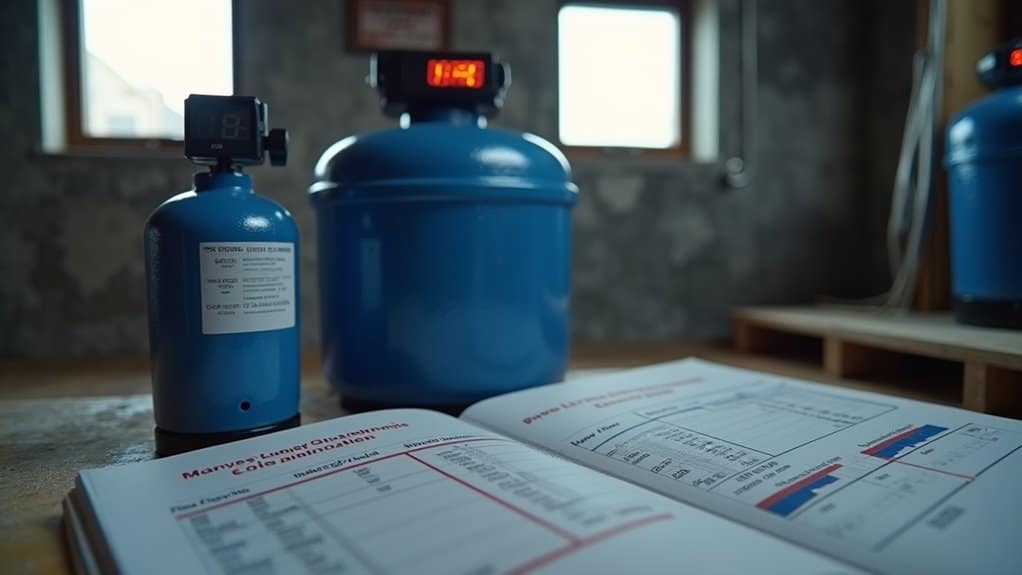
critical peak flow importance

While most sizing discussions focus on grain capacity, peak flow rates represent the most overlooked yet critical factor in proper water softener selection.

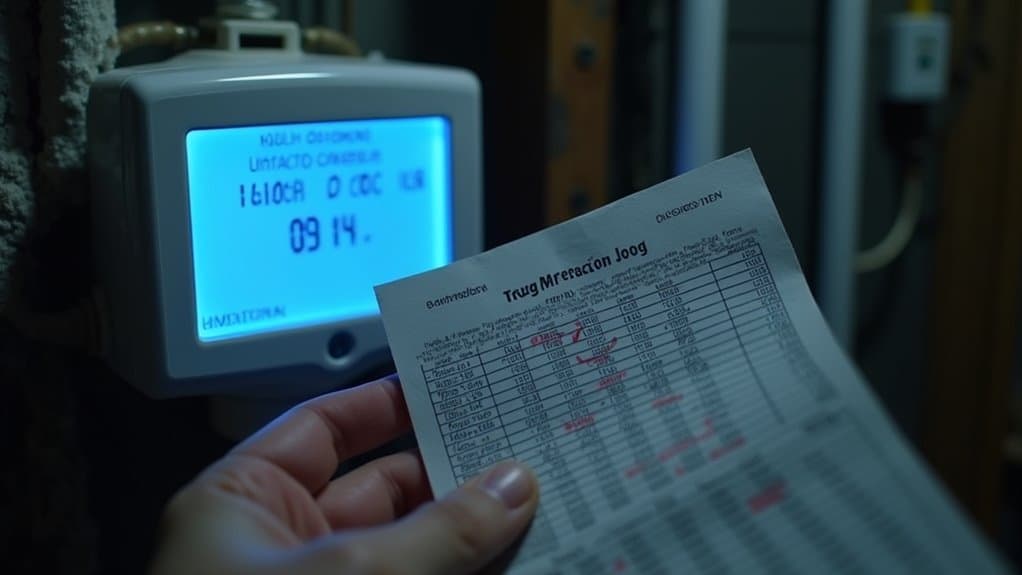
Hunter’s Curve calculations often overestimate requirements, but actual meter data provides superior accuracy. We recommend maintaining pressure loss below 15 PSI during peak flows, never exceeding 25 PSI. Additionally, optimal performance hinges on selecting the right size for your specific needs.

Remember, simultaneous fixture usage drives true demand – those moments when showers, dishwashers, and toilets operate concurrently. Similar to how Seasonic Prime PSUs are recommended for reliability during peak power demands, your water softener must handle maximum flow scenarios.

When sizing your system, account for valve diameter constraints and subtract manufacturer-specified pressure drops from line pressure. This ensures that the system can effectively manage the flow without sacrificing efficiency.

Without these calculations, even a high-grain capacity softener will underperform during peak demand, rendering its theoretical capacity meaningless.

DIY Sizing Guide: Calculate Your Exact Water Softener Needs in 5 Minutes
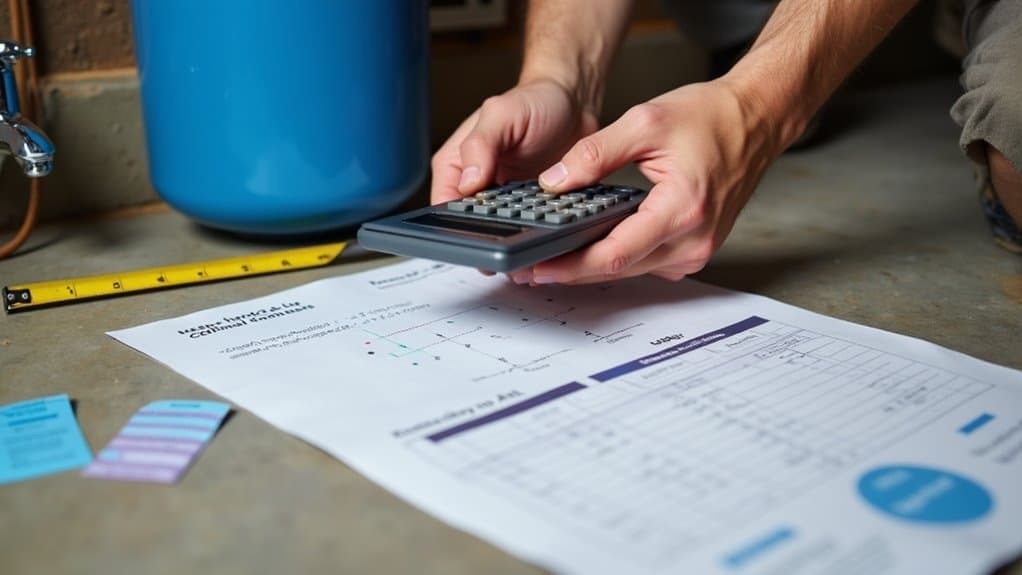
water softener sizing guide

Sizing your water softener correctly requires just five key measurements and a simple calculation. We’ll guide you through determining your daily grain removal needs, the true foundation of proper sizing. Proper sizing ensures optimal performance and minimizes the risk of overworking the system.

First, multiply your household size by daily water usage (typically 80 gallons per person), then multiply by your water hardness level in GPG. Add iron compensation if applicable. Choosing incorrectly can result in wasted energy and frequent maintenance issues.

Household Size Daily Usage Water Hardness Daily Grains
2 people 160 gallons 10 GPG 1,600
4 people 320 gallons 10 GPG 3,200
4 people 320 gallons 15 GPG 4,800

Select a system with capacity that allows regeneration every 7-10 days for optimal efficiency.

Frequently Asked Questions

How Often Should Resin Be Replaced in Properly Sized Softeners?

We typically replace resins in properly sized water softeners every 10-15 years. However, we’ll need replacement sooner with high mineral content or contaminant exposure, even with optimal sizing.

Can I Downsize My Existing Softener Without Replacing the Entire System?

We don’t recommend downsizing existing softeners without replacement. Most systems aren’t modular. Consider partial resin replacement or installing bypass setups for non-essential fixtures to reduce load while maintaining your current unit.

How Do Water Softeners Affect Septic Systems?

We’ve found water softeners impact septic systems through system overloading from regeneration discharge, potential bacterial disruption from sodium, and possible tank corrosion. Redirecting discharge and using high-efficiency units minimizes these risks.

Are “Salt-Free” Water Conditioning Systems Effective Alternatives?

We find salt-free conditioners effective for scale prevention but not true softening. They don’t remove hardness minerals or address soap scum issues, though they’re environmentally friendly with minimal maintenance requirements.

Does Water Pressure Affect Softener Size Requirements?

Yes, water pressure directly affects softener sizing. We need minimum 20 PSI for proper operation, while excessive pressure above 80 PSI requires pressure regulators to prevent internal damage and inefficient regeneration cycles.

Conclusion

We’ve demonstrated how most water softeners are needlessly oversized by plumbers maximizing their profits. By understanding your actual grain capacity needs and accurate peak flow rates, you’ll save thousands over the system’s lifespan. Don’t trust arbitrary sizing formulas. Our calculation method ensures you’ll get precisely what your household requires—nothing more, nothing less. Measure twice, purchase once, and you’ll never overpay for water treatment again.
7 Signs Your Current Water Softener Is Drastically Undersized

Discover these seven crucial warning signs revealing your water softener can’t handle your home’s demands anymore…

If your water softener is undersized, you’ll notice persistent limescale despite salt additions, daily regeneration cycles instead of weekly, significant pressure drops during peak usage, premature appliance failures, inconsistent water quality throughout your home, excessive salt consumption, and hard water symptoms returning shortly after regeneration. These warning signs indicate your system can’t handle your household’s water demands. Understanding these indicators can help you determine whether it’s time for a properly sized replacement.

Key Takeaways

  • Persistent mineral deposits reappear quickly after cleaning, showing the resin is exhausted before the next regeneration cycle.
  • Daily regeneration cycles instead of the normal 3-7 days indicate insufficient capacity for your household’s water consumption.
  • Water pressure drops significantly during peak usage when multiple fixtures are running simultaneously.
  • Premature appliance failures occur as hardness minerals bypass the system and accumulate in water-using appliances.
  • Soap stops lathering properly midway between regeneration cycles as the softener reaches capacity too quickly.

Persistent Mineral Deposits Despite Regular Salt Refills

mineral buildup from salt

When your water softener is properly sized, it should effectively eliminate mineral deposits throughout your home. If you’re noticing limescale residue on faucets and showerheads despite regular salt additions, your system is likely undersized. Tell-tale signs include cloudy dishes after washing, reddish-brown stains in toilets from untreated iron content, and crusty deposits around drain openings. Additionally, many homeowners fail to accurately assess their water hardness levels, leading to misjudgments in sizing and ineffective softening. Pay special attention to scaling on heating elements in water heaters and dishwashers – these high-temperature areas quickly reveal inadequate mineral removal. These persistent deposits indicate your softener lacks sufficient resin capacity to handle your household’s actual water hardness level. Users experiencing these issues may need to contact manufacturers, similar to how users encounter security blocks when trying to access certain websites with protective measures in place.

Daily Regeneration Cycles Becoming the Norm

routine daily renewal cycles

How often does your water softener cycle through regeneration? If it’s running daily, you’re facing a classic sign of an undersized system. Properly sized softeners typically regenerate every 3-7 days. Daily regeneration occurs when insufficient resin capacity can’t handle your household’s water demands. This overworking causes multiple problems: excessive salt consumption, premature resin degradation, and inconsistent water quality during peak usage times. Proper sizing ensures your water softener will maintain optimal performance and prevent these issues.

In fact, using an undersized system can lead to appliance damage from inadequate hardness removal. You’ll notice salt bridges forming quickly, rising maintenance costs, and disrupted water pressure during regeneration cycles. Systems with fixed schedules (rather than demand-initiated regeneration) struggle even more with efficiency in undersized conditions.

Water Pressure Drops During Peak Usage Times

peak usage water pressure

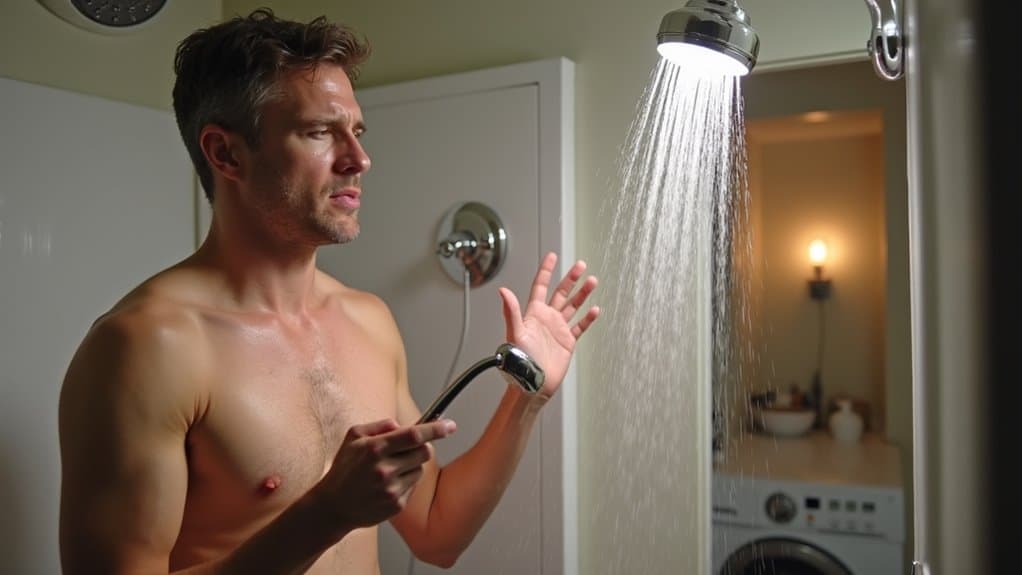
Experiencing sudden water pressure drops during your morning routine points directly to an undersized water softener struggling to meet demand. When multiple fixtures operate simultaneously, an inadequate system simply can’t maintain sufficient flow. We often see this problem manifest during peak usage periods when showers, toilets, and kitchen activities coincide. Your softener should accommodate your household’s maximum simultaneous demand without choking the water supply. This issue becomes especially pronounced in homes with multiple bathrooms or luxury fixtures like garden tubs. If your pressure consistently plummets when more than one person uses water, it’s a clear indicator your current softening capacity is insufficient. Properly sizing a system requires calculating your daily water consumption based on the number of people in your household and your typical usage patterns. An appropriately sized water softener can lead to significant cost savings in the long run, ensuring efficient operation and reduced maintenance needs.

Appliances Failing Long Before Their Expected Lifespan

premature appliance failures increase

Premature appliance failure often signals an undersized water softener that’s no longer protecting your household equipment properly.

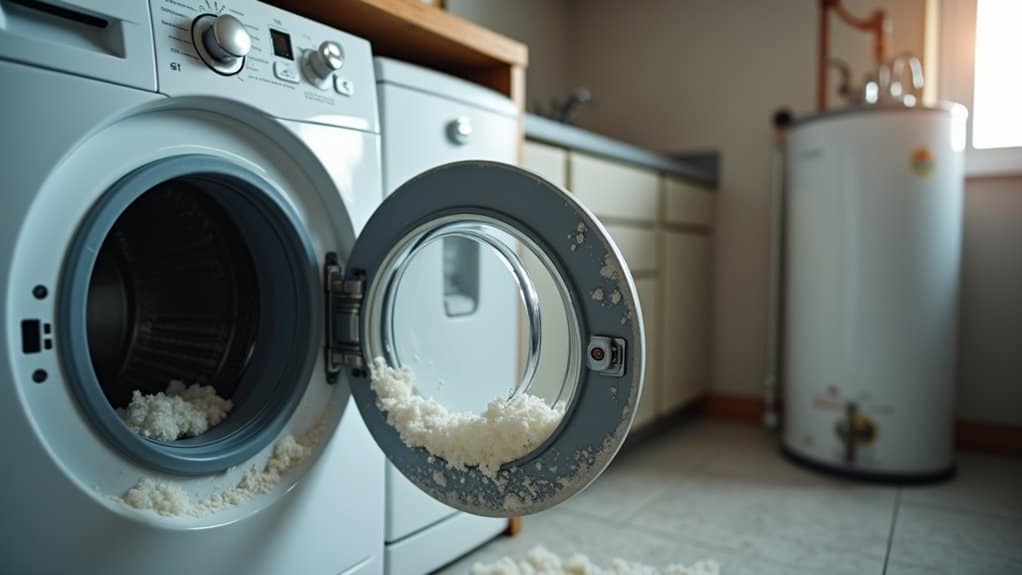
When water hardness minerals bypass your system, they accumulate in appliances, reducing efficiency and lifespan. An incorrectly sized water softener can lead to costly mistakes that could have been avoided with proper planning.

We regularly see dishwashers, washing machines, and water heaters failing years ahead of schedule in homes with inadequate softening capacity.

The scale buildup creates stress on heating elements, clogs valves, and damages internal components.

This damage extends beyond appliances to your plumbing infrastructure and even fire protection systems.

Hard water especially affects laundry appliances, leading to scratchy, stiff clothes and reduced effectiveness of cleaning agents.

The repair and replacement costs significantly outweigh the investment in a properly sized water softening system.

Inconsistent Water Quality Throughout Your Home

uneven home water quality

Inconsistent water quality throughout your home serves as another telltale sign of an undersized water softener.

You’ll notice disparate treatment outcomes—soft water from kitchen taps but hard water in showers—especially during peak usage periods.

This occurs when your softener lacks capacity to handle simultaneous demands.

Watch for localized mineral stains in high-traffic areas, taste differences between fixtures, or visible sediment in specific locations.

These indicators reveal uneven treatment during regeneration gaps or when demand exceeds capacity.

The reverse flow of hardened water into already-softened pipelines during multi-fixture use further confirms your system simply can’t keep up. Additionally, ensuring proper water softener sizing can prevent these issues and maintain consistent quality throughout your home.

Excessive Salt Consumption Compared to System Specifications

Excessive salt consumption provides one of the most reliable indicators of an undersized water softener system.

When your unit requires refills beyond the manufacturer’s specifications—typically exceeding 25-30 pounds monthly—it’s compensating for inadequate capacity.

We often see undersized systems regenerating too frequently, sometimes every 500-1,000 gallons instead of the recommended 3,000-4,000 gallons.

This inefficiency becomes obvious when comparing to high-efficiency models that use 50% less salt for the same water volume.

Households purchasing salt in bulk or refilling bags every 1-2 weeks are almost certainly dealing with systems that can’t handle their water hardness levels.

Hard Water Symptoms Returning Shortly After Regeneration

We’ll often see homeowners experiencing soap scum, spotty dishes, or dry skin shortly after their water softener completes a regeneration cycle—clear indicators that hard minerals are returning too quickly.

This premature reappearance of hard water symptoms points directly to insufficient resin bed capacity that can’t handle your household’s water demands between regenerations.

When your system reaches its ion exchange capacity too rapidly, the resin becomes saturated with calcium and magnesium ions before the next scheduled regeneration can occur, leaving you with diminishing periods of soft water.

Quick Mineral Reappearance

One of the most telling signs that your water softener is undersized manifests when hard water symptoms return shortly after regeneration. When mineral deposits reappear rapidly on fixtures, glassware, and appliances, your system simply can’t keep up with your household’s water demand.

Watch for these quick reappearance indicators:

  • White scale forming on faucets and showerheads within days of cleaning
  • Soap failing to lather properly midway between regeneration cycles
  • Spotting on dishes immediately after running the dishwasher

These symptoms indicate that your softener exhausts its resin capacity too quickly, forcing more frequent regeneration cycles that waste salt and water.

Diminishing Softening Capacity

Diminishing softening capacity represents a more systemic issue than sporadic hard water symptoms.

When your system struggles to maintain soft water between regeneration cycles, it’s a clear indicator of insufficient resin volume.

We often see this pattern: shortly after regeneration, soaps stop lathering properly and scale deposits reappear within 24-48 hours.

The underlying problem is mathematical—your resin’s grain capacity simply can’t handle your daily mineral load.

This creates a cascading effect where regeneration occurs multiple times daily, dramatically increasing salt consumption while delivering inconsistent water quality.

The solution requires properly sizing your system to match your household’s actual usage patterns.

Frequently Asked Questions

Can I Upgrade My Existing System or Need Full Replacement?

We recommend replacement for systems over 15 years old or with corroded tanks. For newer units, upgrading control valves may work if your tank size meets current household demand.

How Is Water Softener Size Calculated for My Home?

We calculate your water softener size by multiplying household members, daily water usage per person, and water hardness (GPG). This gives us daily grain requirements to match with appropriate system capacity.

Will an Undersized Softener Damage My Plumbing System?

Yes, we’re seeing undersized softeners allow mineral scale buildup that narrows pipes, corrodes fixtures, and strains appliances. This damages your entire plumbing system through accelerated wear and restricted flow.

Do Water Softener Problems Worsen in Certain Seasons?

Yes, we’ve found water softener problems typically worsen in summer when increased mineral concentration overtaxes systems, and during seasonal shifts when municipal sources change or precipitation patterns alter groundwater hardness levels.

How Frequently Should Professional Maintenance Be Performed?

We recommend professional maintenance every 3-4 months for basic systems and annually for advanced Kinetico units. Monthly salt checks are essential, but adjust frequency based on water hardness and household usage.

Conclusion

We’ve outlined key indicators that your water softener simply isn’t keeping up with demand. Don’t ignore these warning signs—they’re costing you money in damaged appliances, excessive salt usage, and diminished water quality. Upgrading to an appropriately sized system will immediately resolve these issues, providing consistent soft water throughout your home while reducing maintenance headaches. Contact a water treatment professional to calculate your actual capacity needs based on household size and water hardness levels.