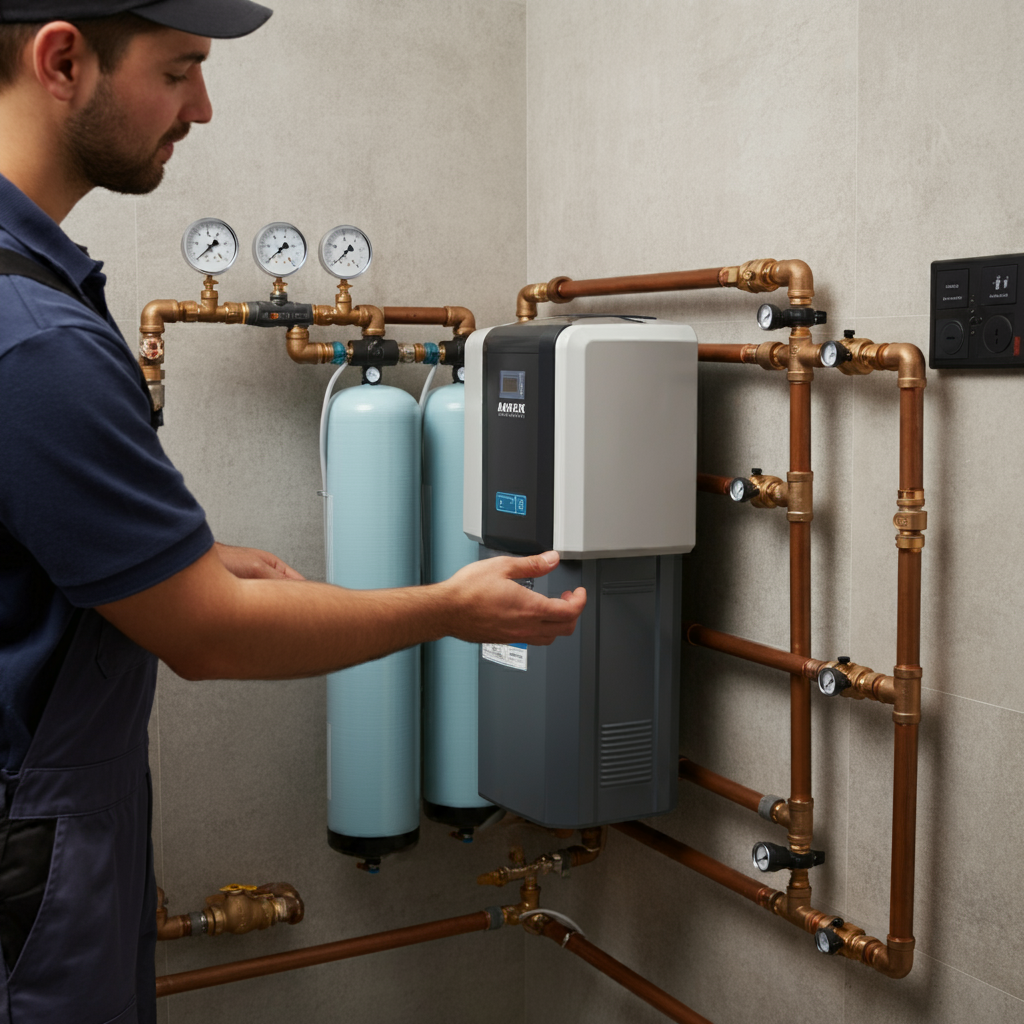
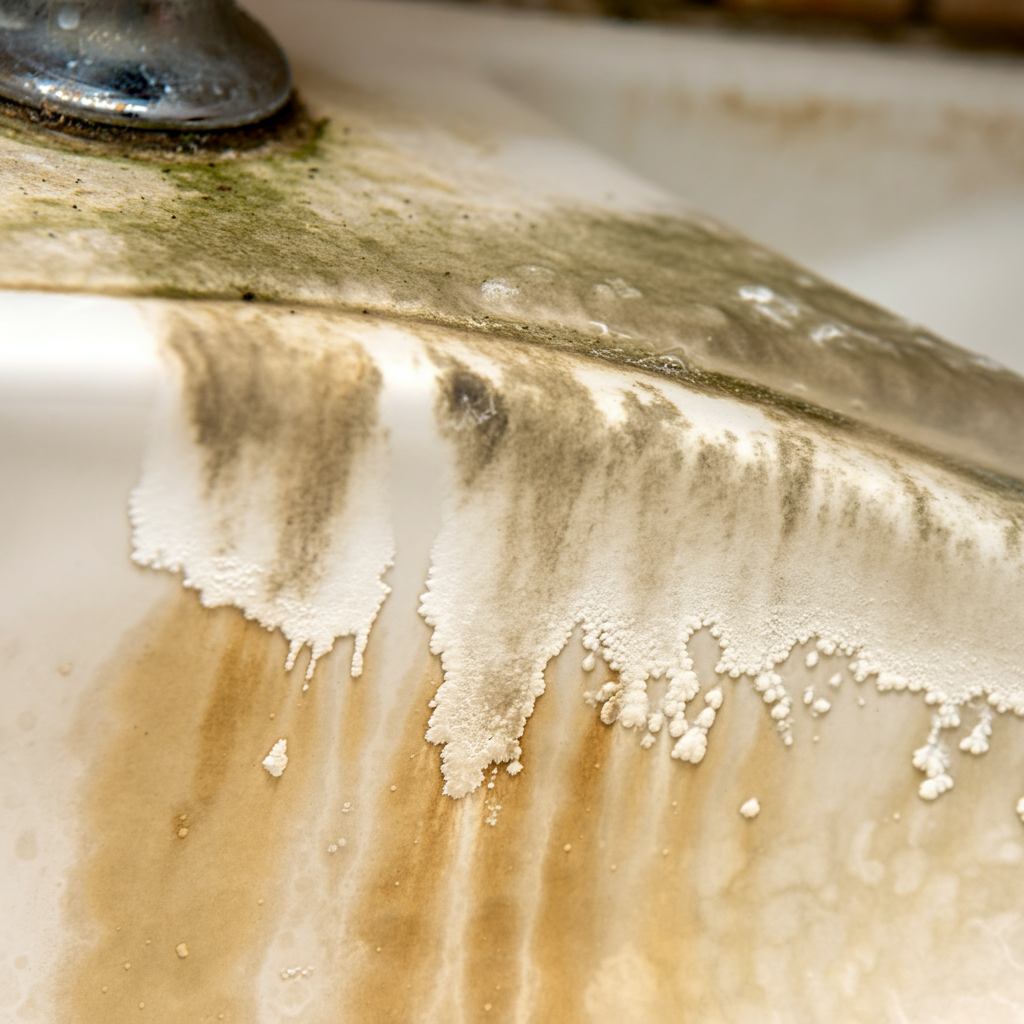
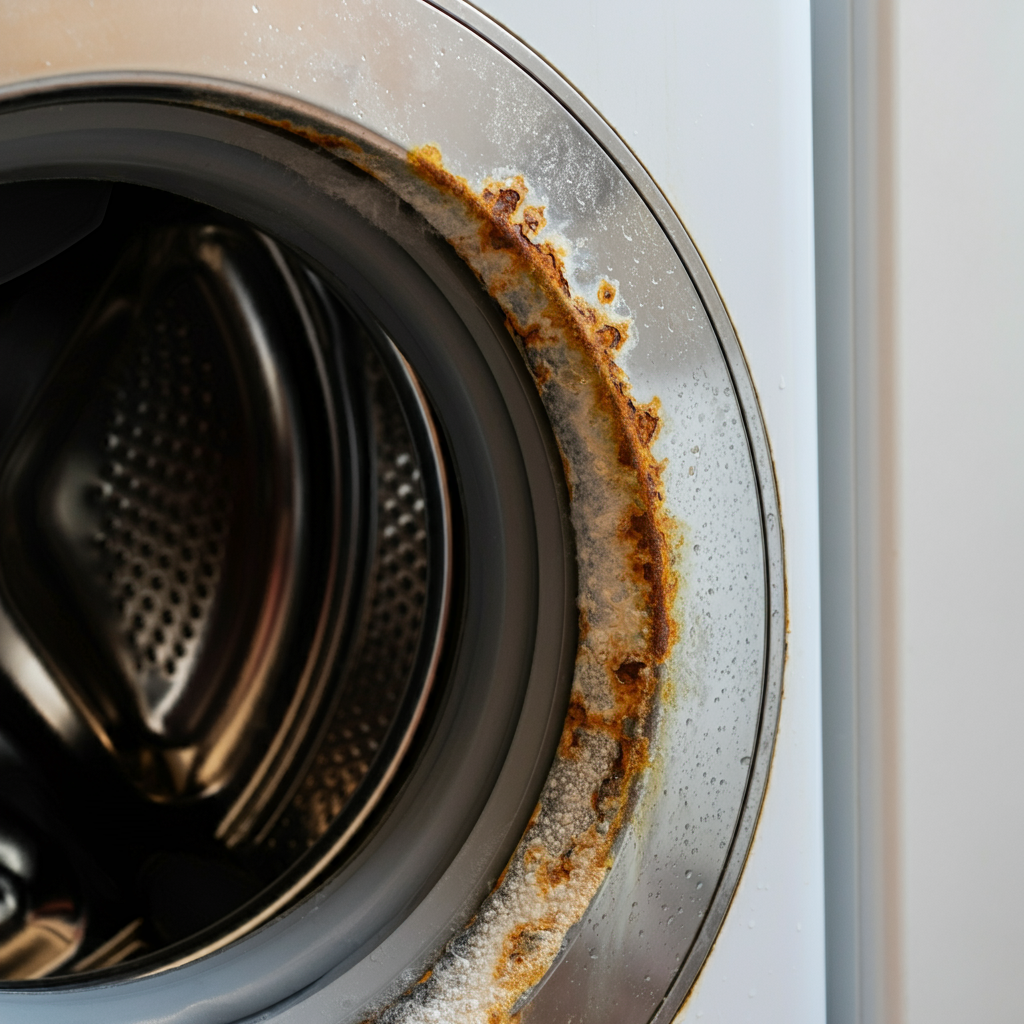
What Size Water Softener for Family of 6: The Formula That Works

Wondering what size water softener for family of 6? Discover the formula to ensure perfect water quality!

Assessing Water Softener Size

Picking the right water softener size is key for large families like ours. Let’s figure out what helps us run smoothly and keep our water treatment top-notch.

Factors to Consider

When figuring out what size water softener for a family of 6 works best, we need to weigh a few things:  

  • Daily Water Use: Picture this—each of us splashing through about 82 gallons every day. So for a crew of six, we’re talking somewhere in the ballpark of 492 gallons daily. Knowing our water habits is step one in picking the right water softener.
  • Water Hardness Levels: Depending on where we live, our home’s water might be hard as nails or soft as a pillow. Decoding the water’s hardness is next in line for figuring out the size of our softener.
  • Rated Capacity of the Softener: This is all about how much ick (measured in grains) the softener can handle before it taps out and needs a refresh. For us, a softener handling 48,000 grains makes the cut.

Importance of Sizing Correctly

Parents and Children Drinking Water Getting the size just right is like nailing a perfect recipe for water happiness because:  

  • Efficiency: If the softener’s too small, it’s going to strain, much like squeezing into jeans that have seen more pizza nights than gym days. It won’t keep up with our needs and might wear out faster.
  • Longevity of the System: A softener that’s just the right fit sticks around longer. It doesn’t feel overworked and stressed, saving us bucks in the long run from unnecessary repairs or replacements.

Here’s a handy dandy table to see water use and softener sizes:  

Family Size Estimated Daily Usage (gallons) Recommended Softener Size (grains)
2 160 32,000
4 320 48,000
6 480 64,000

So there you have it. Figuring out our family’s water game plan and the hardness levels, mixed with the right capacity, points us to our perfect water softener. If we’re in doubt, checking out options like a water softener calculator is a good way to dive deeper and make sure we’re covered.

Understanding Water Softener Capacity

Get Water Score for Free Alright folks, we’re here to dive into the wild world of water softeners, all to help you make a savvy choice for your home sweet home. It’s all about those grain stats, and we’re gonna break it down so it makes sense. Let’s dive right in and see how we can figure out what fits our family’s needs just right.

Grain Capacity Explanation

So, you’re probably wondering, what’s this grain capacity jazz all about? It’s basically the measure of how much gunk (like calcium and magnesium—you know, the stuff that makes your water as hard as a math test) a water softener can tackle before it needs to hit pause for a refresh. Picture each grain as a tiny soldier tasked with the mission to keep your water soft and lovely. Knowing this helps ensure our water softener won’t tap out when we’re knee-deep in laundry or showering bliss. Here’s a quick cheat sheet for ya:  

Grain Capacity Family Size Vibes
30,000 grains Great for up to 4 people (chillin’ with low hardness)
40,000 grains Happy spot for 4-6 people (dealing with medium hardness)
60,000 grains Big fam or high hardness warriors

Calculating Grain Capacity Needs

Time to play water detective! Figuring out our water softener’s grain capacity ain’t rocket science, and we’ve got a straightforward formula for you. Here’s how it goes:

  1. Daily Water Usage: Multiply the number of folks in the fam by the average water they’ll splash down daily.
  2. Water Hardness: Now, take that daily usage and multiply it by how hardcore your water is (measured in grains per gallon, GPG for the old hands).

Try this on for size: Say we’ve got a bustling household of six, each gulping down 65 gallons a day. If our water boasts a hardness of 11 grains per gallon, here’s how the math shakes out: [\text{Daily Grain Requirement} = (\text{Family Members} \times \text{Daily Water Usage}) \times \text{Hardness}] [\text{Daily Grain Requirement} = (6 \times 65) \times 11 = 4,290 \text{ grains}] So, we need a powerhouse water softener ready to zap away at least 4,290 grains every day. And if you want to breeze through this calculation stuff, hit up our water softener calculator. For those of us chillin’ in a mid-hardness zone, a 30,000 to 40,000-grain capacity should do just fine. Get down to the nitty-gritty with our water softener sizing chart. By sizing up our daily water antics and the grit in our H2O, we’re set to pick a water softener that’ll keep things flowing smooth for our crew of six.

Effects of Undersized Water Softeners

When picking a water softener, we all need to make sure it fits our household needs just right. Going too small can lead to headaches that aren’t just annoying but might also cost us more and damage our gear.

Underperformance Issues

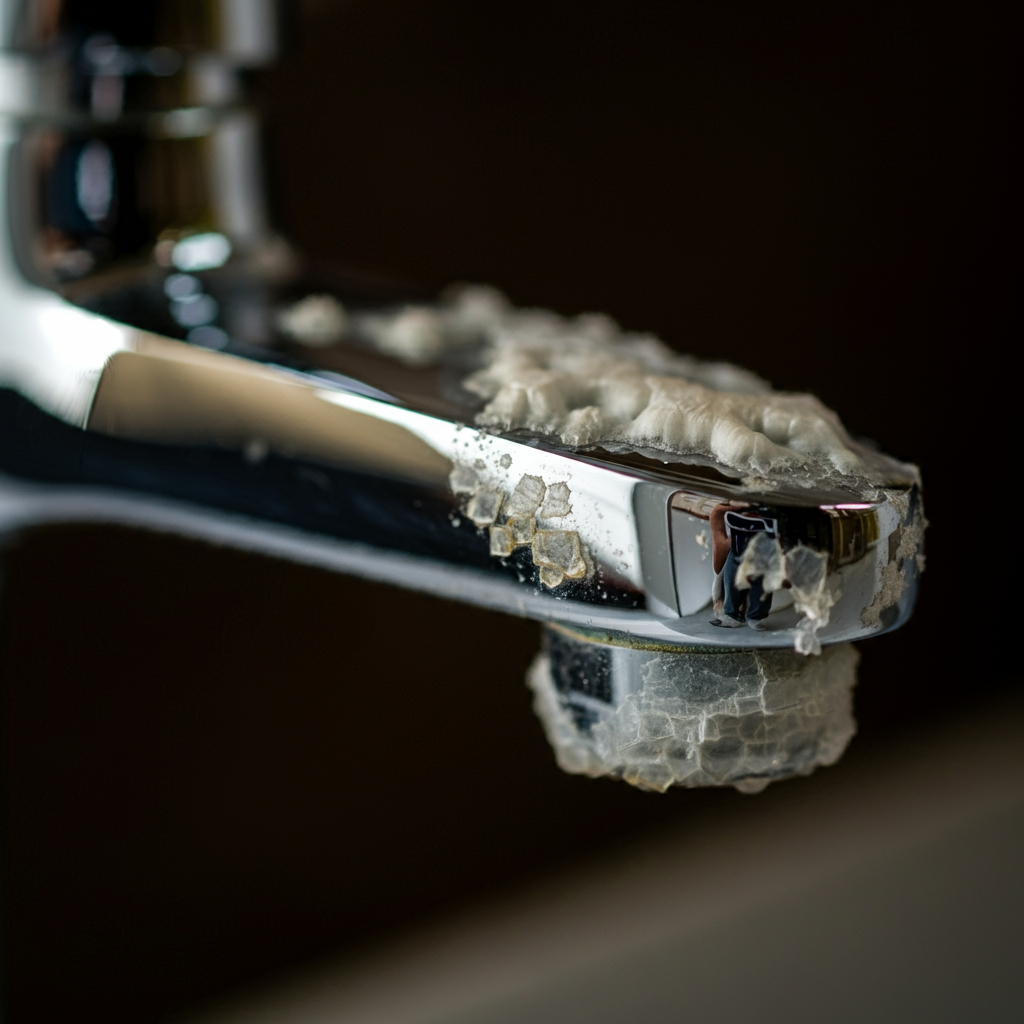
Get Water Score for Free If your water softener is too small, it might miss the mark on handling hard water properly. That leftover hardness can get real annoying, showing up as low water pressure or making us burn through water and salt faster, which beats the purpose of having the darn thing in the first place! If we’ve got loads of thirsty mouths to feed – say six of us – this turns into an even bigger deal. A tiny softener just won’t cut it, and we’ll see nasty scale showing up on our faucets and appliances, clear signs that the hard water issue’s far from solved. Don’t shortchange yourself; we can find tools online, like a water softener size calculator, and they make picking the right size less of a guessing game.

Mechanical Strain Consequences

Choosing a softener that’s too small is like forcing our car to run a marathon every day – it’s gonna wear out quick. If it’s cranking out cycles more often because it can’t keep up, the whole shebang – motor and everything – might give out sooner than we’d hoped. You’ll likely face more breakdowns and repair bills. Let’s be honest, that sounds like unnecessary stress. Getting a softener that’s up to snuff helps our system work smoothly, tackles hard water like a champ, and keeps the bucks from flying out of our wallets. Having a well-sized beast running our home’s water can save us from breakdowns, surprise repair bills, and the dreaded early shopping for a new unit when it should’ve lasted years longer!

Risks of Oversized Water Softeners

So, you’re thinking about getting a water softener, right? Well, diving headfirst into an oversized one could leave you with a few more headaches than you’d like. Let’s chew over why picking the right size matters.

Water and Salt Waste

Going for a big ol’ water softener can be like buying a tractor to mow your lawn—it’s overkill! Bigger units handle more water and grains per gallon than necessary. What does that mean? Loads of wasted water and salt, not to mention your hard-earned cash down the drain. Yup, according to some sources, folks often see gallons of precious water go whoosh due to oversized softeners not doing their job efficiently. Picture it this way: slapping a 40,000-grain tank in when you need just 30,000 grains is like throwing a party for 40 when only 30 show up—all that extra salt is just money wasted! Here’s what that mess looks like on paper:  

Water Hardness (GPG) Right Size Softener Too Big Softener Wasting
5-10 30,000 40,000 Tons
15-20 40,000 60,000 Mountain

Over-Softening Effects

But, waste isn’t the only villain here. Too much softening can cause more harm than good. Nobody wants their morning coffee tasting a bit too salty, right? Over-softened water can throw off the mineral mojo needed for household stuff, even mess with the taste. Water softer than grandma’s mashed potatoes might be a pickle, especially if you’re counting your sodium intake (SoftPro Water Systems). Here’s the scoop on over-softening fun:  

  • Flavor Flop: Water can end up with a salty note that might just ruin your morning tea.
  • Scale surprise: Oddly enough, too much softening can create a breeding ground for hard water scale, throwing off your plans for shiny new appliances.

Choosing the correctly sized water softener is a big deal—it saves you trouble and keeps those dollars in your pocket. Make sure you’ve got a softener that ticks all the boxes for your household needs without piling up unnecessary waste. For more sizing help, peek at our water softener sizing chart to find the perfect fit for families of all shapes and sizes.

Determining Family Needs

Figuring out just the right size for a water softener is like Goldilocks testing porridge—too hot, too cold, or just right? So, what we gotta do is think about how much water we guzzle down each day and size up how hard the water comes out of the tap.

Daily Water Usage

Here’s the deal: most folks use between 80 to 100 gallons of water a day. That’s like soaking in a tub or running a few loads of laundry. For a squad of six—like us—you gotta crunch the numbers to see where you’re at with daily gallons:

Family Members Gallons per Day Total Daily Usage (Gallons)
6 80 – 100 480 – 600

Yeah, we’re slurping up between 480 and 600 gallons each day! This isn’t just a random number; it’s our magic number to find the right softener. Too small of a softener, and we’ll have it cranking 24/7. No bueno.

Water Hardness Levels

Next stop, hardness. This one’s kinda sneaky. Most of us in the U.S. are dealing with hard water—like, 85% of us—so the stakes are high. Average water trudges in at about 60 grains per gallon (GPG) of hardness. That’s no joke! Getting this wrong is like missing the clown at the dunk tank. More salt, more money down the drain. We got some tried-and-true numbers here to help guide us:

Household Size Water Hardness (GPG) Recommended Softener Capacity (Grains)
4 5 – 10 30,000
4 15 – 20 40,000
6 5 – 10 45,000
6 15 – 20 60,000

So, if we’re looking at our crew of six, swimming in water with 15 GPG, we’re hunting for a softener boasting a capacity of around 60,000 grains. By measuring up our daily splash fest and hardness, we can snag the softener that’ll fit like a glove. If you’re still scratching your head, there’s the handy water softener calculator to back you up.

Selecting the Right Water Softener

Alright, folks! Picking out a water softener for our big family of six isn’t just a casual trip to the store. Yep, we need to make sure we’re getting the right size and type to keep us swimming in soft water. Let’s take a look at how to choose the perfect match for our needs—and the perks of going double on those tanks.

Matching Capacity to Usage

We want to make sure we don’t go overboard or fall short with our water softener capacity. For our six-person crew, we’re eyeballing around 48,000 grains. This one’s pretty solid if our water isn’t super hard—think maybe not as tough as a rock? Here’s what the numbers say:  

Family Size Water Hardness Level Recommended Softener Capacity
Family of 4 5-10 grains per gallon 30,000 grains
Family of 4 15-20 grains per gallon 40,000 grains
Family of 6 Low to Medium 48,000 grains

This capacity lets us keep using water throughout the day without running dry. Accurately measuring our water’s hardness can dodge us the drama of picking the wrong gizmo, which might just guzzle salt and cash.

Dual-Tank Options

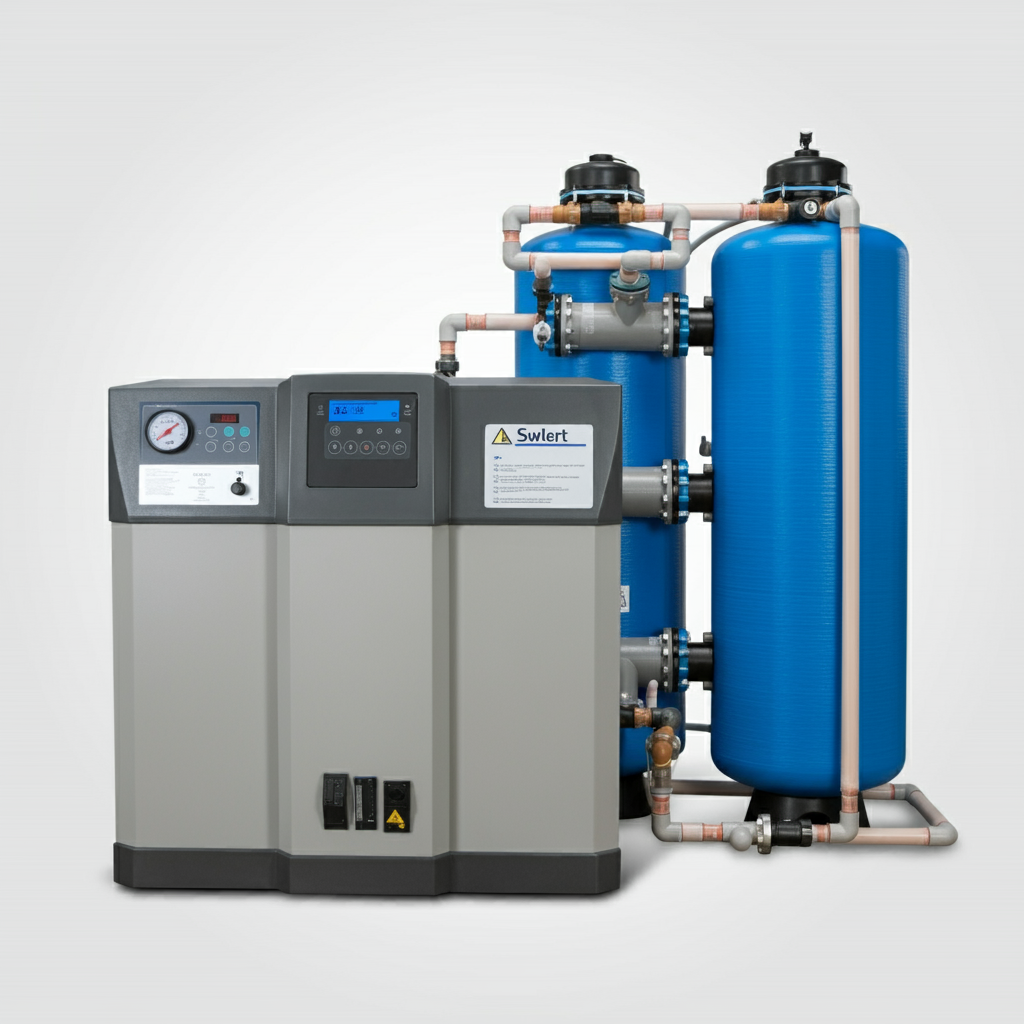
Got a bustling household? Well, a dual-tank water softener might just be our best friend. These setups let one tank do its thing—cleaning itself up—while the other keeps the water soft. Perfect for when everyone’s hogging the showers or appliances, especially in the early hours when we all need to look presentable. Dual-tank systems are champs at keeping the water soft, never running low even when it’s rebooting itself. It’s like having a backup plan running smoothly—anytime, all the time. Mapping out our daily water habits and size preference will help us nail down the perfect water softener. We might want to check out a water softener size calculator or a sizing chart to help us hit the right mark.  

Small Size Water Softener Guide: Big Performance in Tiny Spaces

Discover how a small size water softener can deliver big results! Let’s find the perfect fit for our homes!

Understanding Water Softener Sizing

Getting the right fit for our water softener can really make a difference around the house. It’s not just about plugging a gadget into our water line; it’s about making sure it works just right, keeping our showers pleasant, dishes clean, and pipes happy. So, let’s dive into why this makes such a splash when we’re picking out a small size water softener.

Importance of Correct Sizing

A Girl With A Glass of Water in hand Imagine trying to win a race with shoes that don’t fit – a water softener that’s too small or too big for our home does the same thing. A pint-sized unit just can’t keep our water as soft as we need, leaving us with scale buildup and countless angry plumbing fixtures. Too big, and it’ll burn through energy like a kid in a candy store, hiking up bills and putting out SOS signals in the form of frequent cleaning cycles. Finding our Goldilocks softener involves a bit of math: calculate our daily water splashing and the level of ‘hardness’ – that’s how much calcium and magnesium are hitching a ride in our water. We’re not leaving you high and dry here; we’ve got all the deets lined up in our article about what size water softener do I need.

Factors Influencing Sizing

Alright, here’s what we need to think about when sizing up our water softener:

  1. Water Hardness: Depending on where we live, the water’s mineral mix changes. Knowing how stubborn our water is helps pick the right softener capacity. We aren’t just talking teaspoons here; softeners are measured in grains. Get the numbers right, and we’re in for the win.

2. Daily Water Usage: Time to judge how splashy our house really is. Got a bunch of folks taking showers, doing laundry, and the rest? Our softener needs to step up the challenge. Bigger households or those with morning rush-hour showers need systems that handle peak usage, so we’re not cutting it close at zero hour.   3. Regeneration Frequency: Here’s the science-y bit: softeners reset the clock about every week. That means multiplying our household water love by the hardness levels, tally that up over seven days – and voilà – we get how much softening action we need in one go.   4. Household Size: More folks equal more water. An extended family or the ultimate party house needs something beefier. And, let’s not forget those moments where everyone just needs water… like, now.   With these in mind, piecing together the best size water softener for us becomes less of a guessing game and more like fitting together a puzzle. To top it off, there are handy tools like our water softener calculator, ready to crunch the numbers and make sure we’re all set.

Maintenance of Small Water Softeners

  Get Water Score for Free   To keep our tiny water bender doing its thing, we gotta do some regular check-ups, just like how we pamper our favorite pair of sneakers. A bit of daily, monthly, and yearly TLC will make sure our gadget keeps churning out smooth, soft water without us having to pull our hair out over tough, crusty problems.  

Daily Check-ups

  Every day, let’s pause for a coffee break—oh, and peek at our water softener. Here’s the scoop on what to do:  

Task Description
Salt Level Peek inside to make sure there’s enough salt partying in the brine tank. If it’s running low, hard water might crash the party.
Salt Bridges Be on the lookout for salt who decided to unite and form a wall, stopping proper salt dissolving. Not cool, buddy.

  Doing these lil’ checks keeps things running smooth, like an engine well-oiled with love.  

Monthly Inspections

  Once a month, put on your inspector detective hat to ensure our small water wizard is still conjuring its magic like a champ.  

  • Brine Tank Watch: Snooping for buildup or funky stuff that’s up to no good.
  • Resin Bed Cleanup: If you notice water’s still acting tough, even with TLC, the resin might be suspiciously feisty due to iron or chlorine overload. Check for sneaky salt usage or weird specks in the water joungers.
  • Salt Type Spot-check: Splurge a bit on the good quality salt designed for these softies; it’s like treating it to a gourmet meal, ensuring no surprise clogs.

Annual Servicing

  Water Softener Small Size   Once a year, call in the pros—because sometimes it’s nice to let the experts do their thing.  

  • Resin Swap: If it’s been riding with us for a good few years, the resin could probably use a fresh start to keep the ion mojo flowing.
  • System Tweak: Have someone tune it to match how much water we’re using now and its hardness—like making sure your guitar’s pitch perfect.
  • Overall Check: The pros do a double check for any sneaky troubles trying to brew, saving us some future headaches and cash.

  By sticking to a routine like this, our trustworthy lil’ water softener sidekick can keep on rockin’. Curious about the right size for our setup? Check out our guide to find the perfect dance partner: water softener size calculator.  

Calculating Water Softener Size

  Let’s talk about sizing that little water softener of ours without getting lost in math land. There’s two ways we can do it – a grains calculation and taking a peek at our household size.  

Grains Calculation Method

  Alright, here’s the scoop on grains – it ticks off how tough your water is. A simple equation keeps this hassle-free:   [ \text{Daily Softening Requirement} = \text{Number of People} \times \text{Average Daily Water Use} \times \text{Water Hardness} ]   Multiply that by seven ’cause these softeners like to take a weekly breather. Let’s see it shake out in some digits:  

What We’re Looking At Example Statistics
Number of Folks 4
Daily Water Use (gallons) 60
Water Hardness (grains per gallon) 10
Weekly Softening Needs 4 * 60 * 10 * 7 = 16,800 grains

  So, we’re after a gizmo that takes on at least 16,800 grains weekly if we’re a family of four. For more number fun, give our water softener calculator a whirl.  

Household Size Considerations

  A quick eyeball on the fam gives us insight into our water antics. Simply put, more folks, more water. Think about these when sizing that water wizard of ours:  

  • We gulp about 50 to 100 gallons per person daily.
  • Mornings and weekends can see that spike.
  • Watering the garden in summer? That’s more gallons gone too.

  Here’s a neat chart to take a glance at:  

Family Bunch Daily Water Use (gallons)
1-2 30 – 60
3-4 60 – 120
5-6 120 – 180

  Marrying our usage with local water hardness helps us dodge hiccups like picking a too-small or gigantic system. Yep, getting that sweet spot will keep our taps running smoothly. For more juicy details, head over to our guide on how to size a water softener.  

Right-Sizing Your Compact Water Softener

  Get Water Score for Free   Picking the right water softener isn’t rocket science, but it’s a call you want to get right. Going too big or too small can lead to headaches and additional costs.  

Risks of Undersizing

  Opt for a tiny water softener, and you might regret it later. Picture this: your tap’s trickling with hard water. Annoying, right? Here’s what you might face:  

  • Limescale Buildup: Hard water minerals love clinging to pipes and appliances, setting up messes that could mean costly repairs down the line.
  • Soap Scum Formation: Insufficiently softened water is the perfect breeding ground for soap scum, leaving dishes and laundry dingy.
  • Inefficient Appliance Performance: Appliances are moody. Hard water makes them work harder, wearing them out faster and possibly requiring repairs.

  Getting stuck with these problems is the worst, and they could hike up our bills big time. If you’re in doubt, leaning a bit towards a larger unit could save you stress and tears.  

Risks of Oversizing

  Going big, on the other hand, isn’t always better. Here’s what’s at stake with a too-large unit:  

  • Wasted Energy: Bigger units like to hog electricity, ballooning our bills.
  • Maintenance Costs: Larger systems often mean extensive upkeep, which can chip away at your savings.
  • Short Cycling: A massive softener could hit shuffle too soon, not running long enough to do the job right, leaving you with water that’s less than perfect.

  When making your pick, don’t just eyeball the size; we’ve gotta think about how much water we use daily and what we use it for. Families using hot water like it’s going out of style might need something on the larger side.   Not to worry, figuring this out isn’t some complicated puzzle. We’ve got handy tools like our water softener size calculator and a guide on how to size water softener for more help. Picking the right softener will ensure our system runs smoothly, saving us time and money.

Professional Advice for Compact Sizing

  Finding that perfect fit for a small size water softener is key to keeping things running smoothly. We’re here to walk you through the two big steps: checking out your water quality and getting some expert help.  

Water Quality Assessment

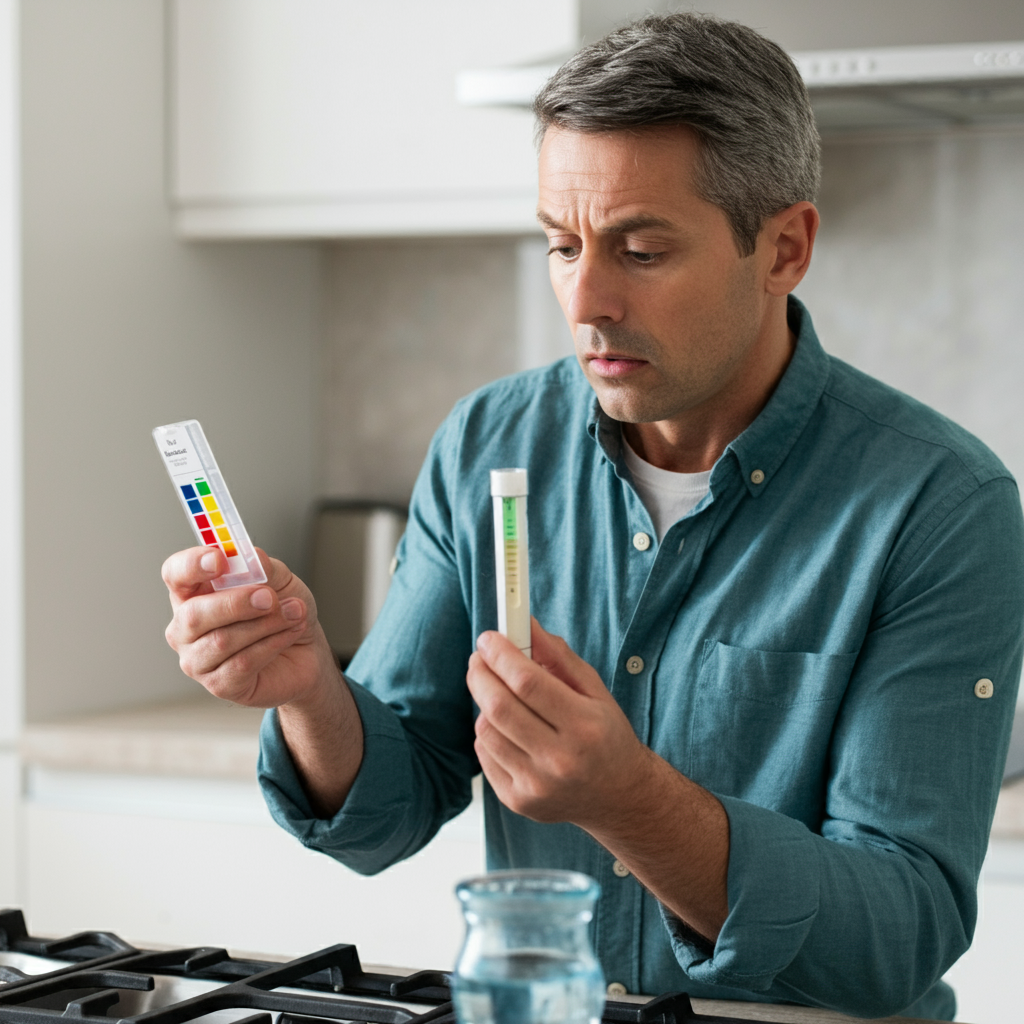
  Before diving into a decision, let’s get to know our water better. Water hardness – basically, how ‘crunchy’ your water is – is measured in grains per gallon (gpg). More grains, more crunch, more work for your softener.   You’ve got options: snag a water hardness test kit and play water scientist or hand off a sample to your local lab heroes. Figuring out your water’s hardness and how much of it you splash around daily can really help us zero in on what you need.  

Hardness Level (gpg) What It Means
0 – 3 Soft as a cloud
4 – 7 Kind of hard
8 – 12 Hard enough
13+ Extra crunchy

  Think about what you do with your water. Some chores might like it a little softer.  

Consulting Water Specialists

  When things get tricky, water specialists are like your personal water whisperers. They’ll peek at your home’s water quirks and habits to find a system that’s just right. Plus, they can get the setup going without a hitch.   Make sure to chat about how many folks you’ve got under your roof and your water usage. Big families tend to soak up more water, and that counts! Specialists take all this info and match you with a softener that gets the job done.   All in all, by understanding what’s in our water and calling in the pros, we can figure out the perfect small size water softener for our home. To crunch more numbers, check out our water softener calculator or take a peek at the water softener sizing chart for more tips.

How Big Are Water Softeners? The Truth About Space Requirements

Wondering how big water softeners really are? Discover the space you need for the perfect fit in your home!

Determining Water Softener Size

  We’ve all dealt with hard water at some point—pesky build-up on shower heads, spots on dishes, and soap that just won’t lather. Picking the right water softener size can make these issues a thing of the past. It’s about finding the sweet spot between tank size and what your household consumes.   So dealing with hard water in your home requires the right water softening solution. Our guide helps you choose from various water softeners and systems for optimal performance.  

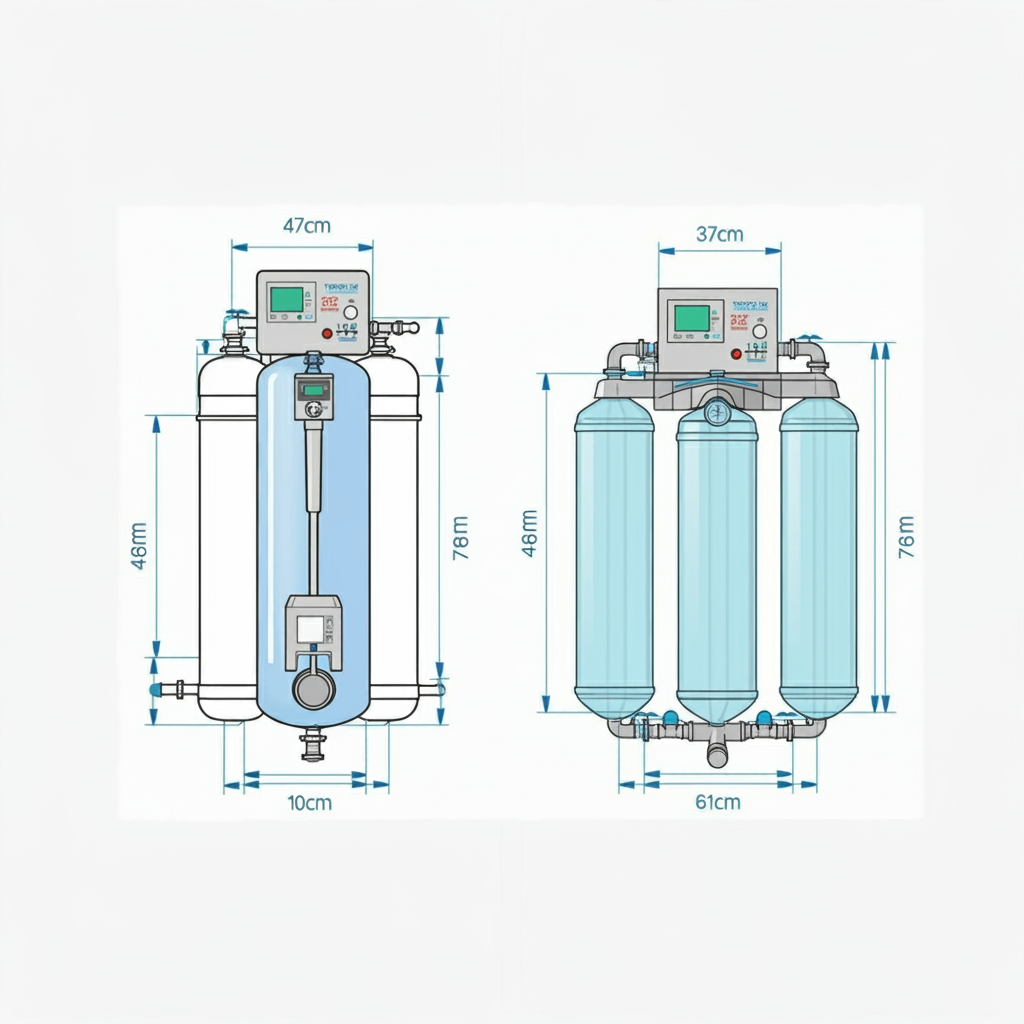
Measuring Water Softener Tank Dimensions

  Let’s start by checking out the softener itself. You’ll often find a sticker on the tank that’s doing you a solid by broadcasting its size. It’s a big 4-digit combo—first two numbers tell diameter in inches, last two share height. Cool trick, right? So, “1048” would mean 10 inches wide and 48 inches tall.   Water Softener Size   No sticker playbook available? No sweat. We’ll get hands-on. Measure from the ground up to where the tank does its best giraffe neck impression. Then, grab a measuring tape or string, and see what the circumference is—quick math trick: divide that circumference by 3.14, voilà, you’ve got the diameter.  

Measurement Hack How-To Guru Move
Sticker Peek Look for the 4-digit cheat sheet on tank size.
DIY Measurement Height? Easy. Diameter? Use a string and some math.

Calculating Tank Capacity of Water Softeners

  Once we’ve got tank size down, it’s number-crunching time. No one wants a softener that’s too small to handle peak shower hours or too big and just plain wasteful. The size of our crew at home and how hard the water is are crucial for getting that perfect size.   To make life easier, think of handy tools like a water softener size calculator. It’s like having a calculator for that math test you dread—just pop in your details, and it’ll chat out the right numbers.   Here’s a cheat sheet for getting your bearings:  

Family Crew Water Hogging Daily (gallons) Softener Muscles Needed (grains)
Just the Two of Us 30 – 60 30,000
Average Netflix Family 60 – 100 40,000
Big Fam, Big Water 100+ 50,000+

  Figuring out this combo game means fewer headaches and cleaner water. With the right softener size, your water will be smooth sailing, not like the Mississippi during flood season.   For a deeper dive, hit up our page on how big are water softeners or check out the easy-peasy water softener sizing chart.  

Understanding Water Softener Types

  When we think about getting a water softener, it’s good to know what options are out there so we can choose the best one for our homes.   Get Water Score for Free

Compact Softener Advantages

  Compact softeners are all the rage, especially for folks with smaller living spaces. Check out why they’re awesome:  

  • Space Savvy: These little gadgets gobble up way less room than their bigger counterparts. If you’re short on space or living in something cozy like an apartment, a small water softener system could be the answer.


  • Water and Salt Sippers: Compact models use a lot less water and salt, cutting down your bills and helping out your pocket.


  • Lightning-Fast Regeneration: These guys get back to action much quicker, meaning you won’t be left without softened water for long.


  For anyone dreaming of a compact fix without losing performance, these systems deliver efficiency. By thinking about our space, our water use, and our personal wants, we can pick the best system for our home.   And hey, if you’re on the fence about which softener to pick, dive into our guides on how to determine what size water softener or use our water softener calculator to make the best call.  

Factors Influencing Water Softeners Sizing

  Setting up a water softener ain’t rocket science, but a few things definitely come into play when figuring out the right size for it. Nailing these aspects helps us snag the best unit, ready to give a top-notch performance without throwing a wrench in the works at home.  

Water Hardness Levels

  Let’s chat about water hardness – yep, it’s a biggie when choosing our water softener’s size. Across the country, different areas have varying amounts of minerals like calcium and magnesium chilling in the water. A water hardness test is our first stop. Knowing the hardness lets us pick out a unit that boots out those pesky minerals, stopping issues like clogged pipes, soap that just won’t wash away, and those pesky stains. These gadgets have their limits depending on how hard they’re fighting — measured in grains per gallon (GPG).   Understanding your water’s hardness level is crucial. Most homes have hard water ranging from 3-20 grains per gallon. Modern filtration systems can effectively remove these minerals.  

Hardness Level (GPG) Recommended Water Softener Capacity (Grains)
0-3 24,000 – 32,000
4-7 32,000 – 40,000
8-10 40,000 – 48,000
11+ 48,000+

Household Water Consumption

  Gotta think about how much water we burn through, too—our household’s water use can swing a lot, depending on how many folks are around and how everyone uses it. On average, a family of four might gulp down about 400 gallons daily.   So, it’s key to snag a softener that can keep up with our daily dose and deal with our water’s minerals effectively.

Peak Water Usage Considerations

  Then there’s the whole peak usage deal. You know the drill—those busy hours when everyone’s showering, doing laundry, and running the dishwasher at the same time. We need to make sure our softener can hang during these times without missing a beat. If there’s a bustling household and water usage is up there, it’s smart to pick a unit that allows water to zip through at over 16 gallons per minute (GPM) when things get busy.  

Peak Water Usage (GPM) Suggested Water Softener Type
1-4 Standard Models
5-10 Mid-Range Units
11-16+ High-Performance Models

  When we look at these pieceswater hardness, daily water use, and those high-use times—we get the full picture of sizing our water softener. For that extra bit of insight, a peek at our water softener sizing chart or trying out our water softener size calculator can help us nail it.  

Size Selection Considerations

  When we’re picking out the perfect water softener for the crib, a few things can really tip the scale.  How many of us are in the house, where we can squeeze in the softener, and how we can get the most bang for our buck – all come into play.   Water Softener Height

Household Size and Water Usage

  Our crew size is a big deal when figuring out what water softener will do the trick. More folks mean more water partyin’ with showers, laundry, and dishes. According to some sources, if you pack the house, you’ll need a beefier softener to keep up with all the action.   Jump into this rough guide to check out what size softener you might need, based on how many bodies are under your roof:  

Household Size Recommended Softener Size
1-2 People 0.75 – 1.0 Cubic Feet
3-4 People 1.0 – 1.5 Cubic Feet
5-6 People 1.5 – 2.0 Cubic Feet
7+ People 2.0 Cubic Feet or more

Space Constraints and Installation Locations

  Space – yeah, it’s important too. We must find a snug spot for our water softener where we won’t break a sweat when refilling salt or doing some TLC. The spot should be close to a drain for those backwash cycles for smooth sailing.   Having a smaller pad or apartment? A small water softener system might be just the ticket. These compact champs can soften up those hard-water blues and are great for solo dwellers or small squads, while mid-sized set-ups cater to bigger clans.  

Finding the Right Balance

  Get Water Score for Free   Figuring out the right size involves walking the line between what we need and the cozy confines of our spot. Go too small, and you might find yourself dealing with dribbly showers or hard water stains. Go too big, and the system might get lazy with water just sliding past without getting softened.   Wanna be smart about it? Hit up a water softener calculator or peep the water softener sizing chart. By getting a grip on our needs and fitting the softener into our living space, we can make sure we get top-notch performance in knocking out hard water issues.  

What Size Water Softener perfect for me?

  Picking the right water softener for our homes is like solving a puzzle—get the right pieces in place, and things run smooth. Let’s make sure we cover all bases so we’re not caught with a cold shower when we least expect it.  

Adding Reserve Capacity

  Who wants to run out of soft water just when it’s hair-washing day? Let’s talk a little insurance. We recommend adding about 30% extra capacity to breathe easy between regenerations. Most folks find that regenerating every 5 to 7 days, while using up 75% of the system’s potential, keeps about a quarter tank in reserve—a just-in-case buffer for those “Whoops, I left the sprinkler on” moments. More info from the water pros can be found on our website.  

Regeneration Frequency

  Stick with us as we walk this tightrope of regeneration. The magic window is the same 5 to 7 days. Use up 75% of the tank, leave 25% in the wings—just in case Aunt Linda decides to drop by for the weekend. This keeps the system humming along and soft water flowing.  

Example Sizing Scenarios

  Got your thinking caps on? Let’s mull over a couple of real-life scenarios to light the way.  

Example 1

  Say we’ve got a family of three, guzzling down 225 gallons a day:  

  • Water Hardness Level: 15 GPG (grains per gallon)
  • Required System Size: 32,000 grains
  • Set Up Capacity: 24,000 grains

  With a strategy like this, our water isn’t just soft—it’s smooth sailing.  

Example 2

  Then there’s another trio, each usually knocking back 75 gallons:  

  • Water Hardness Level: 15 GPG
  • Required System Size: 32,000 grains
  • Set Up Capacity: 24,000 grains

  Both these setups show that when we match water habits with hardness, sweet soft water is ours for the taking. Our trusty water softener sizing chart can help make things crystal clear.   By sticking to these guidelines, we ensure our water’s as reliable as Grandma’s Sunday gravy. Want something tailor-made for your water needs? Check out our water softener calculator and find your perfect match.  

Expert Guidance and Installation on Water Softener Sizes

  Ah, water softeners—those magical machines that save our pipes from becoming a calcium-crusted nightmare. Let’s dive into the nitty-gritty of picking the right size and getting these beauties up and running without losing our minds.  

Consulting Water Treatment Professionals

  First off, it’s like trying to find that perfect pair of jeans—one size does not fit all. There are several factors to consider when choosing a water softener, such as your household size, daily water usage, and the hardness level of your water. These elements determine the capacity of the system you need, ensuring it can handle your home’s hard water woes without frequent regeneration cycles.   We need a pro’s eye to assess our water situation thoroughly. These experts don’t just look at hardness but also test for other issues like iron content or sediment that might require additional filtration systems. For instance, if your water contains high levels of iron, adding an iron filter before the softener can prevent damage to the system and improve its efficiency.   Once the pros have analyzed your water quality and needs, they’ll recommend a system tailored to your home. Modern softeners often come with advanced control features, making it easier to monitor performance and manage maintenance. So, no need to sweat the size or installation hassles—these experts will steer us in the right direction for a smoother experience.  

Installation Considerations

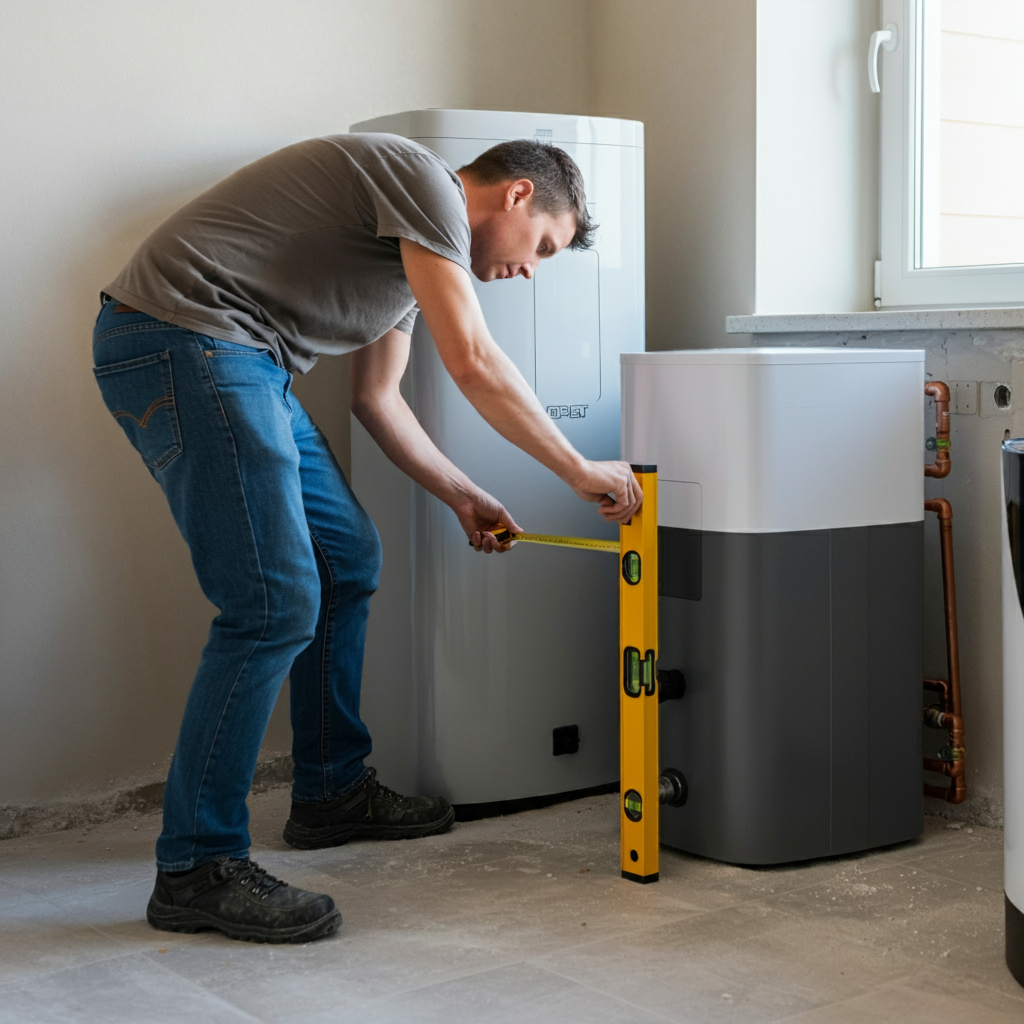
  Okay, now that we’ve got our perfect softener, it’s time to install the thing. Sure, you don’t need to be a master plumber, but you should know which end of a wrench is up. If it all starts to feel like a Rubik’s cube with water pipes, call in the pros—better safe than soggy.Finding a prime spot for the softener is key; it should be within arm’s reach for all those salt refills and not too far from a drain (because backwash cycles are a thing).   Additionally, consider installing a sediment filter before the softener to protect it from dirt and debris, which can damage the system over time. This step is especially important if your water supply contains visible particles or impurities.If your water has issues with acidity, you might also need a neutralizer to adjust the pH before it reaches the softener.   For homes with multiple tanks, such as those combining softeners with filtration systems, ensure proper spacing and flow direction between units for optimal performance.  

Space-Saving Strategies for Family

  In a space where every inch counts—think small apartments or houses with a knack for tucking appliances into closets—consider compact softener models. These pint-sized powerhouses might look small, but they pack a punch, treating our water without cramping our style. Whether we stack it vertically or slide it horizontally, making the most of our layout means more freedom for other stuff, like that dream espresso machine.   By leaning on experts and planning carefully, we’ll strike the perfect balance between efficiency and space. For those of us who like keeping things precise, tools like a water softener calculator can be our best friends—like a personal shopper, but for water. So let’s make those hard water troubles a thing of the past and toast to softer, sweeter days ahead.  

Let’s Wrap Up

  So when choosing a water softener, consider your household’s daily water consumption and water hardness levels. Modern systems include advanced filtration capabilities and efficient salt usage.   The tank size should match your family’s needs, while various parts and filters ensure proper maintenance. So don’t make assumptions on large or small sizes softeners. Also don’t try to size water softener yourself. Focus on the series that suits you well.   Most water softeners can handle different levels of hardness and iron, making them suitable for various applications. The main components include the resin tanksalt storage, and specialized filters. These parts work together to remove calcium, magnesium, and iron from your water supply.   Lastly, keep energy efficiency in mind. Some modern systems are designed to minimize power usage during regeneration cycles, which can save on energy costs in the long run. A little foresight during installation can go a long way in ensuring smooth operation and reducing maintenance hassles later.

Water Softener System Size Calculator: The Tool Experts Trust

Use our trusted water softener system size calculator to find the perfect fit for your home’s needs!

Understanding Water Softener Sizing

When we’re diving into the world of water softeners, the biggest puzzle piece we need to fit is the size of the system. Getting it just right means we’re sipping on the finest utility water, free from the hard stuff and keeping everything running smooth as butter. When selecting a water softener, consider the technical specifications of your system. The flow rate in gpm determines the appropriate volume capacity needed. Popular manufacturers offer various series with different applications. Most systems include replacement cartridges and RO compatibility, backed by a solid warranty. For additional resources, you are just a click away from our calculator tool (all rights reserved).

Why Getting the Right Water Softener Size Matters

Picking the right-sized water softener isn’t just a good idea—it’s a game-changer.
The properly sized systems zaps away those hardness gremlins, sparing your pipes and gadgets from nasty mineral buildups. Pick one that’s too small, and you’ll be juggling hard water problems. Go too big, and you’ll be tossing money down the drain with inefficient operations.

Water Softener System Size Calculator
Think of it like this: water softeners should get their makeover every 1-4 days. Striking this balance helps us keep the good times flowing without having to pull our hair out over stubborn residue or hiccups from hard-water horrors.

What Factors into Sizing?

Deciding the right size isn’t pulling numbers out of a hat. Several big players influence our choice:

  1. Water Hardness: This is like the villain of the story, measured in grains per gallon (GPG). The bigger the bad guy (hardness), the tougher the hero (softener) needed.
  2. Daily Water Usage: Imagine your house as a thirsty beast. You gotta know how much it gulps down each day, calculated by the number of residents and their daily splashings.
  3. Safety Factor: Because life loves twists and turns, we toss in a multiplier of 1.5 to keep things smooth, even when everyone’s breaking records at the water tap.

Here’s a quick look at how these puzzle pieces fit into the bigger picture of water softener sizing:

Factor Hey, What’s This?
Water Hardness (GPG) It’s about the hard stuff in water. More of it means a bigger softener.
Daily Water Usage How many gallons do we burn through in a day? More usage, bigger solution.
Safety Factor A 1.5x buffer to handle any water drama that pops up unexpectedly.

Need a bit of hand-holding to work out the details? Our water softener system size calculator is here to zap those numbers into place. Plus, if you’re into the nitty-gritty, we’ve got some splendid guides like how to size a water softener and what size water softener do I need that are worth a peek.

Calculation Method for Water Softeners System Sizing

Get Free Water Score Alright, so we’re diving into the nitty-gritty of figuring out how beefy your water softener needs to be. Our mission is to make sure your system isn’t just humdrum but jazzed up to work like a charm. Best Water Softener System Size Calculator

Water Hardness and Usage Considerations

If you’re aiming for the perfect water softener size, you gotta think about two biggies: how hard your water is (that’s in grains per gallon, if you’re wondering), and how much water you guzzle down on the daily. Water hardness? It’s not some guessing game – each place has its quirks, so grabbing a test kit isn’t a bad idea. We’ll even throw a lifeline with a water softener hardness calculator at your disposal, just to make life easier. And water usage? This is a no-brainer. Here, the average US household does about 80-100 gallons per head every single day. So, a pack of four people would burn through about 320 to 400 gallons daily.

Household Size Estimated Daily Water Usage (gallons)
1 person 80-100
2 people 160-200
3 people 240-300
4 people 320-400
5 people 400-500

Once you’ve cracked both the hardness code and daily H2O habits, you’re all geared up to pick the right softener size.

Water Softener Sizing Calculator Equation

To get this softener sizing biz just right, we’ve got an equation to lean on. Here’s the magic recipe: [ \text{Softener Size (in grains)} = \text{Daily Water Usage (gallons)} \times \text{Water Hardness (GPG)} \times 1.5 ] That extra 1.5 is like leaving a tip for unexpected bumps. It’s our guardrail to keep the water comfy and smooth, even if you suddenly decide to host the next family reunion at your place.

Safety Factor in Sizing

Let’s talk about why we need that safety margin. Go too tight and risk ending up with solidified water scaling your taps during Sunday dishwashing mayhem. Ideally, softeners are expected to regenerate their mojo every 1-3 days. Give them extra breathing room, and they’ll take on volatile water cravings without breaking a sweat, sparing you from unwanted crusty surprises. So, snapping up the right-sized water softener doesn’t have to be a brain-bender. With our handy water softener system size calculator, you’re all set to streamline the math while factoring in the muscle of your water hardness and usage. Master this method, and you’ll soon be basking in the sweet perks of a system that’s just the right fit for your home needs.

Practical Sizing Examples

Sizing for Residential Use

Choosing the right size for a water softener at home is like Goldilocks trying to find the perfect bowl of porridge—just enough, but not too much. We’ve got to think about how much water our household guzzles each day, mixed with the water hardness level. To hit the sweet spot with our softener size, we can roll with this simple math: Daily Water Usage (gallons) x Water Hardness (grains per gallon) x Safety Factor (usually 1.5) = Softener Size (grains) Let’s paint a picture with a three-person household, each using 75 gallons a day. That’s a big sip of 225 gallons total per day. If we’re dealing with 15 grains of water hardness per gallon, here’s our math:

Math Breakdown Number Crunch
Daily Water Usage 225 gallons
Water Hardness 15 grains per gallon
Safety Factor 1.5
Needed Softener Size 225 x 15 x 1.5 = 5062.4 grains

Ideally, for a wiggle room, a softener with a 32,000-grain capacity would keep things peachy, soaking up the changes in our usage like a pro.

Consulting Professionals for Accuracy

Our formula is a great starting point, but when it comes to getting things spot on, it’s smart to call in the cavalry—certified water treatment pros. They’re the gurus who can dive into details like iron levels or whether we’re using well water. These folks can zero in on what our water really needs, so we’re not just guessing. Consulting with these experts is like having a personalized GPS while others might be using a paper map. They make sure we’re not sidetracked by cookie-cutter calculations. Plus, they can recommend a model that efficiently goes through its cycles. Regular regeneration is key—aiming for every 1-3 days keeps our water flowing silky smooth and helps our system stay alive and kicking. Bottom line? We want a water softener that fits our home like a glove and rolls with the daily punches of water use. For a thorough rundown on getting the size just right, check out our water softener size calculator.

Optimal Softener Efficiency

Picking a water softener isn’t rocket science, but we want to get it right—nobody likes wasting money or dealing with crusty faucets. Let’s break down the essentials: performing like a champ with the least salt required. Two big things to ponder are grains capacity versus salt usage and how much resin we’ve got packed in there.

Grains Capacity vs. Salt Efficiency

Think of grains capacity like your softener’s stomach size—how much hardness it can gulp down before needing a refresh. Numbers like 24,000, 32,000, 48,000, or 64,000 grains get tossed around. But heads up, that number isn’t always about how much resin is inside or how much salt you’re gonna use. Striking the right balance between capacity and salt is key for saving cash and cutting waste. Look at these grain capacities and the salt they munch on:

Grains Capacity Salt Munch (lbs per refresh)
24,000 6
32,000 8
48,000 12
64,000 16

Curious about what fits your casa? Hit up our water softener size calculator for a custom fit.

Resin Amount and System Capacity

Ever wonder what’s inside the softener box doing all the magic? It’s resin, and how much there is, turns out, kinda matters a lot. Different resins play the game differently, especially when it comes to soaking up water hardness. Here’s what we gotta think about:

  1. Raw Water Toughness: Testing your water’s hardness helps steer you to the right beast of a softener.
  2. Resin Power: Not all resins are created equal, so matching them up with our water’s needs is a must.
  3. Salt to the Rescue: How much salt does it take to kick-start a regeneration? Get this wrong and efficiency takes a nosedive with resin amount.

Ideally, our trusty softener should get its job done with a regen every 1 to 3 days to keep things humming smoothly without the system folding under pressure. Visit more often, and we might get away with a smaller unit—saving some bucks. But wait too long, and we’re back to battling tough water because the resin is overworked. Plus, don’t forget to account for both average and peak water flow when picking the size. Focusing on the regular flow while ensuring it can handle those busy mornings is the goal. For more tips on choosing the right size, scope out our guide on how to size a water softener. By using your noggin about grain capacity, salt rules, and resin needs, we’ll end up with a water softener that’s got our backs at home.

Detailed Sizing Considerations

Choosing the right water softener for our place means looking at a bunch of stuff that can mess with the size we need. We gotta think about how much iron is in our water, how to figure out the hardness, and how using a water softener can be eco-friendly. Trusted Water Softener System Size Calculator

Impact of Iron Levels in Sizing

Iron in our water? Yeah, that’s gotta be part of our math. Iron can tweak how a softener works. So, for every 1 part of iron per million, tack on 5 grains of hardness when we’re picking a size. This little trick helps us get a softener that’s good at wrangling both hardness and iron.

Example Table for Iron Adjustment

Iron Content (ppm) Extra Grains Needed
1 5
2 10
3 15
4 20

Converting Hardness Measurements

We gotta make sure our softener can handle our water’s hardness, right? First, convert the hardness from parts per million to grains per gallon. Easy peasy: just divide that number by 17.1. This way, we snag the right size softener for our needs.

Example of Hardness Conversion

Hardness (ppm) Grains per Gallon (GPG)
100 5.85
200 11.70
300 17.55
400 23.40

Environmental Benefits of Softeners

Getting the right size water softening systems isn’t just good for us; it’s good for the Earth too. Water Systems gives less wear on our pipes and appliances, saving us repairs and replacements in the long run. Plus, our water appliances work better, saving energy and water. This results in low maintenance of water filters too. Get Free Water Score Let’s not forget, it tackles soap scum like a champ. That means less gunk to clean and fewer harsh cleaners in our sinks and showers. So, picking a water softener not only makes our water top-notch but also helps give Mother Nature a high-five. Figuring out the right size softener means checking iron levels and converting hardness right. And hey, knowing it helps the environment? That’s just the cherry on top. For more tips on getting the right size, check our articles on how to size water softener and water softener size.

Industrial Size Considerations

Alright folks, we’re diving into the nitty-gritty of picking out the perfect industrial water softener. It’s like shopping for a new car, but without the dealership coffee. The goal: get the size just right. We’ve gotta think about flow rates, how often we need to hit reset with regeneration, and how to handle those stressful peak demands.

Flow Rate Insight

Flow rates are kinda like traffic on the highway; too fast or too slow, and you’re in for a bumpy ride. Too much flow can slam your resin bed down like a packed elevator, taking away its mojo. Meanwhile, trickling water just sneaks around, letting hard minerals sneak past the system. Here’s the lowdown:

  • Continuous Flow Rate: Our usual cruise control speed, meant for typical daily use.
  • Peak Flow Rate: Pedal-to-the-metal when demand spikes.

We base our softener’s size on the average continuous flow but make sure it can handle the peak times without turning every shower into a mineral bath.

Flow Rate Type Description
Continuous Flow Rate Your regular flow during everyday operations
Peak Flow Rate The flow you need when everyone’s rushing to the taps

Water Softeners Regeneration Frequency

Regeneration is your system’s coffee break. Ideally, it should recharge every 1-3 days, or whenever the system needs a little boost. If it happens more often, it’s like having a mini-me; cheaper upfront but with a bit more running around. Less frequent? Well, that could leave the door open for some hard water sneaking by unnoticed. It’s all about keeping the system in tip-top shape to not only perform well but stick around for years.

Handling Those Peak Demand Moments

Got a facility that’s like a rollercoaster with its water use? Then, my friends, a demand flow setup is what you might consider. This involves a tag team of softener tanks that you can turn on and off as needed. Or consider a soft water storage tank – it’s like having a backup singer, complete with pumps to keep the flow steady during those peak times. Dig deep into your water habits and pinpoint those heavy usage times. This will help steer us towards the perfect softener size to tackle industrial needs with finesse. For more information on the best size for your setup, give our water softener systems size calculator a whirl and find perfect size water softener. Understanding water softener sizing requires technical expertise to ensure optimal performance. Our resources help you choose the perfect system for your needs.

How Does a Water Softener’s Regeneration Process Impact Sizing Considerations?

A water softener’s regeneration process directly impacts the size you need by determining how often and effectively the system can recharge itself to continue providing soft water. Choosing the correct size is crucial for ensuring the softener can handle your household’s specific water hardness and usage demands. At WaterSoftenerSizing.com, we understand that selecting the right water softener can be overwhelming. With various models, technologies, and sizing options available, it’s easy to feel lost in the sea of choices. That’s why we’re here to guide you through the intricacies of water softener sizing, starting with the often-overlooked factor of regeneration. The regeneration process, in essence, is the water softener’s way of cleaning itself. It involves flushing the system with a highly concentrated salt solution (brine) to remove the accumulated hardness minerals, primarily calcium and magnesium, from the resin bed. This resin bed is the heart of the water softener, where the ion exchange process takes place. The capacity of the resin bed, which is the amount of hardness minerals it can hold before requiring regeneration, is a critical factor in determining the overall size and efficiency of the water softener. An undersized water softener will regenerate too frequently, leading to excessive salt and water consumption, increased wear and tear on the system, and potentially inconsistent soft water delivery. Conversely, an oversized unit may not regenerate often enough, resulting in reduced efficiency and wasted capacity. In this comprehensive guide, we will delve into the different types of regeneration, their impact on sizing, and how to calculate the ideal size for your specific needs. We’ll also discuss advanced regeneration technologies, troubleshooting tips, and the role of reputable organizations like the Water Quality Association (WQA) in ensuring the performance and quality of water softeners. By the end of this article, you’ll be equipped with the knowledge to confidently choose a water softener that provides your home with a continuous supply of soft, luxurious water.

What is Water Softener Regeneration?

Water softener regeneration is the process by which a water softener cleans and recharges itself to continue removing hardness minerals from your water supply. Over time, the resin beads within the softener become saturated with calcium and magnesium ions, the culprits behind hard water. Regeneration essentially flushes these minerals out, restoring the softener’s effectiveness.

The Ion Exchange Process

Ion exchange is the core process that enables water softening. It involves the exchange of ions between two electrolytes or between an electrolyte solution and a complex. In the context of water softening, it specifically refers to the exchange of calcium (Ca2+) and magnesium (Mg2+) ions, which cause water hardness, with sodium (Na+) ions. The ion exchange process occurs within the resin bed of the water softener. This bed is filled with tiny resin beads, typically made of polystyrene, that are supercharged with sodium ions. As hard water passes through the resin bed, the calcium and magnesium ions are attracted to the beads and swap places with the sodium ions. This exchange effectively “softens” the water by removing the hardness minerals. Over time, the resin beads become saturated with calcium and magnesium, reducing their ability to soften water. This is where regeneration comes in. During regeneration, a highly concentrated brine solution (water saturated with sodium chloride, or salt) is flushed through the resin bed. The high concentration of sodium ions in the brine solution forces the calcium and magnesium ions off the resin beads and replaces them with sodium ions. This replenishes the resin bed and prepares it for another cycle of softening. Let’s break down the key entities involved in the ion exchange process:

  • Resin bed: The container filled with resin beads where the ion exchange takes place. Think of it as a filter that traps hardness minerals.
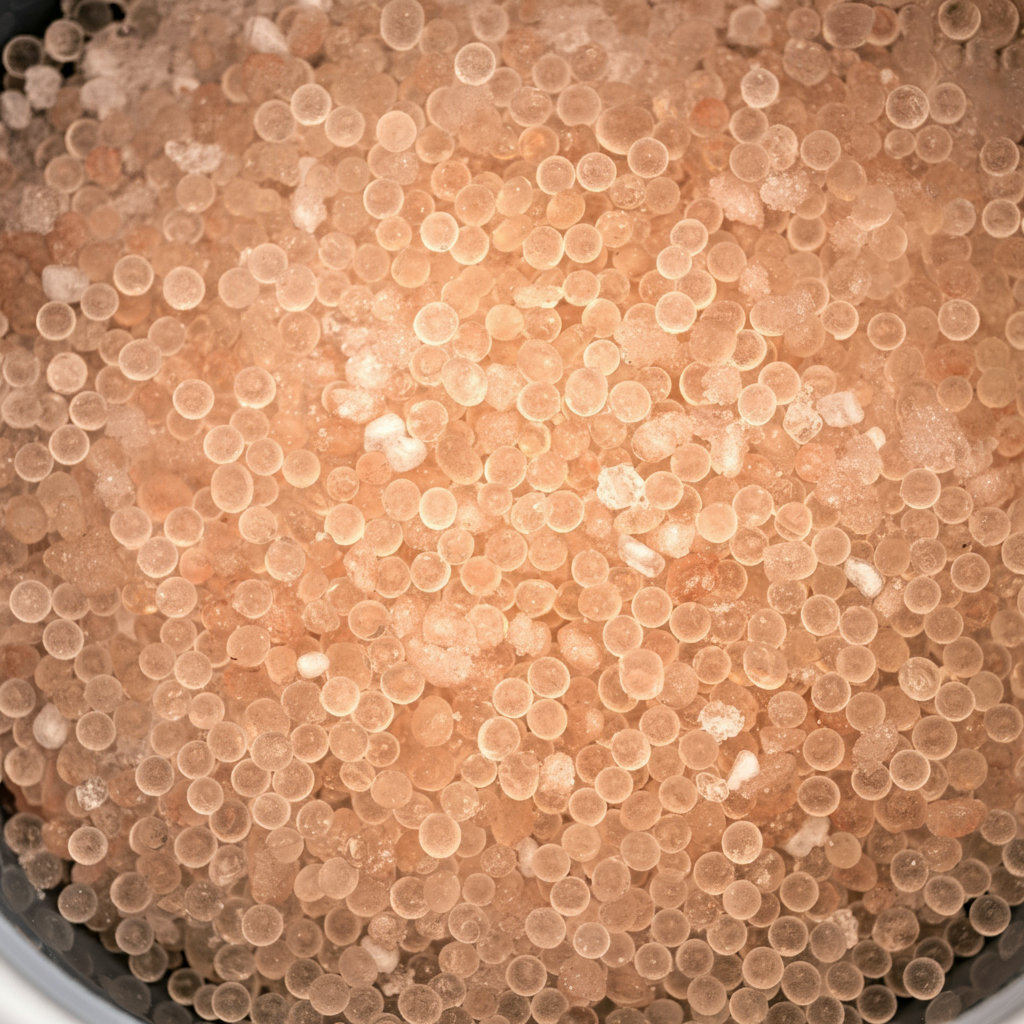
  • Resin beads: Tiny plastic beads coated with sodium ions. They act as magnets for calcium and magnesium ions.
  • Calcium and magnesium ions: The minerals that cause water hardness. They are responsible for soap scum, scale buildup, and other hard water problems.
  • Sodium ions: Harmless ions that replace calcium and magnesium during the ion exchange process.
  • Brine solution: A highly concentrated salt solution used to recharge the resin beads during regeneration.

To visualize the ion exchange process, imagine a dance floor where calcium and magnesium are the unwanted guests. The resin beads are the bouncers who escort them out and invite sodium in as their replacements. The brine solution acts as a refreshment station for the bouncers, providing them with a fresh supply of sodium to keep the dance floor (your water) soft and enjoyable.

Types of Water Softener Regeneration

Water softeners utilize two primary types of regeneration: time-initiated regeneration (TIR) and demand-initiated regeneration (DIR). Each method offers distinct advantages and disadvantages, and understanding their differences is crucial for determining the optimal water softener size for your home.

Time-Initiated Regeneration (TIR)

Time-initiated regeneration operates on a preset schedule, typically every few days. Regardless of actual water usage, the softener will regenerate at the designated time. Pros:

  • Simple and predictable: Easy to set up and maintain.
  • Suitable for consistent water usage: Works well for households with relatively stable water consumption patterns.

Cons:

  • Inefficient: May regenerate even when the resin bed isn’t fully exhausted, wasting water and salt.
  • Risk of hard water breakthrough: If water usage spikes unexpectedly, the softener might run out of capacity before the next scheduled regeneration.

Demand-Initiated Regeneration (DIR)

Demand-initiated regeneration, on the other hand, is triggered by actual water usage. The softener monitors the volume of water passing through and initiates regeneration only when the resin bed’s capacity is nearing exhaustion. Pros:

  • Efficient: Regenerates only when necessary, conserving water and salt.
  • Adapts to fluctuating water usage: Ideal for households with varying water consumption patterns.
  • Minimizes hard water breakthrough: Ensures a continuous supply of soft water even during peak usage periods.

Cons:

  • More complex: Requires a meter to monitor water usage.
  • May be more expensive: DIR systems often come with a higher upfront cost.

Comparing TIR and DIR

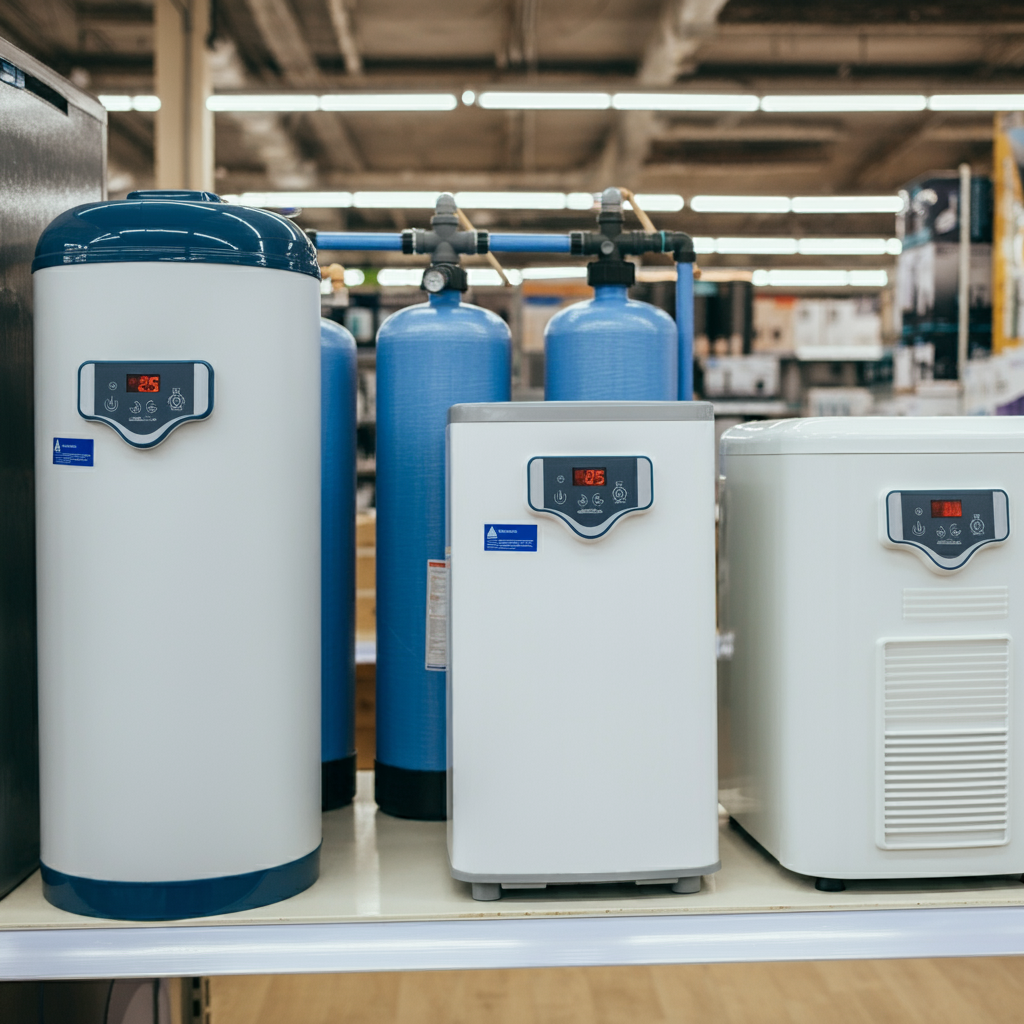
Think of TIR as a traditional alarm clock that goes off at the same time every day, regardless of whether you’ve had enough sleep. DIR, on the other hand, is like a smart alarm clock that wakes you up based on your sleep cycle, ensuring you’re well-rested. Similarly, TIR regenerates on a fixed schedule, while DIR adapts to your actual water usage, maximizing efficiency and minimizing waste. Different sized water softener units suitable for various household needs

How Does Regeneration Frequency Impact Water Softener Sizing?

The frequency with which your water softener regenerates is directly tied to its sizing. Essentially, the more often your softener needs to regenerate, the larger its capacity needs to be to avoid running out of soft water. To illustrate, imagine two households:

  1. Household A: A large family of six with multiple bathrooms and appliances that use a lot of water daily. Their water supply also has a high hardness level.
  2. Household B: A couple living in a smaller home with moderate water usage and moderately hard water.

Household A, due to higher water consumption and harder water, will deplete the softener’s resin bed faster, necessitating more frequent regeneration cycles. If their softener is undersized, they’ll experience periods of hard water between regenerations. Conversely, Household B, with lower water usage and less hard water, can go longer between regeneration cycles.

Capacity and Frequency: A Balancing Act

The capacity of a water softener is measured in grains, which indicates the amount of hardness minerals it can remove before needing regeneration. The higher the capacity, the longer the softener can go between regenerations. However, capacity alone doesn’t determine the ideal softener size. You also need to consider the frequency of regeneration, which depends on two main factors:

  • Water hardness: Measured in grains per gallon (gpg), water hardness indicates the concentration of calcium and magnesium in your water. The higher the hardness level, the more frequently your softener will need to regenerate.
  • Daily water usage: This is the amount of water your household uses on a daily basis. Higher water usage means more minerals passing through the softener, leading to faster resin bed exhaustion and more frequent regeneration.

To strike the right balance, you need a softener with a capacity that can handle your household’s daily water usage while accounting for the hardness of your water. If your softener is undersized, it will regenerate too often, wasting water and salt and potentially leading to periods of hard water. If it’s oversized, you’ll have excess capacity that goes unused, resulting in unnecessary expenses. Let’s break down this concept further with a real-world example. A family of four with a water hardness level of 15 gpg and daily water usage of 300 gallons would need a softener with a capacity of at least 4,500 grains (15 gpg x 300 gallons) to avoid frequent regeneration. However, if their water hardness level was 30 gpg, they would need a softener with double the capacity (9,000 grains) to maintain the same regeneration frequency.

Calculating Regeneration Frequency and Capacity

Understanding the relationship between regeneration frequency, water hardness, and daily usage is essential for accurate water softener sizing. While the precise calculations can be complex, we’ll provide you with a simplified approach and a valuable tool to make the process easier. Calculating Regeneration Frequency:

  1. Determine your water hardness: You can obtain this information from your local water supplier or by using a home water testing kit. Water hardness is typically measured in grains per gallon (gpg).
  2. Estimate your daily water usage: Calculate the average amount of water your household uses per day. You can find typical water usage figures for various appliances and activities online.
  3. Multiply water hardness by daily usage: This gives you the total grains of hardness your softener needs to remove daily.
  4. Factor in regeneration frequency: Most softeners are designed to regenerate about once a week. To calculate the required capacity, multiply your daily grain removal by 7 (days in a week).

Example: Let’s say your water hardness is 10 gpg and your household uses 300 gallons of water per day.

  • Daily grain removal: 10 gpg * 300 gallons = 3,000 grains
  • Weekly capacity: 3,000 grains/day * 7 days/week = 21,000 grains

This means you’ll need a water softener with a capacity of at least 21,000 grains to regenerate weekly and keep up with your household’s demand. Water Softener Sizing Calculator To simplify the process and ensure accurate results, we at WaterSoftenerSizing.com have developed a user-friendly water softener sizing calculator. Our calculator takes into account your water hardness, daily water usage, household size, and other relevant factors to recommend the optimal softener size for your specific needs. Important Considerations:

  • Salt efficiency: Some water softeners are more salt-efficient than others, meaning they use less salt per regeneration. Consider this factor when choosing a softener, especially if you have concerns about salt usage.
  • Future needs: If you anticipate changes in your household size or water usage, choose a softener with a slightly higher capacity to accommodate future needs.
  • Professional consultation: For complex water conditions or if you’re unsure about the calculations, it’s always best to consult with a water treatment professional certified by the Water Quality Association (WQA). They can assess your specific needs and recommend the most suitable softener size and model.

Choosing the Right Size Water Softener

Choosing the right size water softener goes beyond just understanding regeneration frequency and capacity. Several other factors come into play, each contributing to the overall efficiency and effectiveness of your water softening system.

  • Household Size: The number of people in your home directly impacts your daily water usage. A larger household typically consumes more water, requiring a softener with a higher capacity to accommodate the increased demand. 
  • Daily Water Usage: As discussed earlier, your daily water consumption is a key factor in determining regeneration frequency and the required softener size. It’s essential to consider the water usage of all appliances and activities, such as showers, baths, laundry, and dishwashing. 
  • Future Water Usage Projections: If you anticipate changes in your household size, such as a growing family or additional occupants, it’s wise to choose a water softener with a slightly larger capacity to accommodate future needs. 
  • Specific Water Needs: Do you have any specific water-related concerns beyond general hardness? For instance, if you have high levels of iron or manganese in your water, you might need a specialized softener with additional filtration capabilities. These factors can influence the type and size of softener you choose. 
  • Local Water Hardness: The hardness level of your water supply, measured in grains per gallon (gpg), is a crucial factor in determining regeneration frequency and softener capacity. You can obtain this information from your local water supplier or by conducting a water test. 

To ensure you select the right water softener for your unique needs, we recommend consulting with a water treatment professional certified by the Water Quality Association (WQA). These experts have the knowledge and experience to assess your specific requirements and recommend the most suitable softener size and model. They can also help you interpret your water test results and understand the various features and technologies available in the market.

Water Softener Sizing Mistakes to Avoid

Choosing the right water softener size is a balance of art and science. While our calculator at WaterSoftenerSizing.com can guide you, it’s crucial to understand common sizing mistakes that can impact your water softener’s performance and lifespan.

Undersizing: A Recipe for Frustration

Imagine buying a car that’s too small for your family. It might work for short trips, but long journeys become uncomfortable and cramped. Similarly, an undersized water softener might handle your water needs occasionally, but it will struggle to keep up with regular demand. Consequences of undersizing:

  • Frequent Regeneration: An undersized unit will exhaust its resin capacity quickly, leading to excessive regeneration cycles. This wastes water and salt, driving up your utility bills.
  • Inconsistent Soft Water: If the softener regenerates too often, you might experience periods of hard water, especially during peak usage times. This can lead to soap scum, dry skin, and spotty dishes.
  • Reduced Lifespan: The constant strain of frequent regeneration can shorten the lifespan of your water softener, leading to costly repairs or replacements sooner than expected.

Signs your water softener might be undersized:

  • Hard water symptoms: If you notice soap scum, dry skin, or scale buildup on fixtures, your softener might not be keeping up with demand.
  • Frequent salt refills: If you’re refilling the brine tank more often than expected, it could be a sign of excessive regeneration.
  • Unusual noises or malfunctions: An overworked softener might make strange noises or experience mechanical problems due to the increased workload.

Oversizing: Not Always the Solution

While undersizing is a common issue, oversizing a water softener isn’t necessarily the answer. It’s like buying a huge SUV when you only need a compact car for daily commuting. Consequences of oversizing:

  • Wasted Capacity: An oversized softener will have excess resin capacity that goes unused, leading to inefficient salt and water usage during regeneration.
  • Higher Upfront Cost: Larger softeners generally cost more, so you’ll be paying extra for capacity you don’t need.
  • Potential for Bacterial Growth: If the resin bed isn’t fully utilized between regenerations, it can become a breeding ground for bacteria, compromising water quality.

Optimizing Regeneration for Efficiency

While the regeneration process is essential for maintaining a water softener’s effectiveness, it’s equally important to ensure it operates efficiently. Several factors contribute to regeneration efficiency, ultimately affecting the longevity of your softener and its impact on your utility bills.

The Role of Salt in Regeneration

Salt plays a crucial role in the regeneration process. During regeneration, the brine solution, a highly concentrated salt solution, is used to flush the resin bed and replace the captured hardness minerals with sodium ions. The type and amount of salt you use can significantly impact the efficiency of this process. The most common type of salt used in water softeners is sodium chloride (NaCl), available in various forms such as rock salt, solar salt, evaporated salt, and potassium chloride (KCl). Each type has its own advantages and drawbacks, and the choice often depends on personal preference and budget. For instance, rock salt is the most affordable option but can leave sediment in the brine tank, potentially requiring more frequent cleaning. Solar salt and evaporated salt are purer forms of sodium chloride, dissolving more easily and minimizing sediment buildup. Potassium chloride is a good alternative for those concerned about sodium intake but can be more expensive.

The Importance of Regular Maintenance

Regular maintenance is vital to ensure optimal regeneration and prolong the lifespan of your water softener. This includes:

  • Checking salt levels: Regularly check the salt level in the brine tank and refill it when needed. Low salt levels can lead to inefficient regeneration and hard water breakthrough.
  • Cleaning the brine tank: Periodically clean the brine tank to remove salt residue and sediment buildup, which can hinder the regeneration process.
  • Inspecting and cleaning the injector and drain line: These components are critical for proper brine flow during regeneration. Ensure they are clean and free of obstructions.
  • Monitoring water softener settings: Check that the softener is programmed correctly for your water hardness and usage. Incorrect settings can lead to inefficient regeneration or wasted salt and water.

Advanced Regeneration Technologies

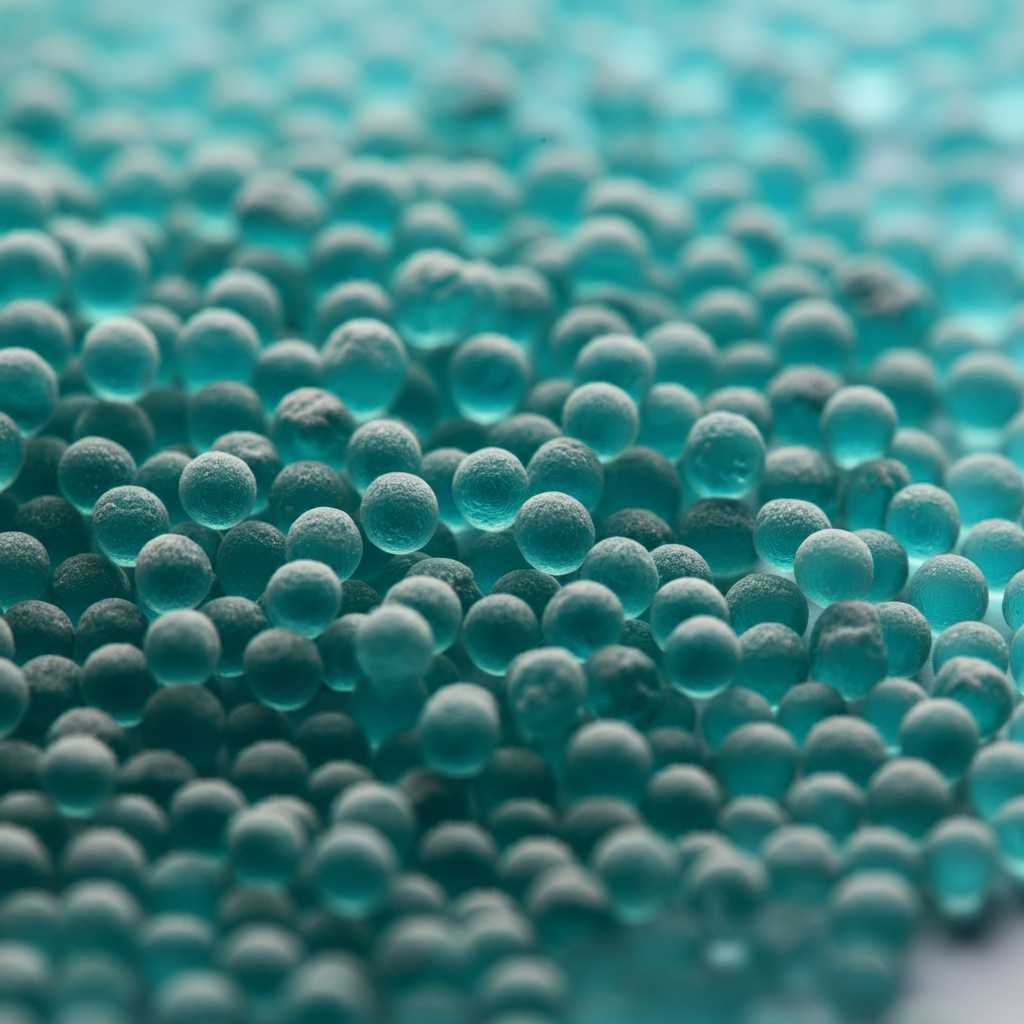
While time-initiated and demand-initiated regeneration are the most common methods, advancements in water softener technology have led to the development of more sophisticated regeneration techniques aimed at further optimizing efficiency and performance. Microscopic view of resin beads used in water softeners to remove hard water minerals

Proportional Brining

Proportional brining is a type of demand-initiated regeneration that takes efficiency a step further. Instead of using a fixed amount of salt for each regeneration cycle, proportional brining adjusts the amount of salt used based on the actual hardness minerals removed. This means that the softener only uses the necessary amount of salt for regeneration, minimizing waste and reducing operating costs. For example, if your water usage is lower than usual during a particular week, the softener will use less salt during the next regeneration cycle, adapting to your actual needs. This can result in significant salt savings over time, especially in households with fluctuating water usage patterns.

Electronic Control Valves

Electronic control valves have revolutionized water softener technology, offering precise control over the regeneration process. These valves use sophisticated algorithms to monitor water flow, hardness levels, and other parameters, ensuring that regeneration is initiated only when necessary and optimized for maximum efficiency. Compared to traditional mechanical timers or meters, electronic control valves offer greater accuracy and flexibility. They can be programmed with multiple regeneration cycles, customized settings for water hardness and usage, and even remote access for monitoring and adjustments.

Benefits of Advanced Regeneration Technologies

  • Enhanced Efficiency: By tailoring regeneration to actual water usage and hardness levels, these technologies minimize water and salt waste, leading to lower operating costs and reduced environmental impact.
  • Consistent Soft Water: Advanced regeneration ensures that your softener is always ready to provide soft water, even during peak usage periods, eliminating the risk of hard water breakthrough.
  • Increased Lifespan: By optimizing salt usage and reducing the frequency of unnecessary regenerations, these technologies can extend the lifespan of your water softener, delaying the need for costly repairs or replacements.
  • User-Friendly: Many advanced softeners come with intuitive interfaces and smartphone apps, making it easy to monitor and control your system remotely.

While advanced regeneration technologies often come with a higher upfront cost, their long-term benefits in terms of efficiency, performance, and convenience can make them a worthwhile investment. If you’re looking for a water softener that offers cutting-edge features and maximum efficiency, consider exploring models with proportional brining or electronic control valves. These technologies represent the future of water softening, providing homeowners with a reliable, cost-effective, and eco-friendly solution for combating hard water.

Making the Right Choice: Your Path to Perfectly Soft Water

The regeneration process of a water softener plays a pivotal role in determining the right size for your home. Understanding how regeneration frequency, capacity, water hardness, and daily usage intertwine is key to selecting a softener that delivers optimal performance, efficiency, and value. By carefully considering these factors, utilizing our sizing calculator, and seeking guidance from a Water Quality Association (WQA) certified professional, you can confidently choose a water softener that meets your specific needs and budget. Remember, a well-sized water softener not only eliminates the frustrations of hard water but also protects your plumbing, appliances, and fixtures, ensuring a long-lasting and enjoyable soft water experience.

Key Takeaways

  • Regeneration is key: The frequency and efficiency of your water softener’s regeneration process directly impacts the size you need.
  • Two types: Time-initiated regeneration (TIR) operates on a fixed schedule, while demand-initiated regeneration (DIR) adapts to your water usage, offering greater efficiency.
  • Calculate carefully: Use our sizing calculator or consult a professional to determine the optimal softener capacity for your household’s water hardness and daily usage.
  • Avoid mistakes: Undersizing leads to frequent regeneration and hard water issues, while oversizing results in wasted capacity and higher costs.
  • Embrace technology: Consider advanced regeneration technologies like proportional brining and electronic control valves for enhanced efficiency and convenience.
  • Maintain regularly: Proper maintenance, including salt checks and brine tank cleaning, ensures optimal regeneration and extends the lifespan of your softener.

At WaterSoftenerSizing.com, we’re committed to helping you navigate the world of water softeners and find the perfect fit for your home.

Ready to take the next step?

Use our free water softener sizing calculator to get a personalized recommendation, or contact our team of experts for personalized assistance. We’re here to ensure you enjoy the many benefits of soft water for years to come.

How Does the Size of a Dual-tank Water Softener Compare to a Single-tank System?

Is a dual-tank water softener bigger than a single-tank system? Generally, yes. Dual-tank water softeners, like the popular Kinetico Premier Series, typically have a larger footprint than single-tank models due to the presence of a second resin tank. However, the exact dimensions can vary significantly depending on several factors, including brand, model, and capacity. At WaterSoftenerSizing.com, we understand that choosing the right water softener involves more than just understanding the technology—it’s also about finding a system that fits your space and budget. While dual-tank systems offer continuous soft water and high efficiency, their larger size might not be suitable for every home. Single-tank softeners, such as the GE GXSH40V, are more compact and budget-friendly, making them a good option for smaller households or those with limited installation space. The size of your water softener, whether single or dual-tank, will largely depend on its capacity, measured in grains. This indicates how much hardness the system can remove before needing regeneration. A higher grain capacity, like 48,000 grains, usually translates to a larger unit, regardless of the tank configuration. Other factors, such as tank orientation (vertical or horizontal) and additional features (built-in filters, larger brine tanks), can also influence the overall dimensions.

Direct Size Showdown: Single vs. Dual-Tank Dimensions

The physical dimensions of a water softener are important considerations, especially if you have limited space in your home. Let’s take a closer look at the typical size ranges for both single-tank and dual-tank models:

Average Dimensions of Single-Tank Softeners

Single-tank water softeners are generally more compact, with average dimensions falling within these ranges:

  • Height: 36-48 inches
  • Width: 10-20 inches
  • Depth: 15-25 inches

However, these are just averages, and the actual dimensions can vary based on the softener’s capacity. For instance, a smaller 30,000-grain system designed for a small household will naturally occupy less space than a larger 48,000-grain system intended for a bigger family or a home with very hard water.

Average Dimensions of Dual-Tank Softeners

Dual-tank water softeners, also known as twin-tank systems, are inherently larger due to the presence of a second resin tank. This additional tank allows for continuous soft water delivery even during regeneration cycles, a key advantage over single-tank models. On average, dual-tank softeners have these dimensions:

  • Height: 48-60 inches
  • Width: 15-30 inches
  • Depth: 20-30 inches

As with single-tank systems, the exact size of a dual-tank softener can fluctuate depending on its capacity and specific model.

Visual Comparison Table: Single vs. Dual-Tank Dimensions

Model Type Capacity (Grains) Height (in) Width (in) Depth (in)
GE GXSH40V Single-Tank 40,000 48 16 21
Fleck 5600SXT Single-Tank 48,000 54 10 21
Kinetico Premier Series Dual-Tank 48,000 52 24 29
Pelican NaturSoft Dual-Tank 32,000 44 24 17

Why the Extra Tank?

The second resin tank in a dual-tank system acts as a backup, ensuring uninterrupted soft water production. While one tank is regenerating (cleaning itself), the other tank takes over the softening process. This eliminates the downtime experienced with single-tank softeners during regeneration, providing a constant supply of softened water for your entire home.

Beyond Tanks: Other Factors That Influence Water Softener Size

While the number of tanks is a significant factor, it’s not the sole determinant of a water softener’s size. Several other elements come into play, impacting the overall dimensions and footprint of the unit.

Capacity (Grain Rating): The Primary Size Driver

Regardless of whether you choose a single or dual-tank system, the capacity, measured in grains, is the most influential factor in determining the softener’s size. The grain capacity indicates the amount of hardness minerals the system can remove before needing to regenerate. A higher grain capacity, such as 48,000 grains, is necessary for larger households or homes with exceptionally hard water. These systems will naturally require larger resin and brine tanks to accommodate the increased workload, resulting in a larger overall unit. Conversely, smaller households with moderately hard water might find a 30,000-grain softener sufficient, which would typically be more compact.

Tank Orientation: Vertical vs. Horizontal

Water softener tanks can be oriented either vertically or horizontally. This choice can significantly impact the unit’s dimensions:

  • Vertical Tanks: These are taller and narrower, making them a suitable option when floor space is limited but vertical clearance is available.
  • Horizontal Tanks: These are shorter and wider, often chosen when there’s ample floor space but limited headroom.

Understanding your available installation space and choosing the appropriate tank orientation can help you optimize the placement of your water softener.

Brand and Model: Unique Designs

Different brands and models of water softeners may have unique designs and features that affect their size. For example, some high-end softeners like the Kinetico Premier Series incorporate advanced technology and additional components, resulting in a slightly larger footprint. It’s essential to check the manufacturer’s specifications for accurate dimensions when comparing specific models.

Additional Features: Integrated Filters and Larger Brine Tanks

Some water softeners come equipped with additional features that can affect their size. For instance, some models include built-in sediment filters to remove dirt and debris from your water. Others might have larger brine tanks to reduce the frequency of salt refills. While these features enhance the softener’s functionality, they can also contribute to a larger overall size.

Does Size Really Matter? Installation Considerations and Space Requirements

When selecting a water softener, it’s crucial to consider not only the size of the unit itself but also the space you have available for installation and the potential plumbing requirements. Dual tank vs single tank water softener size comparison

Where Will It Go? Common Installation Locations

Water softeners are typically installed in locations with access to the main water line, a drain, and an electrical outlet. Common installation spots include:

  • Basements: Basements offer ample space and easy access to plumbing, making them a popular choice for water softener installation. However, ensure the basement is dry and well-ventilated to prevent moisture damage to the unit.
  • Garages: Garages are another convenient option, especially if you have limited space indoors. However, consider temperature fluctuations in your garage, as extreme cold can affect the softener’s performance.
  • Utility Rooms: If you have a dedicated utility room, it can be an ideal location for your water softener. However, ensure there’s enough space to access the unit for maintenance and salt refills.

The choice between a vertical or horizontal tank can also influence the ideal location. Vertical tanks are better suited for tight spaces, while horizontal tanks might be preferable if you have ample floor space.

Plumbing Connections: Inlet, Outlet, and Drain

Regardless of the softener’s size or type, all systems require specific plumbing connections:

  • Inlet: Connects to your home’s main water line, bringing hard water into the softener for treatment.
  • Outlet: Delivers the softened water back into your home’s plumbing system.
  • Drain: Allows for the discharge of wastewater during the regeneration process.

Larger water softeners might require additional plumbing modifications or longer pipe runs, which can increase installation complexity and cost.

Professional Installation: When to Call an Expert

While smaller, single-tank softeners can often be installed by homeowners with basic DIY skills, larger dual-tank systems or installations with complex plumbing requirements might necessitate professional assistance. Professional plumbers have the expertise to ensure proper installation, minimizing the risk of leaks or malfunctions. They can also advise on the best location for your softener and make any necessary adjustments to your plumbing system. If you’re unsure about your DIY skills or the specific requirements of your chosen softener, it’s always recommended to consult a qualified plumber for installation.

The Price Tag of Size: Cost Considerations

Understanding the financial implications of different water softener sizes is essential for making an informed purchasing decision. While larger softeners often offer greater capacity and convenience, they also come with a higher price tag.

Dual-Tank Premium: Expect to Pay More

Dual-tank water softeners typically cost more than single-tank models due to several factors:

  1. Additional Components: The presence of a second resin tank and the control valve mechanism required for alternating between tanks contribute to higher manufacturing costs.
  2. Advanced Technology: Many dual-tank softeners incorporate sophisticated features like demand-initiated regeneration, which optimizes salt and water usage but can increase the overall price.
  3. Enhanced Convenience: The continuous soft water supply and reduced maintenance requirements of dual-tank systems often command a premium.

Capacity vs. Cost: Grains Matter More Than Tanks

While dual-tank softeners are generally pricier, the primary cost driver is actually the softener’s capacity, measured in grains. A higher-capacity system, regardless of the number of tanks, will always be more expensive due to the increased amount of resin and the larger tanks required to house it. For example, a 48,000-grain dual-tank softener might cost more than a 32,000-grain single-tank model, even though the latter has only one tank. It’s crucial to prioritize your household’s needs and budget when selecting a softener.

Long-Term Value: Investing in the Right Size

While the initial cost of a larger softener might be higher, it’s important to consider the long-term value. A larger system can handle higher water usage and harder water conditions, potentially lasting longer and requiring less frequent salt refills compared to a smaller model that’s constantly working at maximum capacity. If you have a large household with high water demand or live in an area with extremely hard water, investing in a larger softener, even if it’s a dual-tank model, could prove more cost-effective in the long run. At WaterSoftenerSizing.com, we can help you assess your water usage and hardness levels to determine the ideal softener size for your specific needs and budget. Our goal is to ensure you invest in a system that delivers optimal performance, efficiency, and value over time.

Size Isn’t Everything: Capacity and Efficiency in Water Softening

While size is a practical consideration, it’s essential to remember that the size of a water softener doesn’t directly correlate with its performance. Instead, the capacity and efficiency of the system are far more critical in determining its effectiveness in combating hard water. Water softener control valve for regeneration settings

Grain Capacity, Not Size, Dictates Performance

The grain capacity of a water softener, typically ranging from 20,000 to 80,000 grains, is the key indicator of how much hardness it can remove before needing regeneration. This capacity is determined by the amount of resin beads within the tank, which attract and trap the calcium and magnesium ions responsible for hard water. A larger softener with a higher grain capacity, like the Fleck 5600SXT with 48,000 grains, can treat more water before needing regeneration, making it suitable for larger households or areas with very hard water. Conversely, a smaller softener with a lower grain capacity, like the Pelican NaturSoft with 32,000 grains, might be perfectly adequate for a smaller family or a home with moderately hard water.

Efficiency Matters: Salt and Water Savings

The efficiency of a water softener refers to how effectively it utilizes salt and water during the regeneration process. Some smaller softeners, like those using demand-initiated regeneration (DIR) technology, can be surprisingly efficient, consuming less salt and water than larger, less sophisticated models. For example, the Kinetico Premier Series, a dual-tank softener, employs DIR technology to regenerate only when necessary, based on actual water usage. This can lead to significant salt and water savings compared to timer-based softeners, which regenerate on a fixed schedule regardless of water consumption.

WaterSoftenerSizing.com’s Expertise: Finding Your Perfect Fit

At WaterSoftenerSizing.com, we specialize in helping homeowners find the perfect water softener for their unique needs. Our team of experts can assess your water usage, household size, and water hardness levels to accurately calculate the ideal grain capacity and recommend the most suitable softener models. We believe that the right water softener isn’t always the biggest or most expensive one. It’s the one that efficiently and effectively addresses your specific water conditions, providing you with soft, luxurious water while minimizing waste and maximizing value.

Your Perfect Fit: Water Softener Sizes

When it comes to choosing between a single-tank or dual-tank water softener, size is just one piece of a larger puzzle. While dual-tank systems generally require more space due to their additional resin tank, the exact dimensions of both types can vary significantly based on factors like brand, model, and capacity. Remember, the size of your water softener doesn’t necessarily dictate its performance; instead, focus on the grain capacity, which determines the amount of hardness the system can remove before needing regeneration.

Key Takeaways:

  • Size Variations: Both single and dual-tank water softeners come in various sizes, with the latter typically requiring more space due to the extra resin tank.
  • Capacity Matters Most: The grain capacity of a softener is the key factor in determining how much water it can treat before needing regeneration, making it more important than the number of tanks.
  • Efficiency is Key: Smaller softeners equipped with advanced technology like demand-initiated regeneration (DIR) can be just as efficient, if not more so, than larger models.
  • Installation Considerations: Think about your available space and plumbing setup when deciding on a softener size and tank orientation.
  • Cost-Effectiveness: While dual-tank softeners often come with a higher price tag, they can offer long-term value for households with high water usage or very hard water.

At WaterSoftenerSizing.com, we understand that choosing the right water softener can be a daunting task. That’s why we offer a free water softener sizing calculator to help you determine the ideal capacity for your needs. We also provide personalized recommendations and expert advice to guide you towards the most suitable softener for your home. Ready to take the next step toward softer, healthier water? Visit WaterSoftenerSizing.com today to access our free sizing calculator and explore our range of water softener solutions.

How Does Water Softener Sizing Differ for Whole-house and Point-of-use Systems?

The sizing of a water softener differs significantly for whole-house and point-of-use systems, primarily due to the volume of water they treat and their intended applications. Whole-house systems are designed to soften all the water entering your home, while point-of-use systems focus on a single fixture, such as a shower or kitchen sink. At WaterSoftenerSizing.com, we recognize that selecting the right size water softener is crucial for optimal performance and ensuring you get the most out of your investment. A softener that’s too small won’t effectively remove hardness minerals, leading to issues like soap scum, dry skin, and appliance damage. Conversely, an oversized softener will waste salt and water, increasing your operating costs. The key difference in sizing lies in the factors considered for each system. Whole-house water softener sizing primarily depends on your household’s daily water usage (measured in gallons per day), the hardness of your water (measured in grains per gallon – gpg), and the peak flow rate (gallons per minute) of your plumbing system. On the other hand, point-of-use water softener sizing focuses mainly on the flow rate of the specific fixture it serves and the water hardness. To ensure you select the right size for your needs, we recommend consulting with a water treatment professional or using our comprehensive water softener sizing calculator. By inputting your specific water hardness and usage data, our calculator can accurately determine the ideal softener size for your home. In the following sections, we’ll delve deeper into the intricacies of whole-house and point-of-use softener sizing, providing you with the knowledge and tools necessary to make an informed decision. Whether you’re battling hard water throughout your entire home or seeking a targeted solution for a specific fixture, understanding the nuances of water softener sizing will empower you to choose the system that best suits your needs and budget.

Understanding Water Softener Sizing

Water softeners are appliances designed to remove minerals that cause water hardness, primarily calcium and magnesium. These minerals can lead to a host of issues in your home, from dry skin and hair to clogged pipes and inefficient appliances. A water softener operates by replacing these hardness minerals with sodium ions through a process called ion exchange. The effectiveness of a water softener hinges on its size, which is determined by several key factors.

Key Factors in Water Softener Sizing

  1. Water Hardness (gpg): Measured in grains per gallon (gpg), water hardness indicates the concentration of calcium and magnesium in your water. Higher gpg levels necessitate a larger softener capacity. You can obtain your water hardness level by contacting your local water utility or using a home test kit.
  2. Daily Water Usage (gallons per day): This refers to the total amount of water your household consumes daily. Factors such as the number of people in your home, bathing habits, and appliance usage (dishwasher, washing machine) contribute to your daily water usage.
  3. Peak Flow Rate (gallons per minute): This represents the maximum amount of water that flows through your plumbing system at any given time. It’s essential to consider peak flow rate to ensure your softener can handle the demand during high-usage periods.
  4. Regeneration Cycle: Water softeners periodically regenerate to flush out the accumulated hardness minerals. The frequency of regeneration depends on the softener’s capacity and your water usage. Understanding this cycle is crucial for selecting a softener that can keep up with your needs.
  5. Household Size: The number of people in your household directly impacts your water usage and, consequently, the required softener size. Larger households generally require higher capacity softeners.
  6. Types of Appliances: Certain appliances, like dishwashers and washing machines, consume more water than others. If you have multiple water-using appliances, you may need a larger softener to accommodate their demand.

Whole-House Water Softener Sizing

Whole-house water softeners, as the name implies, are installed on the main water line entering your home. This means that all the water used throughout your house, from showers and faucets to appliances like washing machines and dishwashers, passes through the softener and is treated for hardness.

How Whole-House Softeners Work

Whole-house systems typically consist of two tanks: a mineral tank and a brine tank. The mineral tank contains resin beads that attract and trap calcium and magnesium ions, effectively removing them from the water. The brine tank holds a salt solution used to regenerate the resin beads when they become saturated with minerals. This regeneration process flushes the trapped minerals down the drain, restoring the softener’s capacity.

Sizing Calculations for Whole-House Systems

Properly sizing a whole-house water softener requires a two-step calculation:

  1. Grains to be Removed Daily: Multiply your water hardness (gpg) by your daily water usage (gallons). For example, if your water hardness is 10 gpg and your household uses 300 gallons per day, you need to remove 3,000 grains daily (10 gpg x 300 gallons/day = 3,000 grains/day).
  2. Days Between Regeneration: Divide the softener’s capacity (measured in grains) by the grains to be removed daily. For instance, if your softener has a 40,000-grain capacity, it would need to regenerate every 13.3 days (40,000 grains / 3,000 grains/day = 13.3 days). Professional water softener installation ensures optimal performance

Importance of Sizing a Whole-House Softener Correctly

Accurate sizing is essential for maximizing the efficiency and lifespan of your whole-house softener.

  • Oversized Softeners: An oversized softener will regenerate less frequently but use more salt and water during each regeneration cycle, resulting in unnecessary waste.
  • Undersized Softeners: Conversely, an undersized softener will regenerate too frequently, leading to higher salt and water consumption and potentially allowing hard water to bypass the system.

When to Choose a Whole-House System

A whole-house water softener is ideal for households with:

  • Multiple Bathrooms: If you have multiple bathrooms, a whole-house system ensures that all showers and faucets deliver soft water.
  • High Water Usage: Large families or households with high water-consuming appliances like dishwashers and washing machines benefit from the comprehensive softening provided by a whole-house system.
  • Hard Water Affecting the Entire Home: If you’re experiencing hard water problems throughout your home, such as soap scum buildup, dry skin, and spotty dishes, a whole-house softener is the most effective solution.

If you’re unsure about the ideal size for your home, consult with a water treatment professional. They can assess your specific needs and recommend a suitable model that aligns with your budget and water usage.

Point-of-Use Water Softener Sizing

Point-of-use (POU) water softeners are compact systems designed to soften water at a specific location, such as a kitchen sink or showerhead. Unlike whole-house systems, POU softeners do not treat all the water entering your home, making them a more targeted and often more affordable solution for addressing specific hard water concerns.

How Point-of-Use Softeners Work

Similar to whole-house softeners, POU systems utilize ion exchange resin to remove calcium and magnesium ions from water. However, due to their smaller size and lower capacity, they are typically installed directly under the sink or showerhead they are intended to serve. This means that the softened water is only available at that particular fixture.

Sizing Considerations for Point-of-Use Systems

Sizing a point-of-use water softener is generally simpler than sizing a whole-house system. The primary factors to consider are:

  • Flow Rate of the Fixture: The flow rate, measured in gallons per minute (gpm), determines how much water the softener needs to treat at any given time. Different fixtures have varying flow rates. For example, a showerhead may have a flow rate of 2.5 gpm, while a kitchen faucet may have a flow rate of 1.5 gpm.
  • Hardness of the Water: Similar to whole-house softeners, the hardness of your water plays a role in determining the softener’s capacity. Higher hardness levels require a softener with greater capacity to effectively remove minerals.

Benefits and Limitations of Point-of-Use Softeners

  • Benefits:
    • Cost-Effective: POU softeners are generally more affordable than whole-house systems, making them a budget-friendly option for addressing specific hard water issues.
    • Targeted Softening: They provide softened water exactly where you need it, such as at a showerhead for softer skin and hair or at a kitchen sink for spot-free dishes.
    • Easy Installation: POU softeners are relatively easy to install and often don’t require professional plumbing assistance.
  • Limitations:
    • Limited Coverage: They only soften water at a single fixture, meaning other areas of your home may still experience hard water problems.
    • Lower Capacity: POU softeners typically have lower capacities than whole-house systems, requiring more frequent regeneration.

When to Choose a Point-of-Use System

A point-of-use water softener may be the right choice if you:

  • Have a Limited Budget: If you’re looking for an affordable solution to address specific hard water issues, a POU softener can be a cost-effective option.
  • Have Specific Hard Water Issues: If you’re primarily concerned about the effects of hard water on your skin and hair, a POU softener installed on your showerhead can provide relief.
  • Are Renting or Have Limited Space: POU softeners are compact and easy to install, making them suitable for renters or those with limited space for a whole-house system.

Expert Tips for Water Softener Sizing

While understanding the fundamental differences between whole-house and point-of-use systems is crucial, accurately sizing your water softener requires a more nuanced approach. Here are some expert tips to help you navigate the selection process:

  1. Consult a Water Treatment Professional: A knowledgeable professional, such as a plumber or water treatment specialist, can assess your specific needs, water quality, and plumbing system. They can conduct a thorough analysis of your water hardness, daily usage, and peak flow rate to determine the optimal softener size for your home.
  2. Use a Water Softener Sizing Calculator: Many reputable water softener manufacturers and retailers offer online sizing calculators. These tools allow you to input your water hardness, daily usage, and other relevant factors to receive a personalized size recommendation. At WaterSoftenerSizing.com, we provide a free, user-friendly calculator that can simplify this process for you.
  3. Consider Future Needs: If you anticipate changes in your household size or water usage, it’s wise to factor those into your sizing decision. Opting for a slightly larger softener can ensure it accommodates future needs without requiring premature replacement.
  4. Read Product Reviews and Specifications: Research different water softener brands and models, paying attention to user reviews and technical specifications. Look for models certified by reputable organizations like the Water Quality Association (WQA) or NSF International, which indicate that the product meets stringent quality and performance standards.

Recommended Water Softener Brands and Models

Choosing the right water softener brand and model can be a daunting task, given the plethora of options available on the market. At WaterSoftenerSizing.com, we’ve done the research for you, evaluating top brands and models based on performance, efficiency, customer reviews, and certifications from reputable organizations like the Water Quality Association (WQA).

  1. SoftPro:

SoftPro is a leading manufacturer of non-electric, twin-tank water softeners known for their efficiency and longevity. Their patented twin-tank design allows for continuous soft water, even during regeneration, and their systems are engineered to use less salt and water compared to traditional single-tank models. SoftPro softeners are backed by comprehensive warranties and have garnered numerous awards for their innovative technology.

  • Recommended Model: SoftPro Elite Series: This series offers a range of sizes to accommodate different household needs and boasts features like demand-initiated regeneration, which adjusts regeneration cycles based on actual water usage, further optimizing efficiency.
  1. Culligan:

Culligan is a well-established brand with a wide range of water treatment solutions, including whole-house and point-of-use water softeners. They offer both salt-based and salt-free options, catering to diverse preferences and needs. Culligan softeners are known for their reliability and are often backed by professional installation and maintenance services.

  • Recommended Model: Culligan HE Series: This high-efficiency series utilizes smart technology to monitor water usage and adjust regeneration accordingly, minimizing salt and water waste. The HE softeners are available in various sizes and can be customized to meet specific requirements.
  1. Fleck:

Fleck is a popular choice for those seeking a more budget-friendly option without compromising on performance. They offer a range of control valves known for their durability and ease of use. Fleck softeners are often sold as DIY kits, allowing homeowners to save on installation costs.

  • Recommended Model: Fleck 5600SXT: This model features a digital control head with user-friendly programming options and a robust design built to withstand years of use. It’s available in various sizes and can be paired with different tank capacities to suit your household’s needs.

These are just a few examples of reputable water softener brands and models. The best choice for you will depend on your specific requirements, budget, and preferences. We encourage you to research different options, read customer reviews, and compare features to find the perfect fit for your home. Remember, choosing the right size is just as important as selecting a reputable brand. By combining a high-quality softener with accurate sizing, you can ensure that your home enjoys the benefits of soft, clean water for years to come. Hard water scale buildup on a faucet, a common problem solved by water softeners

Making the Right Choice: Your Path to Softer Water

Determining the ideal water softener size for your home boils down to understanding your specific needs and water usage patterns. Whether you opt for a whole-house system that provides comprehensive softening or a point-of-use system that targets specific fixtures, accurate sizing is paramount for optimal performance and efficiency. At WaterSoftenerSizing.com, we believe that informed decisions lead to the best outcomes. By carefully considering factors like water hardness, daily usage, flow rate, and household size, you can confidently select a water softener that meets your needs and budget. Remember, consulting with a water treatment professional or utilizing our sizing calculator can provide valuable insights and ensure you make the right choice for your home. Key Takeaways:

  • Whole-house softeners treat all the water entering your home and are ideal for larger households with high water usage or widespread hard water issues.
  • Point-of-use softeners are cost-effective solutions for softening water at a single fixture and are suitable for renters, smaller households, or those with limited budgets.
  • Accurate sizing is crucial for both whole-house and point-of-use systems to ensure optimal performance, minimize waste, and maximize the lifespan of the softener.
  • Key sizing factors include water hardness, daily water usage, peak flow rate, and household size.
  • Consulting a professional or using a sizing calculator can help you determine the right size softener for your specific needs.

Embark on your journey to softer, healthier water today. Visit WaterSoftenerSizing.com to utilize our free water softener sizing calculator, explore our recommended models, and connect with our team of experts for personalized assistance.

What is the Difference in Sizing Between Salt-based and Salt-free Water Softeners?

The primary difference in sizing between salt-based and salt-free water softeners lies in the fundamental way they address hard water. Salt-based softeners, like those offered by industry leaders SoftPro, Culligan and Kinetico, are sized primarily based on the hardness of your water (measured in grains per gallon – gpg) and your daily water usage (gallons). In contrast, salt-free water conditioners, such as those from SpringWell or Pelican, focus on your home’s peak flow rate (gallons per minute) and pipe size during the sizing process. Understanding these distinctions is essential when choosing the right water softener for your needs. While both systems aim to mitigate the effects of hard water, they employ different mechanisms, leading to distinct sizing considerations. Salt-based softeners use a process called ion exchange, physically removing the calcium and magnesium ions that cause hardness. Salt-free conditioners, however, use Template Assisted Crystallization (TAC) to alter the structure of these minerals, preventing them from forming scale buildup. At WaterSoftenerSizing.com, we recognize that navigating these differences can be daunting. That’s why we’re here to help you make an informed decision. Our expertise in water softening technology allows us to assess your unique requirements and recommend a softener that not only fits your home’s plumbing but also addresses your specific water hardness levels. Whether you’re battling stubborn scale buildup or simply seeking softer skin and hair, we’re committed to ensuring you select a softener that delivers optimal results and long-term value. Choosing the correct size is crucial for both types of systems. An undersized salt-based softener won’t effectively remove all the hardness minerals in your water, while an undersized salt-free conditioner may not be able to handle your home’s peak water flow, leading to reduced effectiveness. On the other hand, oversizing a salt-based softener can result in wasted salt and water, while oversizing a salt-free system is less of a concern as it doesn’t consume salt.

How Do Salt-Based and Salt-Free Water Softeners Work?

To truly grasp the sizing differences, it’s crucial to first understand how each type of water softener operates.

Salt-Based Water Softeners: The Ion Exchange Process

Salt-based water softeners, like those offered by leading brands SoftPro, Culligan and Kinetico, rely on a process called ion exchange. Inside the softener, there’s a mineral tank filled with tiny resin beads. These beads carry a negative charge and attract positively charged ions. When hard water, rich in calcium (Ca2+) and magnesium (Mg2+) ions, enters the tank, the resin beads capture these hardness ions, replacing them with sodium (Na+) ions. This exchange effectively “softens” the water, preventing scale buildup and soap scum. Over time, the resin beads become saturated with hardness minerals and lose their effectiveness. This triggers a regeneration cycle, where a highly concentrated salt solution (brine) flushes the resin bed, removing the trapped calcium and magnesium and replacing them with sodium, preparing the softener for another round of softening.

Salt-Free Water Conditioners: The Template Assisted Crystallization (TAC) Process

Salt-free water conditioners, often called “water descalers,” take a different approach. Instead of removing hardness minerals, they utilize Template Assisted Crystallization (TAC) technology. In these systems, water passes through a chamber containing a specialized medium. This medium encourages calcium and magnesium ions to form microscopic crystals. These crystals remain suspended in the water, preventing them from adhering to surfaces and causing scale. Importantly, salt-free conditioners do not alter the chemical composition of the water. The hardness minerals remain present but in a modified, less problematic form.

Key Differences and Impact on Sizing

The fundamental difference in how these systems work directly influences their sizing considerations.

  • Salt-based softeners need to be sized to accommodate the amount of hardness minerals they’ll remove before needing regeneration. This is determined by water hardness and daily water usage.
  • Salt-free conditioners are not limited by the need to remove minerals, so their size is less dependent on water hardness. Instead, the focus shifts to the system’s ability to handle the maximum flow rate of water in your home, which is influenced by your plumbing’s peak demand and pipe size.

In essence, salt-based softeners are sized based on capacity, while salt-free conditioners are sized based on flow rate. Understanding this distinction is the first step towards choosing the right size softener for your specific needs. Homeowner using a water hardness test kit to determine the level of minerals in their water

Key Factors That Determine Water Softener Size

Before we dive into the specific sizing nuances of each softener type, let’s discuss the universal factors that influence the size of any water softening system.

Water Hardness (gpg)

The hardness of your water is the single most critical factor in determining the size of a water softener. Hardness is measured in grains per gallon (gpg) and refers to the concentration of dissolved calcium and magnesium in your water supply. The higher the gpg, the harder your water is, and the more capacity your softener will need to effectively treat it. To determine your water hardness, you can purchase a simple test kit online or at most hardware stores. Alternatively, you can contact your local water utility or a water treatment professional for a water analysis. Water hardness levels can vary significantly depending on your geographical location and water source.

Daily Water Usage (Gallons)

The second key factor is your household’s daily water usage. This includes all the water you use for showers, baths, laundry, dishwashing, and other household activities. The more water you use, the greater the demand on your water softener, and therefore, the larger the system you’ll need. Estimating your daily water usage can be as simple as checking your water bill or using an online water usage calculator. You can also track your water usage for a week and calculate the average daily consumption.

The Interplay Between Hardness and Usage

These two factors – water hardness and daily water usage – are interconnected. A household with moderately hard water (10 gpg) and high water usage (300 gallons per day) will require a larger softener than a household with the same water hardness but lower usage (150 gallons per day). Understanding the interplay between these factors is crucial for choosing the right size water softener. That’s where our expertise at WaterSoftenerSizing.com comes in. We can help you analyze your water test results and estimate your daily water usage to pinpoint the optimal softener size for your specific needs.

Sizing Salt-Based Water Softeners: Capacity and Efficiency are Key

When it comes to sizing a salt-based water softener, the primary considerations are the system’s grain capacity and its salt efficiency. These two factors work in tandem to determine how effectively the softener can remove hardness minerals and how often it needs to regenerate.

Grain Capacity: The Workhorse of Your Softener

The grain capacity of a salt-based softener indicates how much hardness it can remove before needing to regenerate. It’s typically measured in thousands of grains (e.g., 32,000 grains, 48,000 grains). Higher grain capacity translates to a longer time between regeneration cycles, which can be more convenient for homeowners. To determine the ideal grain capacity for your home, you’ll need to consider both your water hardness and your daily water usage. For instance, a family of four with moderately hard water (15 gpg) using around 300 gallons of water per day might require a 32,000-grain softener to comfortably last a week between regenerations. It’s worth noting that oversizing your salt-based softener in terms of grain capacity is generally not a major issue. It simply means the system will regenerate less frequently. However, significantly oversizing can lead to inefficiencies, as the softener may use more salt and water than necessary during each regeneration cycle.

Salt Efficiency: Optimizing Performance and Resource Use

Salt efficiency refers to how effectively a softener uses salt during the regeneration process. Some modern salt-based softeners, like those offered by Fleck, utilize advanced technology to optimize salt usage, reducing waste and saving you money on salt refills. A more salt-efficient softener will typically require a smaller brine tank for salt storage, as it uses less salt per regeneration. However, it’s important to strike a balance between salt efficiency and grain capacity. A highly efficient softener with a low grain capacity might require more frequent regenerations, negating the benefits of salt savings. When choosing a salt-based softener, it’s wise to look for models that are certified by the Water Quality Association (WQA). The WQA Gold Seal certification indicates that the softener meets rigorous standards for performance and efficiency, ensuring you’re investing in a reliable and effective system.

Sizing Salt-Free Water Conditioners: Flow Rate Takes Center Stage

Unlike their salt-based counterparts, salt-free water conditioners don’t remove hardness minerals. As such, their sizing isn’t determined by the amount of hardness in your water or your daily usage. Instead, the primary factor that dictates the size of a salt-free conditioner is the flow rate of your home’s plumbing.

Flow Rate (GPM): The Key to Salt-Free Sizing

Flow rate refers to the amount of water that flows through your pipes at any given time, measured in gallons per minute (GPM). Every salt-free conditioner has a maximum flow rate capacity. Exceeding this limit can hinder its ability to effectively treat the water and prevent scale formation. To determine your home’s peak flow rate, you’ll need to consider the number of bathrooms and water-using appliances you have, as well as the size of your plumbing pipes. For example, a home with multiple bathrooms, a large washing machine, and 1-inch plumbing pipes will have a higher peak flow rate than a smaller home with fewer appliances and half-inch pipes.

Pipe Size: A Supporting Factor

The diameter of your plumbing pipes plays a supporting role in determining the size of your salt-free conditioner. Larger pipes can accommodate higher flow rates, meaning you may need a larger conditioner to match the increased water flow.

Sizing Example for Salt-Free Conditioners

Let’s consider a household with 1-inch plumbing throughout, two bathrooms, and a high-efficiency washing machine. The peak flow rate for such a home might be around 10-12 gallons per minute. In this case, a salt-free conditioner with a flow rate capacity of at least 12 GPM would be necessary to ensure proper treatment of all the water flowing through the system.

Oversizing and Undersizing Salt-Free Conditioners

Oversizing a salt-free conditioner isn’t a major concern, as it won’t negatively impact its performance or efficiency. However, undersizing can be problematic. If the conditioner’s flow rate capacity is lower than your home’s peak demand, the water may flow through too quickly for the TAC process to effectively modify the hardness minerals, reducing the system’s overall effectiveness. When selecting a salt-free conditioner, it’s crucial to choose a model that can comfortably handle your home’s peak flow rate. Consulting with a water treatment professional or using an online sizing calculator provided by reputable brands like SpringWell or Pelican can help you make an informed decision.

Pros and Cons of Each Softener Type: Weighing Your Options

Now that we’ve explored the mechanics and sizing of both salt-based and salt-free systems, let’s weigh the advantages and disadvantages of each to help you make an informed decision.

Salt-Based Water Softeners: Proven Effectiveness with Maintenance Requirements

Pros:

  • Effective Hardness Removal: Salt-based softeners excel at removing calcium and magnesium, providing you with genuinely soft water that leaves your skin feeling silky, your hair looking lustrous, and your appliances running efficiently.
  • Long Lifespan: With proper maintenance and care, a salt-based softener can last 15-20 years, making it a long-term investment in your home’s water quality.
  • Lower Operating Costs: While the initial investment might be higher, salt-based softeners often have lower operating costs due to their efficient use of salt and water during regeneration.

Cons:

  • Salt Usage: These systems require regular replenishment of salt, which can be a recurring expense and inconvenience.
  • Maintenance: Periodic maintenance, such as cleaning the brine tank and checking for salt bridges, is necessary to keep the softener functioning optimally.
  • Increased Sodium in Softened Water: The ion exchange process introduces sodium into the water, which may be a concern for individuals on sodium-restricted diets.
  • Water Waste: A small amount of water is used during the regeneration process, which can contribute to overall water consumption.

Salt-Free Water Conditioners: Low-Maintenance, Eco-Friendly Alternative

Pros:

  • No Salt Usage: Salt-free conditioners don’t require any salt or potassium, making them a maintenance-free and environmentally friendly option.
  • No Wastewater: Unlike salt-based systems, salt-free conditioners don’t produce any wastewater during their operation.
  • Sodium-Free Water: The treated water remains sodium-free, making it suitable for those on low-sodium diets.

Cons:

  • Less Effective on Very Hard Water: Salt-free systems are generally less effective at preventing scale in homes with extremely hard water.
  • Doesn’t Remove Existing Scale: While they can prevent future scale buildup, salt-free conditioners won’t dissolve existing scale deposits in your pipes and appliances.
  • May Not Address All Hard Water Issues: Some users report that salt-free systems don’t fully alleviate all the effects of hard water, such as dry skin and soap scum.
  • Higher Initial Cost: Salt-free conditioners can be more expensive upfront than comparable salt-based softeners.

Choosing the Right System for You

The best choice for you ultimately depends on your individual needs and priorities. If you have very hard water and want the most effective hardness removal, a salt-based softener is the preferred choice. If you’re looking for a low-maintenance, eco-friendly solution and have moderately hard water, a salt-free conditioner might be a good fit.

Choosing the Right Size for Your Needs: Finding Your Perfect Match

Selecting the right size water softener is not a one-size-fits-all scenario. It requires a personalized approach that considers your unique circumstances and preferences. At WaterSoftenerSizing.com, we’re committed to guiding you through this process, ensuring you invest in a system that delivers optimal performance and value for years to come. Resin beads used in a salt-based water softener for ion exchange

Understanding Your Priorities: Salt-Based or Salt-Free?

The first step in determining the right size is deciding between a salt-based softener and a salt-free conditioner. This choice hinges on your priorities and the specific challenges you face with your water.

  • Do you have severely hard water (over 15 gpg)? If so, a salt-based softener is likely your best bet. These systems are the most effective at removing high levels of hardness minerals, ensuring you have truly soft water throughout your home.
  • Is low-maintenance a top priority? Salt-free conditioners are virtually maintenance-free, as they don’t require salt refills or regular cleaning. However, they may not be as effective in combating very hard water.
  • Are you concerned about sodium intake or environmental impact? Salt-free systems don’t add sodium to your water and produce no wastewater, making them a more eco-conscious and health-conscious choice.

Utilizing Sizing Tools and Resources

Once you’ve chosen the type of system that aligns with your needs, it’s time to determine the appropriate size. Fortunately, there are several resources available to help you with this:

  • Online Sizing Calculators: Reputable brands like SoftPro, Culligan and Kinetico offer user-friendly online calculators on their websites. These tools take into account your water hardness, daily water usage, and household size to estimate the ideal softener size.
  • WaterSoftenerSizing.com Calculator: We provide a comprehensive sizing calculator that considers all the relevant factors, including your water hardness, daily water usage, household size, and specific appliances (e.g., high-efficiency washing machine, tankless water heater). This personalized approach ensures you receive the most accurate sizing recommendations.
  • Consulting with Water Treatment Professionals: If you have complex needs or prefer expert guidance, our team at WaterSoftenerSizing.com is here to help. We offer personalized consultations to assess your water quality and usage patterns, recommend the most suitable softener models, and connect you with trusted installers in your area.

The Importance of Professional Installation

Even with the right size softener, proper installation is crucial for optimal performance. We strongly recommend working with a qualified plumber or water treatment professional to install your system. They have the expertise to ensure the softener is integrated seamlessly into your plumbing, preventing leaks, pressure drops, and other issues that can compromise its efficiency.

Making the Right Choice: Your Path to Softer Water

As we’ve explored, the difference in sizing between salt-based and salt-free water softeners is not merely a matter of dimensions; it reflects a fundamental difference in how these systems operate and the specific needs they address. Salt-based softeners, with their ion exchange technology, focus on removing hardness minerals and are sized based on water hardness and daily usage. Salt-free conditioners, utilizing Template Assisted Crystallization (TAC), aim to prevent scale buildup and are sized based on flow rate and pipe size. Understanding these distinctions is pivotal in selecting a system that aligns with your household’s unique requirements. At WaterSoftenerSizing.com, we’re dedicated to simplifying this decision-making process. Our expertise in water softening technology and our commitment to customer satisfaction ensure you’ll find the perfect solution for your home’s water needs. Key Takeaways:

  • Salt-based softeners remove hardness minerals through ion exchange, while salt-free conditioners alter their structure to prevent scale.
  • Water hardness (gpg) and daily water usage are the primary factors influencing the size of salt-based softeners.
  • Flow rate (GPM) and pipe size are the key considerations for sizing salt-free conditioners.
  • Salt-based softeners are generally more effective at removing high levels of hardness, while salt-free systems offer a low-maintenance, eco-friendly alternative.
  • Online sizing calculators and professional consultations can help you determine the ideal size for your specific needs.

Your Next Step to Softer Water Ready to transform your water and experience the benefits of softened water? Visit WaterSoftenerSizing.com today to utilize our free water softener sizing calculator, explore our comprehensive resources, or contact our team of experts for personalized guidance. We’re here to help you make an informed decision and enjoy the luxury of soft, clean water in your home.

What Are the Different Types of Water Softeners and How Do They Affect Sizing?

Water softeners come in several types, each with a distinct mechanism for addressing hard water and unique sizing implications. The main categories are salt-based softeners (which use ion exchange), salt-free softeners (also known as conditioners), and dual-tank systems. Choosing the right type and size for your household depends on factors like your water hardness, daily water usage, and budget. At WaterSoftenerSizing.com, we understand that selecting the optimal water softener can be a daunting task. The variety of options, technical jargon, and sizing calculations can easily overwhelm homeowners. That’s why we’re here to demystify the process. We believe that everyone deserves the benefits of soft water – from smoother skin and hair to longer-lasting appliances – without the stress of figuring it all out alone.

Understanding Water Softeners: The Basics

Water softeners are designed to combat the effects of hard water, a common issue in many households. Let’s delve into what hard water is and explore the fundamental ways water softeners work to transform your water quality.

What is Hard Water?

Hard water is water with a high mineral content, primarily calcium and magnesium. These minerals are naturally occurring and dissolve into the water as it passes through rocks and soil. The levels of hardness can vary significantly depending on your geographical location and the source of your water supply. Hard water, while not a health hazard, can wreak havoc on your home and daily life. The dissolved minerals tend to leave behind scaly deposits that build up over time, affecting everything from your plumbing fixtures and appliances to your skin and hair. These deposits can clog pipes, reduce water flow, decrease the efficiency of water heaters, and even shorten the lifespan of appliances like washing machines and dishwashers. Water hardness is measured in grains per gallon (gpg) or parts per million (ppm). The Water Quality Association (WQA) classifies water hardness as follows:

  • Soft: 0-3.5 gpg
  • Slightly Hard: 3.5-7 gpg
  • Moderately Hard: 7-10.5 gpg
  • Hard: 10.5-14 gpg
  • Very Hard: 14+ gpg

Knowing your water hardness level is essential for selecting the right water softener and determining its size, a topic we’ll explore in more detail later.

How Do Water Softeners Work?

Water softeners employ various techniques to address hard water, but the most common method is ion exchange. This process involves replacing the calcium and magnesium ions in the water with sodium ions. Here’s how it works:

  1. The resin tank: Inside the water softener, there’s a tank filled with small resin beads. These beads carry a negative charge and are saturated with sodium ions.
  2. Ion exchange: As hard water passes through the resin tank, the positively charged calcium and magnesium ions are attracted to the negatively charged resin beads. The beads release their sodium ions, effectively swapping them for the hardness minerals.
  3. Soft water output: The water, now stripped of its hardness minerals, flows out of the softener and into your home’s plumbing system.
  4. Regeneration: Over time, the resin beads become saturated with calcium and magnesium, losing their ability to soften water. This triggers a regeneration cycle where a brine solution (highly concentrated salt water) is flushed through the resin tank. The sodium ions from the brine solution displace the hardness minerals, recharging the beads and preparing them for further softening.

This continuous process of ion exchange and regeneration ensures a consistent supply of soft water for your household.

The Benefits of Softened Water

The advantages of using a water softener extend to various aspects of your home and daily life:

  • Softer skin and hair: Soft water lathers better with soap and shampoo, leaving your skin and hair feeling softer and smoother.
  • Cleaner clothes: Soft water enhances the effectiveness of laundry detergents, resulting in brighter, cleaner clothes with less fading and wear.
  • Reduced soap scum and scale: Soft water minimizes soap scum buildup in showers, tubs, and sinks, making cleaning easier and reducing the need for harsh chemicals. It also prevents scale buildup in pipes and appliances, improving their efficiency and longevity.
  • Longer appliance lifespan: By preventing scale buildup, soft water can significantly extend the lifespan of your water heater, washing machine, dishwasher, and other appliances.
  • Cost savings: While water softeners require an initial investment and ongoing maintenance, the potential savings on soap, cleaning products, energy bills (due to more efficient appliances), and appliance repairs can outweigh the costs over time.

Salt-Based Water Softeners: The Workhorses of Water Softening

Salt-based water softeners are the most prevalent type found in homes and businesses today. They have earned their reputation as “workhorses” due to their robust performance and effectiveness in tackling even the most severe hard water conditions. Let’s explore how they function, the different types available, and the key factors that determine their sizing.

How Salt-Based Softeners Work: The Ion Exchange Process

At the heart of every salt-based water softener is a process called ion exchange. This process relies on the principle of chemical attraction and exchange between ions. Ion Exchange in Action

  1. Resin Tank: The softener’s resin tank is filled with tiny resin beads. These beads carry a negative charge and are initially saturated with sodium (Na+) ions, a harmless and abundant element. 
  2. Hardness Mineral Attraction: As hard water enters the resin tank, the positively charged calcium (Ca2+) and magnesium (Mg2+) ions are naturally drawn to the negatively charged resin beads. 
  3. Ion Swap: The resin beads, with their strong affinity for calcium and magnesium, release their sodium ions and capture the hardness minerals in exchange. This swap is what “softens” the water, as the problematic calcium and magnesium ions are replaced with benign sodium ions. 
  4. Soft Water Release: The softened water, now free from most of the hardness-causing minerals, exits the resin tank and flows into your home’s plumbing system. 

Regeneration: Replenishing the Resin Over time, the resin beads become saturated with calcium and magnesium ions, diminishing their capacity to soften water. This triggers a regeneration cycle.

  1. Brine Solution: The softener draws a highly concentrated saltwater solution (brine) from the brine tank.
  2. Brine Rinse: The brine solution is flushed through the resin tank. The high concentration of sodium ions in the brine dislodges the calcium and magnesium ions from the resin beads.
  3. Backwash: The softener flushes out the brine solution and the displaced hardness minerals, sending them down the drain.
  4. Recharge: Fresh water rinses the resin beads, recharging them with sodium ions and preparing them for the next softening cycle.

This regeneration process is typically automated and occurs periodically, often during the night when water usage is low.

Types of Salt-Based Softeners: Single-Tank vs. Dual-Tank

Salt-based water softeners primarily come in two configurations:

  • Single-Tank Softeners: This is the most common and economical type. It houses the resin and brine tank within a single unit. The regeneration process takes the softener offline for a period, typically 1-2 hours, during which soft water is unavailable. 
  • Dual-Tank Softeners: This type has separate resin and brine tanks. One tank softens water while the other regenerates, ensuring a continuous supply of soft water even during regeneration. This is ideal for larger households with high water demand. 

Sizing Salt-Based Softeners: A Critical Step

Proper sizing is crucial for the optimal performance of a salt-based water softener. An undersized unit won’t effectively soften your water, while an oversized one will waste salt and water during regeneration. Two key factors determine the size of a salt-based softener:

  1. Grain Capacity: This indicates the amount of hardness minerals the softener can remove before needing regeneration. It’s measured in grains. To determine the required grain capacity, you’ll need to know your water hardness level (gpg) and your household’s daily water usage (gallons). 
  2. Flow Rate: This measures the maximum amount of water the softener can process per minute (gallons per minute or gpm). It’s important to choose a softener with a flow rate that can handle your peak water demand (e.g., when multiple showers and appliances are running simultaneously). 

Let’s illustrate with an example: If your household has 4 people, uses 80 gallons of water per person per day, and has a water hardness of 15 gpg, you’ll need a softener with a capacity of at least 4,800 grains (4 people * 80 gallons/person * 15 gpg = 4,800 grains). Additionally, you’ll want to ensure the flow rate is sufficient for your peak demand. To make this process easier, we offer a free water softener sizing calculator on WaterSoftenerSizing.com. Simply input your information, and we’ll provide you with personalized recommendations.

Pros and Cons of Salt-Based Water Softeners

Salt-based water softeners have long been the go-to solution for combating hard water, but like any technology, they come with both advantages and disadvantages. Understanding these pros and cons will help you make an informed decision about whether this type of softener is the right fit for your home.

Advantages of Salt-Based Water Softeners

  • Highly Effective: Salt-based softeners are renowned for their exceptional effectiveness in removing hardness minerals, even in regions with very hard water. They consistently deliver soft water that can significantly improve your household’s water quality.
  • Widely Available and Affordable: These softeners are readily available from various manufacturers and retailers, both online and in physical stores. Their widespread popularity has led to competitive pricing, making them a relatively affordable option for many homeowners.
  • Proven Technology: The ion exchange technology used in salt-based softeners is well-established and has been refined over decades. This translates to reliable performance and a proven track record of softening water effectively.
  • Simple Maintenance: While salt-based softeners require periodic replenishment of salt, the maintenance process is generally straightforward. Most modern systems have automated regeneration cycles, minimizing the need for manual intervention.

Disadvantages of Salt-Based Water Softeners

  • Salt Usage: The need for salt replenishment is a significant drawback for some homeowners. The amount of salt required depends on the water hardness and household usage, but it can range from 20 to 80 pounds per month. This can be a concern for those on sodium-restricted diets or individuals who prioritize environmental sustainability.
  • Wastewater Discharge: During the regeneration process, salt-based softeners discharge a brine solution containing the removed hardness minerals and excess salt. This wastewater is typically directed into the sewage system, raising concerns about potential environmental impact.
  • Not Ideal for Low-Sodium Diets: While the amount of sodium added to softened water is generally small, it may still be a concern for individuals on strict low-sodium diets. In such cases, consulting a doctor or dietitian is recommended.
  • Potential Plumbing Issues: In rare cases, salt-based softeners can contribute to corrosion of older plumbing systems or those with specific types of pipes. It’s advisable to have your plumbing system evaluated before installing a softener to ensure compatibility.

Salt-Free Water Softeners: A Greener Alternative

For those seeking an eco-friendlier and sodium-free approach to water treatment, salt-free water softeners, more accurately referred to as water conditioners, offer a compelling alternative to traditional salt-based systems. Let’s delve into how they operate, their sizing considerations, and the pros and cons they bring to the table. Benefits of soft water for showering and skin

How Salt-Free Softeners Work: Template Assisted Crystallization (TAC) and Other Methods

Salt-free water softeners, unlike their salt-based counterparts, do not remove the hardness minerals (calcium and magnesium) from the water. Instead, they utilize innovative technologies to alter the structure of these minerals, preventing them from forming scale buildup in pipes and appliances. Template Assisted Crystallization (TAC): The most common technology used in salt-free softeners is Template Assisted Crystallization (TAC). This process involves a specialized media bed within the softener tank that contains millions of tiny “templates” or nucleation sites.

  1. Crystal Formation: As hard water passes through the media bed, the calcium and magnesium ions are attracted to the templates. The templates act as catalysts, encouraging the minerals to form microscopic crystals.
  2. Non-Adhesive Crystals: These newly formed crystals are no longer able to stick to surfaces, preventing the formation of scale.
  3. Scale Prevention: The crystallized minerals remain suspended in the water and are safely carried away down the drain.

Other Salt-Free Technologies: In addition to TAC, some salt-free softeners utilize alternative methods like:

  • Nano-crystallization: Similar to TAC, but uses nano-sized templates for crystal formation.
  • Electronic descaling: Employs electrical impulses to alter the charge of mineral ions, making them less likely to adhere to surfaces.

Sizing Considerations for Salt-Free Softeners

Unlike salt-based softeners, which require careful calculation of grain capacity, sizing salt-free softeners is primarily based on the flow rate of water in your home. The flow rate, measured in gallons per minute (gpm), determines the amount of water the softener can effectively treat. While most salt-free softeners have a standard capacity for handling moderately hard water, some models offer different capacity levels to accommodate varying hardness levels. It’s essential to choose a model that aligns with your household’s peak water demand and the hardness of your water.

Pros and Cons of Salt-Free Softeners

Salt-free water softeners offer several compelling advantages:

  • No Salt Usage: They eliminate the need for salt, making them an excellent choice for individuals on low-sodium diets or those concerned about salt’s environmental impact.
  • Eco-Friendly: Salt-free softeners don’t produce any wastewater discharge, reducing the strain on septic systems and the environment.
  • Healthier Choice: By not adding sodium to the water, they are a healthier option for individuals with hypertension or other health conditions sensitive to sodium intake.
  • Low Maintenance: Salt-free softeners require minimal maintenance, typically limited to periodic media replacements every few years.

However, there are some potential drawbacks to consider:

  • Limited Effectiveness on Very Hard Water: Salt-free softeners may not be as effective as salt-based systems in areas with extremely hard water. While they can prevent scale buildup, they may not completely eliminate all hardness minerals, and some residual hardness may remain in the water.
  • May Not Prevent Scale in Hot Water: Some salt-free softeners may not effectively prevent scale buildup in hot water systems like water heaters. This is because the crystallized minerals can revert to their original form under high temperatures.

Salt-Based vs. Salt-Free: Which is Right for You?

The choice between salt-based and salt-free water softeners depends on your specific needs and priorities. Consider the following factors:

  • Water Hardness: Salt-based softeners are generally more effective on very hard water, while salt-free softeners are suitable for moderately hard water.
  • Dietary Restrictions: If you’re on a low-sodium diet, a salt-free softener is the obvious choice.
  • Environmental Concerns: Salt-free softeners are more eco-friendly due to their lack of salt usage and wastewater discharge.
  • Budget: Salt-based softeners are typically more affordable upfront, but salt-free softeners require less maintenance and have no ongoing salt costs.
  • Maintenance: Salt-free softeners require less maintenance than salt-based systems.

If you’re unsure which type is best for your home, we at WaterSoftenerSizing.com can help you evaluate your water hardness, household needs, and preferences to determine the ideal solution.

Other Water Softening Options

While salt-based and salt-free softeners are the most common choices, there are other options available, each with its own advantages and drawbacks. Let’s take a look at dual-tank systems, portable softeners, and two technologies that, despite their names, aren’t true softeners: magnetic and electronic devices.

Dual-Tank Water Softeners: Continuous Soft Water Supply

Dual-tank water softeners are a variation on the traditional salt-based softener. The key difference lies in their configuration: they have two separate resin tanks instead of one. How Dual-Tank Softeners Work The two tanks work in tandem to provide a continuous supply of soft water. While one tank is actively softening the water, the other tank is undergoing regeneration. Once the first tank is exhausted, the system automatically switches to the second tank, ensuring uninterrupted soft water availability. This is particularly beneficial for larger households with high water demand or those who don’t want to experience temporary hard water during regeneration cycles. Sizing Dual-Tank Softeners Sizing considerations for dual-tank softeners are similar to those for single-tank salt-based softeners. You’ll need to calculate your household’s daily water usage and water hardness level to determine the required grain capacity. However, since dual-tank systems operate continuously, you might want to consider a slightly higher grain capacity to accommodate peak demand during regeneration of one tank. Pros and Cons of Dual-Tank Softeners

  • Continuous Soft Water: The primary advantage is the uninterrupted supply of soft water, even during regeneration.
  • Higher Efficiency: Dual-tank systems can be more efficient in terms of salt and water usage compared to single-tank softeners, as they regenerate less frequently.
  • Higher Cost: The main drawback is their higher upfront cost compared to single-tank systems.

Portable Water Softeners: On-the-Go Softening

Portable water softeners are compact, self-contained units designed for use in RVs, boats, apartments, or other situations where a whole-house system isn’t feasible. They often utilize salt-based ion exchange technology but with a smaller resin capacity. Sizing Portable Softeners Portable softeners have lower grain capacities compared to whole-house systems. They are typically sized based on the water usage of the specific application. For example, a portable softener for an RV would be sized based on the water usage habits of the occupants during their travels. Pros and Cons of Portable Softeners

  • Portability and Convenience: Their compact size and ease of installation make them ideal for on-the-go use.
  • Lower Cost: Portable softeners are generally less expensive than whole-house systems.
  • Limited Capacity: Their smaller size means they have lower grain capacities and require more frequent regeneration.
  • Not Suitable for Whole-House Use: They are not designed to handle the water demands of an entire household.

Magnetic and Electronic Water Softeners: Fact vs. Fiction

Magnetic and electronic water softeners claim to alter the behavior of hardness minerals using magnetic fields or electrical impulses, respectively. While these devices may seem appealing due to their salt-free operation and ease of installation, their effectiveness is highly debated. The scientific consensus is that there’s limited evidence to support the claims made by manufacturers of magnetic and electronic water softeners. Studies conducted by reputable organizations like the Water Quality Association (WQA) have not found these devices to be effective in softening water or preventing scale buildup.

Choosing the Right Size Water Softener: A Step-by-Step Guide

Selecting the correct size for your water softener is crucial for optimal performance and efficiency. An undersized unit will struggle to keep up with your household’s demand for soft water, while an oversized unit will waste resources like salt and water during regeneration. Let’s walk through the steps involved in determining the ideal water softener size for your specific needs.

Step 1: Determining Your Water Hardness

The first step is to determine the hardness of your water. You can usually obtain this information from your local water provider or by conducting a simple water hardness test at home. These tests, readily available at most hardware or home improvement stores, provide a quick and accurate measurement of your water’s hardness level in grains per gallon (gpg). Remember, water hardness varies significantly depending on your location. Knowing your specific hardness level is essential for selecting the right softener size.

Step 2: Calculating Your Household’s Water Usage

Next, you’ll need to estimate your household’s daily water usage in gallons. This can be done by multiplying the number of people in your household by the average daily water usage per person. A typical estimate is 75 gallons per person per day, but this can vary depending on individual habits and appliance usage. Consider factors like:

  • Number of bathrooms: More bathrooms usually mean higher water usage.
  • Appliances: High-efficiency appliances may use less water.
  • Outdoor water usage: Watering lawns and gardens can significantly increase consumption.

Be sure to account for all water-using activities in your household to get the most accurate estimate.

Step 3: Matching Softener Size to Your Needs

Once you know your water hardness and daily water usage, you can calculate the required capacity of your water softener. This capacity, measured in grains, represents the amount of hardness minerals the softener can remove before needing regeneration. A common rule of thumb is to multiply your daily water usage in gallons by your water hardness in gpg. For example, a household using 300 gallons of water per day with a hardness level of 10 gpg would need a softener with a capacity of at least 3,000 grains. However, it’s always recommended to err on the side of caution and choose a softener with a slightly higher capacity than calculated. This provides a buffer for unexpected increases in water usage or fluctuations in water hardness. For your convenience, we offer a free water softener sizing calculator on WaterSoftenerSizing.com. Simply input your water hardness and daily water usage, and we’ll provide you with personalized recommendations for softener size and models.

Tips for Optimal Water Softener Sizing

  • Consult a professional: If you’re unsure about any aspect of sizing, don’t hesitate to consult a plumber or water treatment specialist. They can help you accurately assess your water hardness, water usage, and recommend the ideal softener size for your specific situation.
  • Consider future needs: If you anticipate your household size or water usage increasing in the future, factor that into your sizing calculations. It’s better to choose a slightly larger softener that can accommodate future needs than to have to replace it prematurely.
  • Research different models: Once you know the required size, research different water softener brands and models that meet your capacity and flow rate requirements. Compare features, warranties, and prices to find the best value for your investment.

Hard water stains caused by calcium and magnesium buildup

Key Considerations Beyond Softener Type and Size

While selecting the right type and size of water softener is crucial, there are several other important factors to consider before making your final decision. These factors can significantly impact the performance, longevity, and overall value of your water softener investment.

Water Softener Certifications: Ensuring Quality and Performance

Not all water softeners are created equal. To ensure you’re investing in a reliable and high-performing system, look for certifications from reputable organizations like the Water Quality Association (WQA) or the National Sanitation Foundation (NSF).

  • WQA Gold Seal Certification: This certification indicates that the water softener has met rigorous standards for efficiency, capacity, and durability. WQA-certified softeners undergo independent testing to verify their performance claims and ensure they comply with industry standards. 
  • NSF/ANSI 44 Certification: This certification focuses on the safety and effectiveness of water softeners in reducing hardness minerals. NSF-certified softeners are tested to ensure they meet specific contaminant reduction claims and do not introduce harmful substances into the water. 

By choosing a water softener with WQA or NSF certification, you can have confidence in its quality, performance, and safety.

Maintenance and Upkeep: Keeping Your Softener Running Smoothly

Proper maintenance is essential for ensuring the longevity and optimal performance of your water softener. The specific maintenance tasks will vary depending on the type of softener you choose:

  • Salt-Based Softeners: These systems require regular replenishment of salt in the brine tank. The frequency of salt refills depends on your water hardness and usage, but it’s typically done every few weeks to a couple of months. Additionally, you’ll need to clean the brine tank periodically and monitor the salt level to ensure the softener functions correctly. 
  • Salt-Free Softeners: While salt-free softeners don’t require salt, they do need periodic media replacement. The frequency of replacement depends on the specific model and your water usage, but it’s typically done every few years. Some models may also have filters that need replacement. 

Regardless of the type of softener, regular inspections and cleaning of the system are recommended to prevent issues like salt bridges (in salt-based softeners) or clogging of the media bed (in salt-free softeners).

Cost and Budget: Balancing Investment and Value

Water softeners come with varying price tags, and it’s essential to consider your budget alongside your needs. While salt-based softeners are generally more affordable upfront, they incur ongoing costs for salt replenishment. Salt-free softeners have a higher initial cost but eliminate the need for salt purchases. Consider the following cost factors:

  • Purchase price: The initial cost of the softener unit itself.
  • Installation: Professional installation may be required, adding to the upfront expense.
  • Maintenance costs: Salt (for salt-based systems), media or filter replacements, and occasional professional servicing.
  • Operational costs: Electricity usage for the softener’s control valve and motor.

It’s crucial to weigh the initial investment against the long-term operational and maintenance costs to determine the total cost of ownership. While a salt-free softener might seem more expensive upfront, it could be more cost-effective in the long run due to the absence of salt costs.

Your Path to Softer Water: Making the Right Choice

Choosing the right water softener is a decision that can significantly impact your home’s water quality, appliance longevity, and overall comfort. Whether you opt for a traditional salt-based softener, an eco-conscious salt-free alternative, or a specialized dual-tank system, understanding the different types and their sizing implications is paramount. At WaterSoftenerSizing.com, we’re committed to guiding you through this process. We provide expert sizing calculations, personalized recommendations, and comprehensive resources to empower you to make an informed decision.

Key Takeaways

  • Hard water, characterized by high mineral content, can cause various issues in your home, from appliance damage to dry skin and hair.
  • Water softeners address hard water through ion exchange (salt-based) or template-assisted crystallization (TAC) and other methods (salt-free).
  • Salt-based softeners are effective but require salt and produce wastewater.
  • Salt-free softeners are eco-friendly and sodium-free but may not be as effective on very hard water.
  • Dual-tank softeners offer continuous soft water, while portable softeners are suitable for smaller spaces or on-the-go use.
  • Magnetic and electronic “softeners” lack scientific backing for their effectiveness.
  • Proper sizing is crucial. Consider your water hardness, household size, and water usage.
  • Look for WQA or NSF certifications to ensure quality and performance.
  • Factor in maintenance requirements and long-term costs when making your decision.

We invite you to explore our website’s resources, utilize our free water softener sizing calculator, and connect with our experts for personalized guidance. Let us help you embark on your journey to softer, cleaner, and healthier water for your home.

Does Your Dishwasher or Washing Machine Need a Bigger Water Softener?

Yes, the amount of water your dishwasher and washing machine use directly impacts the size of the water softener you need. As your trusted water softening experts at WaterSoftenerSizing.com, we understand the importance of getting this right. An adequately sized water softener ensures your appliances operate at peak efficiency, last longer, and save you money on energy bills and repairs. Hard water, which is water with a high mineral content, wreaks havoc on appliances like dishwashers and washing machines. These minerals, primarily calcium and magnesium, build up as scale on heating elements, pipes, and internal components. This buildup not only reduces the efficiency of your appliances but also leads to costly repairs and replacements. A water softener is designed to remove these minerals through a process called ion exchange, replacing them with sodium or potassium ions. However, the effectiveness of this process depends on having a water softener that’s appropriately sized for your household’s specific water usage. If your softener is too small for your water-consuming appliances, it will have to regenerate (clean itself) more frequently, leading to higher salt usage, increased wear and tear on the system, and potentially still leaving some hard water minerals in your water supply. In contrast, a properly sized water softener will efficiently remove minerals, protect your appliances from hard water damage, and provide you with the soft, luxurious water you deserve. At WaterSoftenerSizing.com, we can help you determine the perfect softener size for your home based on factors such as your water hardness level, daily water usage, and the types of appliances you use.

Hard Water’s Harsh Reality: Why Your Appliances Are Thirsty for Soft Water

Hard water, simply put, is water with a high concentration of dissolved minerals, primarily calcium and magnesium. These minerals are picked up as water travels through rocks and soil. While generally safe to drink, hard water leaves behind a trail of problems, especially for your water-hungry appliances. Imagine washing your dishes in water that leaves behind a chalky residue or doing laundry that comes out feeling stiff and scratchy. That’s the work of hard water. The dissolved minerals in hard water react with soap and detergent, reducing their effectiveness and leaving behind soap scum and mineral deposits.

Hard Water’s Impact on Dishwashers and Washing Machines

In your dishwasher, hard water can lead to:

  • Scale buildup: Mineral deposits accumulate on the heating element, spray arms, and interior surfaces. This buildup not only looks unsightly but also reduces the dishwasher’s efficiency.
  • Cloudy glassware: Hard water leaves spots and films on glasses, making them appear cloudy even after washing.
  • Reduced cleaning power: The minerals interfere with detergent’s ability to lather and clean, resulting in dishes that aren’t as sparkling as they should be.

Your washing machine suffers too, with hard water causing:

  • Dull, dingy laundry: Mineral deposits embed themselves in fabric fibers, making colors fade and whites look dull.
  • Stiff, scratchy clothes: Fabrics lose their softness and suppleness due to mineral buildup.
  • Increased wear and tear: The harshness of hard water can damage the washing machine’s internal components, leading to a shorter lifespan.

These issues not only affect the performance of your appliances but also your wallet. A study commissioned by the Water Quality Association (WQA) found that hard water can shorten the lifespan of washing machines by up to 40% and dishwashers by up to 30%. Additionally, using more detergent and energy to compensate for hard water’s effects can significantly increase your utility bills.

The Science Behind the Scale

The culprit behind most hard water woes is limescale, a chalky white substance composed primarily of calcium carbonate. When hard water is heated, like in your dishwasher or washing machine, the dissolved calcium and magnesium ions react with carbonate ions, forming insoluble calcium carbonate that precipitates out of the water and adheres to surfaces. This process accelerates as water temperature increases, exacerbating the problem in hot water appliances. In contrast, soft water, which has had its mineral content removed or significantly reduced, doesn’t leave behind these damaging deposits. This is where water softeners come into play. By removing the calcium and magnesium ions from your water supply, a water softener prevents limescale buildup and protects your appliances from hard water’s damaging effects.

How Much Water Do Your Appliances Actually Use?

Understanding the water consumption of your appliances is the first step in determining the right water softener size for your home. It’s important to note that not all appliances are created equal when it comes to their thirst for water. Even within the same category, water usage can vary significantly depending on the model, age, and settings. Limescale buildup in dishwasher from hard water Let’s take a closer look at the typical water usage of dishwashers and washing machines:
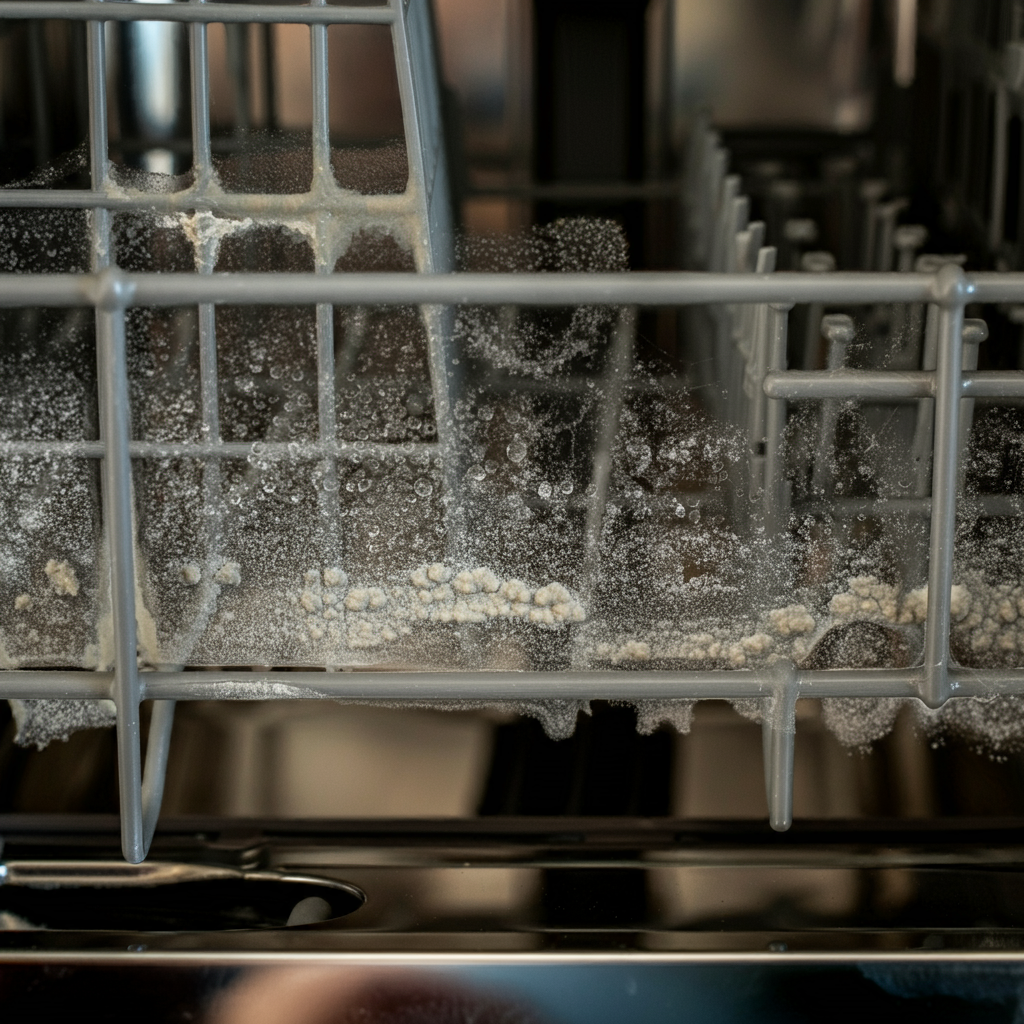
Dishwasher Water Usage

  • Standard Dishwasher: An average dishwasher uses around 6 gallons of water per cycle. However, older models can use as much as 10 gallons per cycle.
  • High-Efficiency Dishwasher: These models are designed to conserve water, typically using 3-5 gallons per cycle. Some Energy Star certified dishwashers use as little as 2.5 gallons per cycle.

The actual water usage of your dishwasher can vary depending on factors such as the selected cycle, load size, and whether or not you pre-rinse your dishes.

Washing Machine Water Usage

  • Standard Top-Load Washer: Older top-load washing machines can use a whopping 40 gallons of water per load.
  • High-Efficiency Top-Load Washer: These models are more water-conscious, typically using 15-30 gallons per load.
  • High-Efficiency Front-Load Washer: Front-load washers are generally the most efficient, using 10-25 gallons per load.

Similar to dishwashers, the water usage of washing machines can fluctuate based on the cycle, load size, and soil level.

Factoring Water Usage into Softener Sizing

Why is all of this important for water softener sizing? Well, the more water your appliances use, the more hard water minerals your softener will need to remove. This translates to a higher demand on your softener’s capacity and a more frequent need for regeneration. To illustrate, consider a household with a standard top-load washing machine that uses 40 gallons per load. If they do laundry three times a week, that’s 120 gallons of water passing through the softener. If the water hardness is high, say 20 grains per gallon (GPG), the softener would need to remove 2,400 grains of hardness per week just from laundry alone! This is why it’s crucial to accurately estimate your household’s total water usage, including appliance usage, when determining the appropriate size for your water softener.

Sizing Up Your Softener: The Appliance-Water Softener Connection

Now that we understand the impact of hard water on appliances and their varying water usage, let’s explore how this knowledge translates to choosing the right water softener size. The goal is to strike a balance between effectively treating your water and ensuring the longevity and efficiency of your softener.

Water Softener Capacity: Grains and Gallons

Water softeners are rated by their capacity, measured in grains. One grain is equivalent to 17.1 milligrams of calcium carbonate, the primary component of limescale. This capacity determines how much hardness a softener can remove before needing to regenerate. The size of the softener you need depends on two main factors:

  1. Your household’s daily water usage: This includes water used for drinking, cooking, bathing, cleaning, and, of course, running your appliances.
  2. The hardness of your water: Water hardness is measured in grains per gallon (GPG). The higher the GPG, the harder your water is and the more grains your softener needs to remove.

For example, a family of four with a water hardness level of 15 GPG and a daily water usage of 300 gallons would need a softener with a capacity of at least 4,500 grains (15 GPG x 300 gallons). However, it’s recommended to choose a softener with a slightly higher capacity, known as reserve capacity, to account for fluctuations in water usage and ensure the softener doesn’t have to regenerate too frequently.

Regeneration and Appliance Usage

Regeneration is the process by which a water softener cleans itself and recharges its ability to remove hardness minerals. The frequency of regeneration depends on the softener’s capacity and your water usage. Appliances that use a lot of water, like washing machines, can significantly impact the frequency of regeneration. If your softener is too small for your appliance usage, it will have to regenerate more often, consuming more salt and potentially shortening its lifespan.

Our Expertise at WaterSoftenerSizing.com

At WaterSoftenerSizing.com, we specialize in helping homeowners accurately assess their water softener needs. We understand that every home is different, and we take a personalized approach to ensure you get the right-sized softener for your specific situation. Our team of water treatment professionals can help you determine your water hardness, estimate your daily water usage, and recommend the ideal softener size and features based on your appliance needs and lifestyle. We also offer a free online water softener sizing calculator that you can use as a starting point for your research.

Don’t Get Overwhelmed! Our Water Softener Sizing Calculator Is Here to Help

Sizing a water softener might seem like a complex task, but it doesn’t have to be. At WaterSoftenerSizing.com, we’ve developed a user-friendly, free online calculator that takes the guesswork out of the process. How It Works Our water softener sizing calculator is designed with you in mind. It asks for a few simple pieces of information:

  1. Your household size: This helps estimate your daily water usage.
  2. Your water hardness level: You can find this information on your water bill or by using a simple home water test kit.
  3. The types of appliances you use: You’ll select from a list of common appliances, including dishwashers and washing machines, to factor in their specific water usage.

Once you’ve entered this information, our calculator will crunch the numbers and provide you with a recommended softener size in grains. It’s that easy! Why Use Our Calculator

  • Accuracy: Our calculator is based on industry-standard sizing guidelines and takes into account all the essential factors that impact softener size.
  • Convenience: It’s available 24/7 on our website, so you can use it whenever it’s convenient for you.
  • No Obligation: It’s completely free to use, and you’re under no obligation to purchase anything from us.

A Starting Point, Not the Final Word While our calculator provides a reliable starting point, we always recommend consulting with a water treatment professional for a personalized assessment. They can further refine the sizing based on your specific needs and preferences, and also recommend the best type of softener for your home. Remember, choosing the right size water softener is an investment in the health of your appliances and the comfort of your home. Don’t let hard water rob you of these benefits. Take the first step towards softer water today by using our water softener sizing calculator.

Beyond Appliances: Other Factors That Influence Softener Size

While dishwashers and washing machines are major water consumers, they’re not the sole determinants of your water softener size. Several other factors come into play, each contributing to your overall water usage and, consequently, the capacity your softener needs.

Household Size: More People, More Water

It’s simple math: the more people in your household, the more water you’re likely to use. Each person contributes to the daily water demand through activities like showering, bathing, cooking, and cleaning. A larger household typically necessitates a water softener with a greater capacity to handle the increased water flow.

Daily Water Usage Habits: Shower Power vs. Bath Lovers

Beyond the number of people, your household’s specific water usage habits also matter. Do you have family members who enjoy long, luxurious showers? Do you frequently run the dishwasher or washing machine? Are you a gardening enthusiast who waters your plants regularly? These habits can significantly impact your overall water consumption. For instance, a single 20-minute shower can use up to 50 gallons of water, while a full bathtub can hold 80 gallons or more. If you have multiple family members taking long showers daily, your water softener needs to be able to handle this increased demand.

Local Water Quality Reports: Your Hardness Baseline

Your local water quality report, often available on your municipal water supplier’s website, provides crucial information about the hardness of your water. This report will typically express hardness in grains per gallon (GPG) or milligrams per liter (mg/L) of calcium carbonate. Understanding your water hardness is essential for determining the right softener size. If your water is very hard (20 GPG or higher), you’ll need a larger capacity softener than someone with moderately hard water (10-15 GPG).

The Water Heater: A Hidden Water Hog

While not often considered in the same category as dishwashers and washing machines, your water heater is another significant water user. It’s constantly refilling and heating water as it’s used throughout your home. A larger household or one with high hot water usage will require a water softener that can keep up with the demand. Incorporating all of these factors into your calculations will give you a more accurate picture of your water softener needs. At WaterSoftenerSizing.com, our free online calculator takes all of these variables into account, providing you with a personalized recommendation for your ideal softener size. It’s a simple, convenient way to get started on your journey to softer water. Remember, choosing the right size water softener is an investment in your home and your appliances. By considering all the factors that contribute to your water usage, you can ensure that your softener is up to the task of providing soft, clean water for years to come.

What If My Current Water Softener Isn’t Cutting It?

If you already have a water softener but are still experiencing the telltale signs of hard water, it’s possible your current system isn’t adequately sized to handle your household’s water demand. Here are some common signs that your water softener may be undersized:

  • Frequent Regeneration Cycles: If your softener is constantly regenerating, it’s a clear indication that it’s struggling to keep up with the demand for soft water. A properly sized softener should regenerate every few days, not every day or multiple times a day.
  • Spotty Hard Water Symptoms: If you notice soap scum on shower doors, spotty dishes, or dry, itchy skin even with a water softener installed, it could mean your softener isn’t removing all the hardness minerals from your water.
  • Reduced Appliance Performance: Appliances not functioning as efficiently as they used to, or requiring more detergent than usual, can also be signs of an undersized softener.

Consequences of an Undersized Water Softener

Using an undersized water softener is not only frustrating but can also lead to several issues:

  • Wasted Salt and Water: Frequent regenerations waste both salt and water, leading to higher operating costs.
  • Increased Wear and Tear: Constant regeneration puts extra stress on the softener’s components, potentially shortening its lifespan.
  • Continued Hard Water Problems: An undersized softener won’t fully protect your appliances from hard water damage, leading to premature wear and tear, reduced efficiency, and costly repairs.

Solutions for an Undersized Water Softener

If you suspect your water softener is undersized, there are a few options to consider:

  • Upgrade to a Larger Softener: The most effective solution is to replace your current softener with a larger one that can adequately handle your household’s water usage and hardness level.
  • Adjust Water Usage Habits: While not always feasible, reducing water usage can help alleviate the strain on your softener. For example, you could take shorter showers, run the dishwasher and washing machine only with full loads, and fix any leaks promptly.
  • Install a Booster Pump: In some cases, a booster pump can be added to the system to help increase water flow and improve softener performance. However, this is usually a temporary fix and not a substitute for a properly sized softener.

Ultimately, the best solution will depend on your specific situation and budget. We recommend consulting with a water treatment professional to assess your needs and recommend the most appropriate course of action.

Choosing the Right Water Softener

Selecting the ideal water softener involves more than just determining the right size. Various types and features are available, each with its own advantages and considerations, especially for households with high appliance usage. Let’s break down your options.

Types of Water Softeners: Salt-Based vs. Salt-Free

The two main types of water softeners are salt-based and salt-free.

  • Salt-Based Water Softeners: These systems use ion exchange to replace hardness minerals (calcium and magnesium) with sodium. They are highly effective at removing minerals and offer a wide range of capacities to suit different household needs. However, they require regular salt replenishment and may not be ideal for individuals on sodium-restricted diets.
  • Salt-Free Water Softeners: Also known as water conditioners, these systems don’t remove minerals but instead alter their structure to prevent them from forming scale. They are a good option for those who want to avoid adding sodium to their water but may not be as effective as salt-based softeners, especially in areas with very hard water.

Features to Consider for Appliance Protection

When choosing a water softener with your appliances in mind, consider these features:

  • High-Efficiency Regeneration: This feature optimizes the regeneration process, reducing salt and water usage while maintaining softener effectiveness. It’s particularly beneficial for households with high water-consuming appliances.
  • Demand-Initiated Regeneration (DIR): DIR systems monitor water usage and initiate regeneration only when needed, rather than on a fixed schedule. This can help conserve salt and water, especially if your appliance usage fluctuates.
  • Salt-Saving Technology: Some softeners use advanced technology to reduce salt consumption without sacrificing performance. This can be a cost-effective and environmentally friendly option.

Recommendations for High Appliance Usage Households

For households with heavy dishwasher and washing machine usage, we recommend considering salt-based water softeners with high-efficiency regeneration and/or DIR technology. These features help ensure that your softener can keep up with the demand for soft water while minimizing salt and water waste. Popular brands like SoftPro, Kinetico, Culligan, and EcoWater Systems offer a variety of models with these features, catering to different household sizes and water hardness levels. Consult with a water treatment professional or use our WaterSoftenerSizing.com calculator to get personalized recommendations based on your specific needs. Choosing the right water softener is a decision that will impact the health of your appliances, your water quality, and your overall satisfaction. By understanding the different types of softeners and the features that cater to high appliance usage, you can make an informed choice that benefits your entire household. Testing water hardness to determine if a water softener is needed
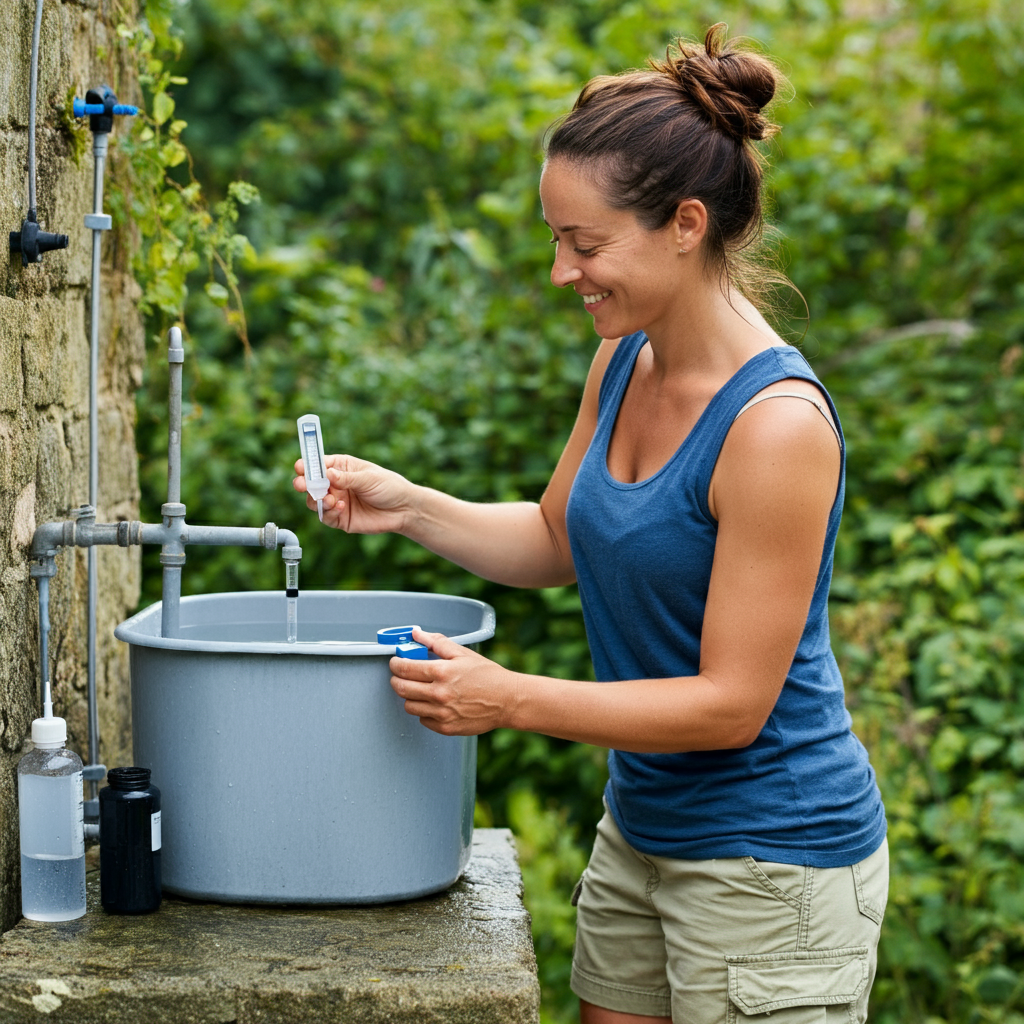
Keep Your Softener and Appliances Happy: Maintenance Tips

A well-maintained water softener is essential for protecting your appliances and ensuring consistent soft water delivery. By following a few simple maintenance tasks, you can extend the lifespan of your softener, prevent costly repairs, and keep your appliances running smoothly. Regular maintenance not only ensures optimal performance but also helps you identify potential issues early on, preventing them from escalating into major problems. It’s a small investment of time and effort that yields significant returns in the long run.

Essential Water Softener Maintenance Tasks

Here’s a quick checklist to keep your water softener in top shape:

  1. Check Salt Levels Regularly: Salt is the lifeblood of your softener, as it’s used to regenerate the resin beads that remove hardness minerals. Make it a habit to check the salt level in the brine tank at least once a month and refill it when it gets low. Most softeners have a low-salt indicator light to remind you.
  2. Clean the Brine Tank: Over time, salt can bridge or clump together in the brine tank, preventing it from dissolving properly. This can hinder the regeneration process and reduce the softener’s efficiency. It’s a good practice to clean the brine tank at least once a year or as recommended by the manufacturer.
  3. Inspect for Leaks: Regularly check for leaks around the softener’s connections, valves, and hoses. Leaks not only waste water but can also indicate a problem with the system. If you notice any leaks, address them promptly to prevent further damage.
  4. Schedule Professional Maintenance: While you can perform many maintenance tasks yourself, it’s recommended to have a professional inspect your softener annually. They can check for any hidden issues, clean internal components, and ensure your system is operating at peak efficiency.

Signs Your Water Softener Needs Attention

In addition to routine maintenance, be on the lookout for these signs that your softener may need attention:

  • Hard Water Symptoms Return: If you start noticing soap scum, spotty dishes, or dry skin again, it could be a sign that your softener isn’t working properly.
  • Salty or Metallic Taste in Water: This could indicate a problem with the brine tank or resin bed, requiring professional inspection.
  • Low Water Pressure: A decrease in water pressure could be caused by a clogged filter or a malfunctioning valve in the softener.

Your Appliances Will Thank You: Investing in the Right Water Softener Size

Choosing the right water softener size isn’t merely about preventing soap scum or enjoying softer skin. It’s a strategic decision that directly impacts the longevity and performance of your household appliances, particularly your dishwasher and washing machine. By understanding the intricate relationship between appliance water usage and softener capacity, you can make an informed choice that saves you money, conserves resources, and ensures your appliances operate at their best. We’ve explored how hard water, laden with minerals, can wreak havoc on your appliances, leading to scale buildup, reduced efficiency, and costly repairs. We’ve also delved into the varying water consumption of different appliance models, highlighting the importance of factoring this into your softener sizing calculations.

Key Takeaways

  • Hard water is harsh: It reduces appliance efficiency, increases energy consumption, and shortens lifespan.
  • Appliances vary in water usage: Dishwashers and washing machines have different water needs, impacting softener sizing.
  • Softener capacity matters: Match the softener’s grain capacity to your household’s water hardness and daily usage.
  • Regeneration frequency is key: High appliance usage can lead to more frequent regeneration cycles.
  • Consider additional factors: Household size, water usage habits, and local water hardness all influence softener size.
  • Use our calculator: WaterSoftenerSizing.com’s free calculator simplifies the sizing process.
  • Consult a professional: For personalized advice and recommendations, reach out to a water treatment expert.

Take the Next Step Towards Softer Water and Happier Appliances

Ready to transform your water and protect your appliances? Start by using our free water softener sizing calculator at WaterSoftenerSizing.com. It’s a quick and easy way to get a preliminary estimate of the right size for your needs. For personalized guidance and expert recommendations, don’t hesitate to contact our team of water treatment professionals. We’re here to help you make the best choice for your home and your appliances.