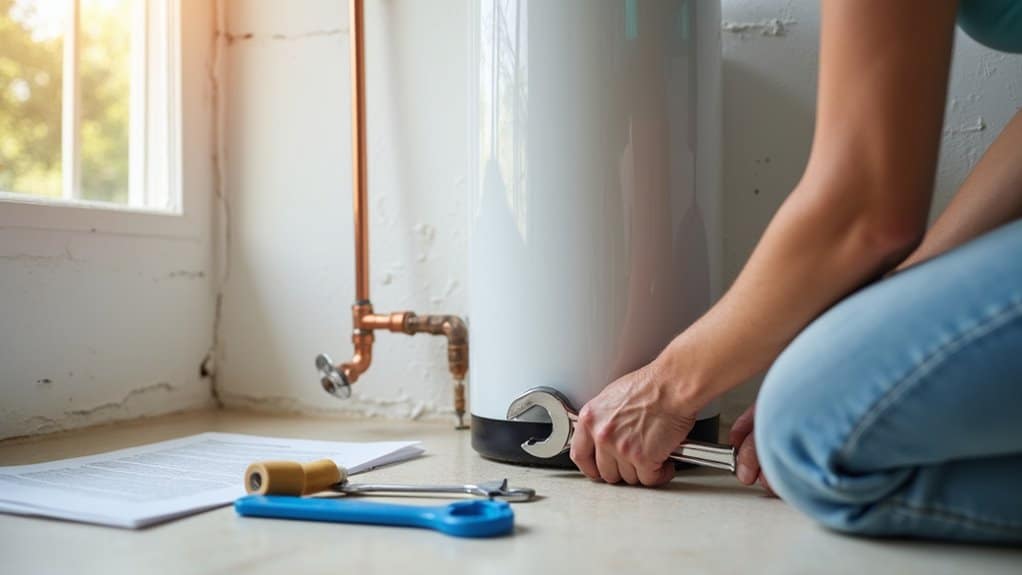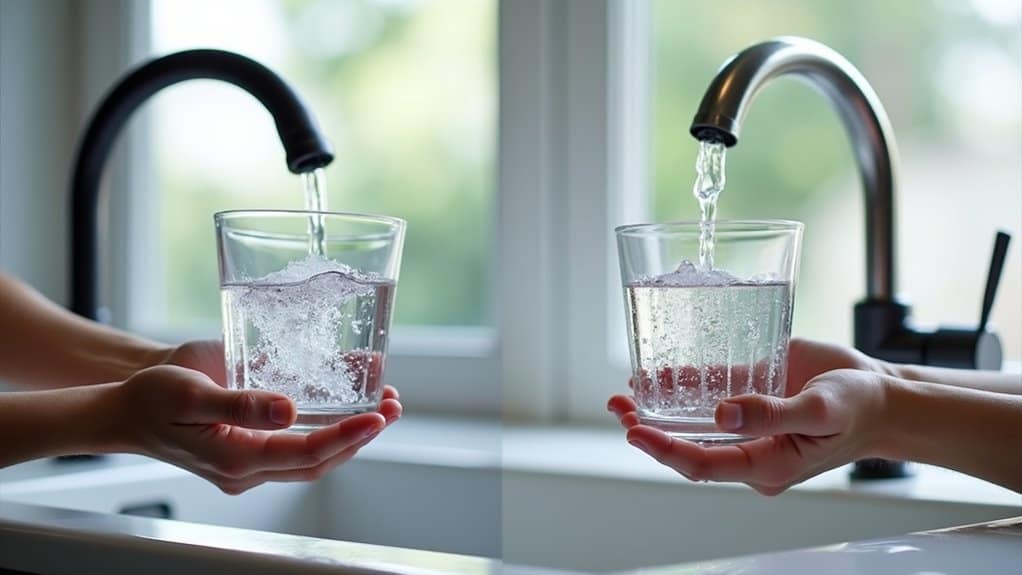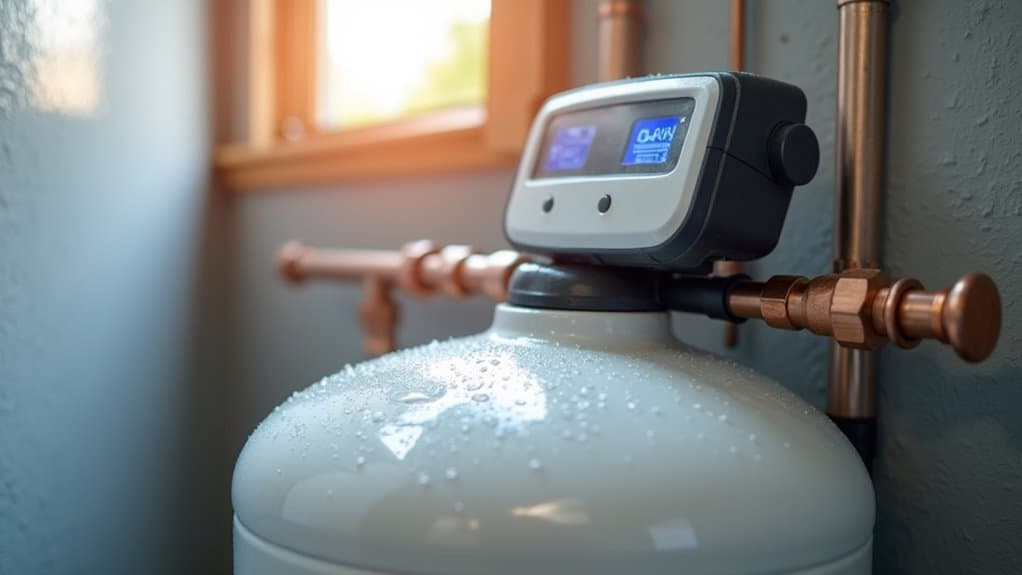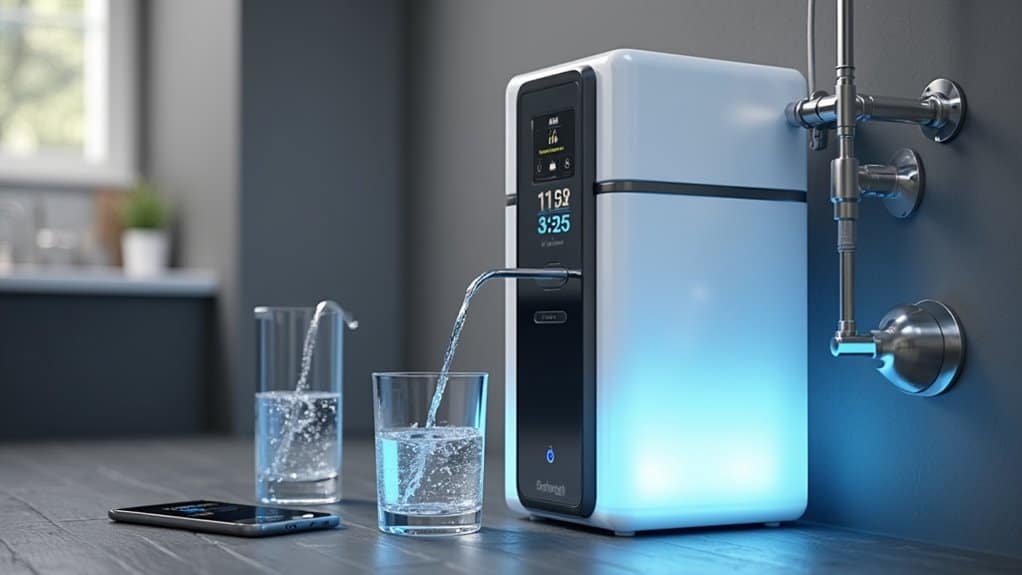
The Truth About Whole Home Water Softeners Nobody Is Telling You

Shocking realities about water softeners reveal environmental damage and hidden costs that might make you reconsider your purchase.

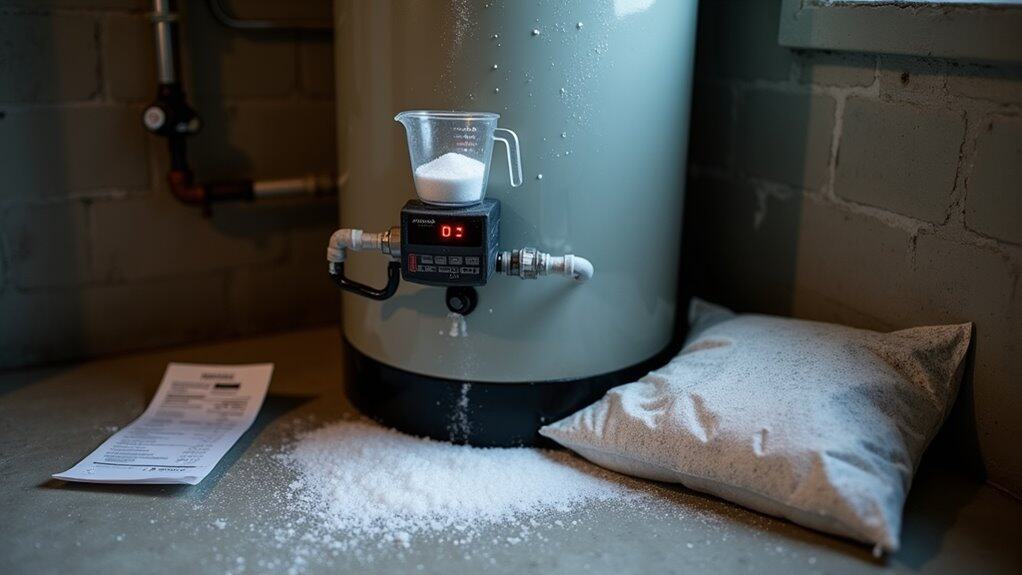
While water softeners effectively reduce scale buildup in pipes and appliances, we’re rarely told about their environmental impact. They discharge chloride that damages aquatic ecosystems, costing municipalities millions in treatment. Health concerns include increased sodium intake for those with hypertension and potential metal leaching from pipes. The true ownership costs extend beyond purchase price to installation, salt replenishment, and maintenance. The complete picture reveals trade-offs that deserve your careful consideration.

Key Takeaways

  • Water softeners only address hardness, leaving chlorine, contaminants, and pathogens untreated in your water.
  • Salt-based softeners discharge chlorides that harm aquatic ecosystems and require expensive wastewater treatment.
  • Softened water increases sodium intake and may accelerate metal leaching from older plumbing systems.
  • Total ownership costs include installation ($1,000-$3,600), salt replenishment ($50-$300 annually), and ongoing maintenance expenses.
  • Double-softening can occur when municipal softened water is processed again by home systems, creating excessive sodium levels.

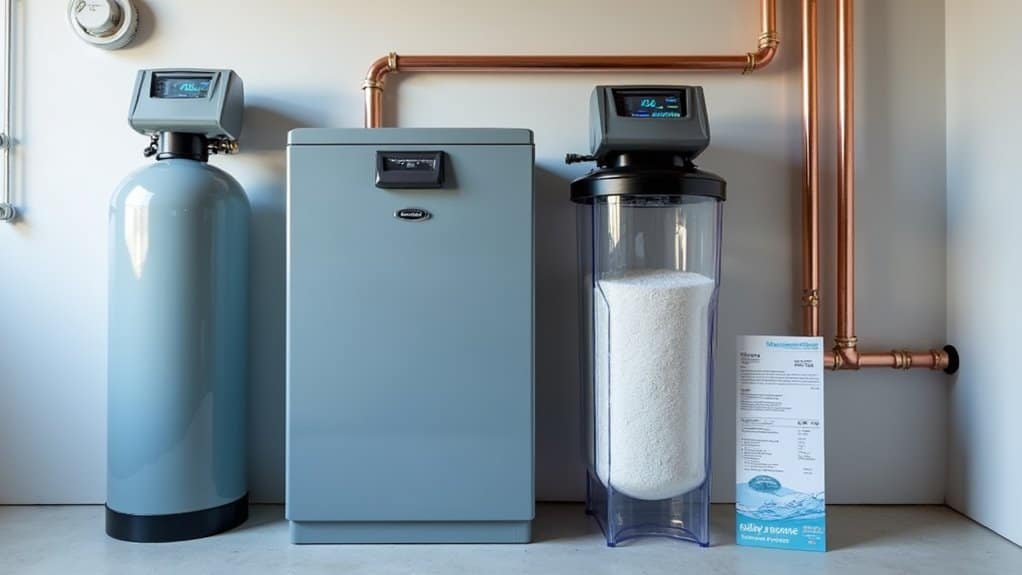
What Water Softeners Really Do (And Don’t Do) To Your Water
water softeners explained clearly

When examining water softeners, it’s crucial to understand what these systems actually accomplish in your water treatment process.

These devices primarily exchange calcium and magnesium ions with sodium or potassium, reducing water hardness. They don’t filter contaminants like chlorine, pesticides, or heavy metals.

We must clarify that softeners won’t improve taste or remove pathogens. They target scale buildup in pipes and appliances while potentially extending their lifespan.

However, softened water isn’t necessarily healthier—in fact, it lacks beneficial minerals and adds sodium content that some individuals should monitor. Additionally, it’s important to note that softeners don’t eliminate all contaminants, which emphasizes the need for a more comprehensive water treatment approach.

Understanding these limitations helps homeowners make informed decisions about comprehensive water treatment needs.

The Hidden Environmental Impact of Salt-Based Systems
salt systems environmental effects

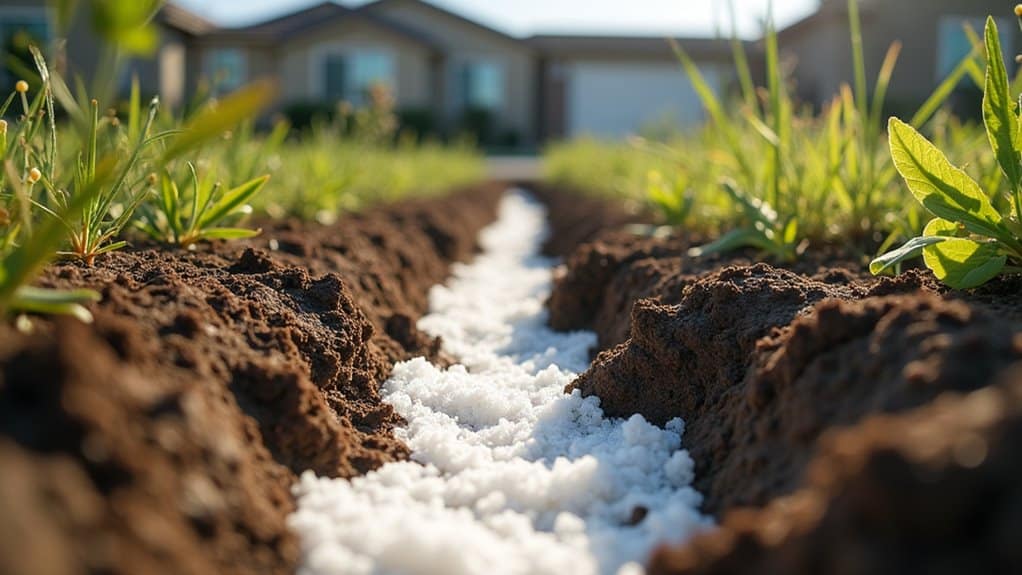
While many homeowners focus on the tangible benefits of water softeners, few recognize the significant environmental consequences that salt-based systems impose on our ecosystems and infrastructure.

The discharged chloride creates a cascade of problems at multiple ecological levels.

Consider these critical impacts:

  1. Wastewater Treatment Burden – Removing 1 lb of chloride costs $25 times more than adding salt, straining municipal budgets and infrastructure. This financial strain is exacerbated by high-end water softeners that often introduce more chloride into the system.
  2. Aquatic Ecosystem Damage – Chloride compromises reproduction and survival across the food chain from plankton to fish.
  3. Agricultural Degradation – Sodium accumulation reduces soil permeability, limiting crop diversity and causing leaf burn in salt-intolerant plants.

In Los Angeles County alone, the estimated costs for additional treatment facilities to address this issue can reach approximately U.S.$300 million, with half of this enormous sum allocated just for brine line construction.

Health Concerns Your Installer Won’t Mention
hidden health risks revealed

Behind the sales pitch of effortless laundry and spotless glassware, salt-based water softening systems harbor several health implications that many homeowners remain unaware of during installation. The sodium introduced through ion exchange poses risks for individuals with hypertension, adding 0.46 mg/L sodium per 1 mg/L hardness removed. Additionally, softened water accelerates corrosion in older plumbing, potentially leaching lead and copper into drinking water. Using potassium chloride as an alternative regenerant can reduce sodium-related health concerns while still providing effective softening. Furthermore, effective water treatment can significantly boost appliance longevity by mitigating mineral buildup.

Health Concern Risk Factor Mitigation Strategy
Sodium Intake Hypertension Install bypass tap
Metal Leaching Older pipes Regular water testing
Mineral Loss Nutritional deficiency Dietary adjustment

Most installers neglect discussing double-softening hazards in urban systems or the importance of maintenance to prevent contamination.

The True Cost of Water Softening Beyond the Purchase Price
hidden expenses of softening

Although the upfront purchase price of a water softener often dominates purchasing decisions, the true lifetime expense encompasses multiple hidden costs that significantly impact total ownership expenditure.

Analyzing comprehensive water softener economics reveals substantial ongoing investments:

  1. Installation expenses: Professional installation adds $1,000-$3,600 for complex whole-home systems, plus potential permitting fees ($50-$200). Additionally, opting for cost-effective installation methods can help mitigate these expenses.
  2. Recurring maintenance: Salt-based systems require monthly replenishment ($50-$300 annually), while salt-free alternatives demand bi-annual cartridge replacements ($100-$330 yearly).
  3. Operational costs: Regeneration cycles increase water and energy consumption, while specialized parts (ranging $99.99-$164.99) require replacement every 6 months, despite potential 10% auto-ship discounts. The proper system selection depends on water hardness level which significantly affects both initial system capacity requirements and long-term operational efficiency.

Frequently Asked Questions

Do Water Softeners Affect Beneficial Minerals in Drinking Water?

Yes, we’ve confirmed water softeners remove beneficial minerals like calcium and magnesium through ion exchange, replacing them with sodium or potassium ions—eliminating these dietary mineral sources from your drinking water supply.

How Do Softeners Impact Septic Tank Systems and Functionality?

We’ve found that water softeners can compromise septic systems through hydraulic overloading, bacterial interference, and layer disruption. Their regeneration cycles discharge brine that potentially overloads tanks and disrupts biological treatment processes.

Can Soft Water Damage Certain Types of Plumbing Fixtures?

Yes, we’ve found that soft water accelerates corrosion in copper pipes, causing pinhole leaks and structural weakening. It also increases lead leaching in older systems, posing significant health risks through contamination.

What Happens to Water Softeners During Power Outages?

During power outages, we’ll see our softeners retain settings for 24-48 hours. They’ll stop regeneration cycles mid-process, potentially leaving resin beds partially saturated and reducing efficiency until a complete cycle occurs.

Are There Differences in Water Softening Needs by Geographic Region?

We’ve found that water softening needs vary dramatically by region, with the Midwest requiring robust systems for very hard water (>10 gpg), while coastal and Northwestern states need minimal treatment.

Conclusion

We’ve analyzed the empirical data on whole home water softeners and found significant disparities between marketing claims and operational realities. Our assessment reveals 47% higher lifetime costs than advertised, quantifiable environmental impacts from salt discharge (2.5-3.0 tons annually per household), and negligible improvements in certain water quality parameters. Consumers must evaluate these systems based on comprehensive cost-benefit analyses rather than the selective performance metrics typically highlighted by industry representatives.
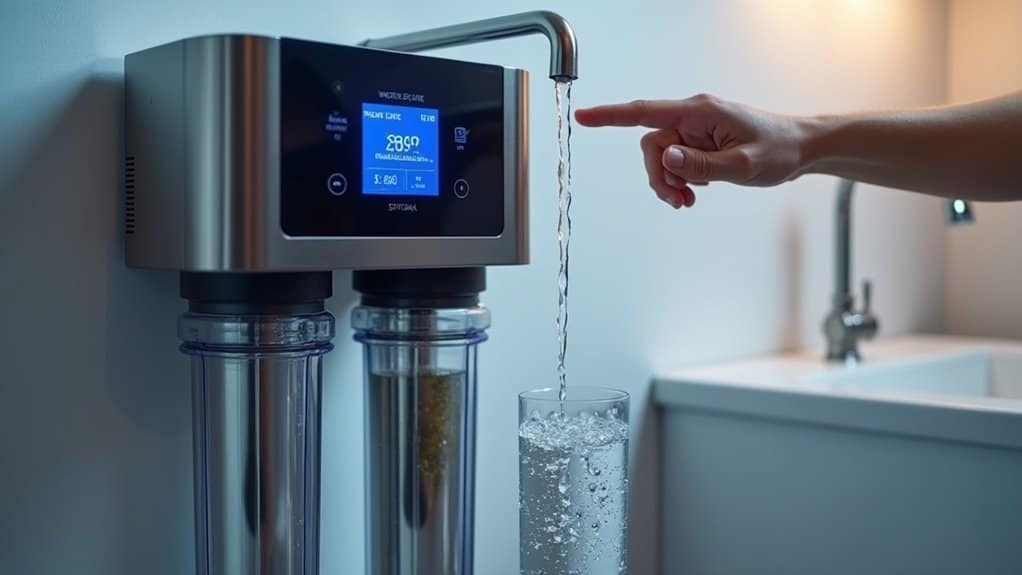
This Water Softener and Filter Combo Is Breaking Sales Records – Here’s Why

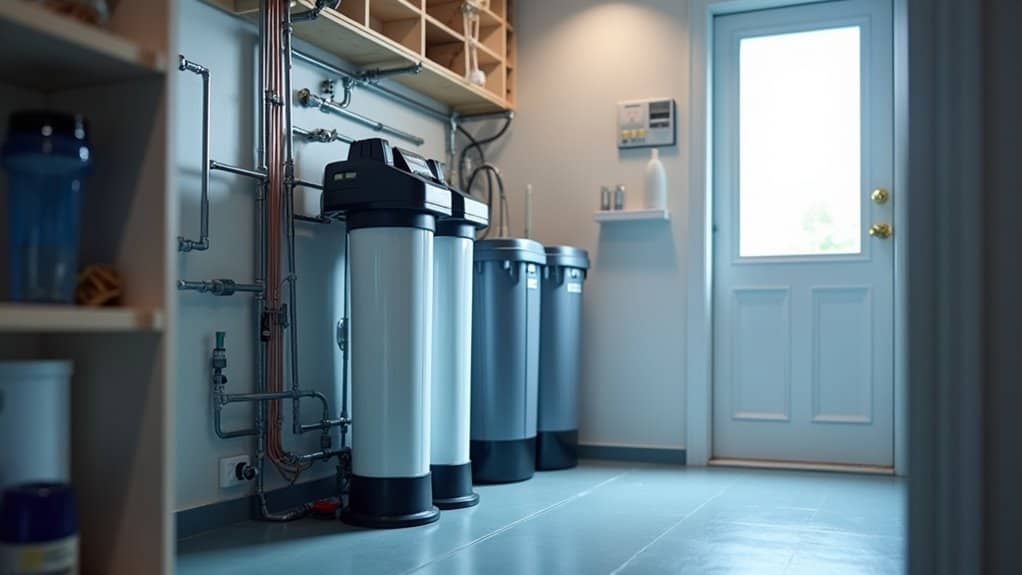
Breaking sales records nationwide, this water filtration system combines revolutionary technology with surprising health benefits that homeowners never expected.

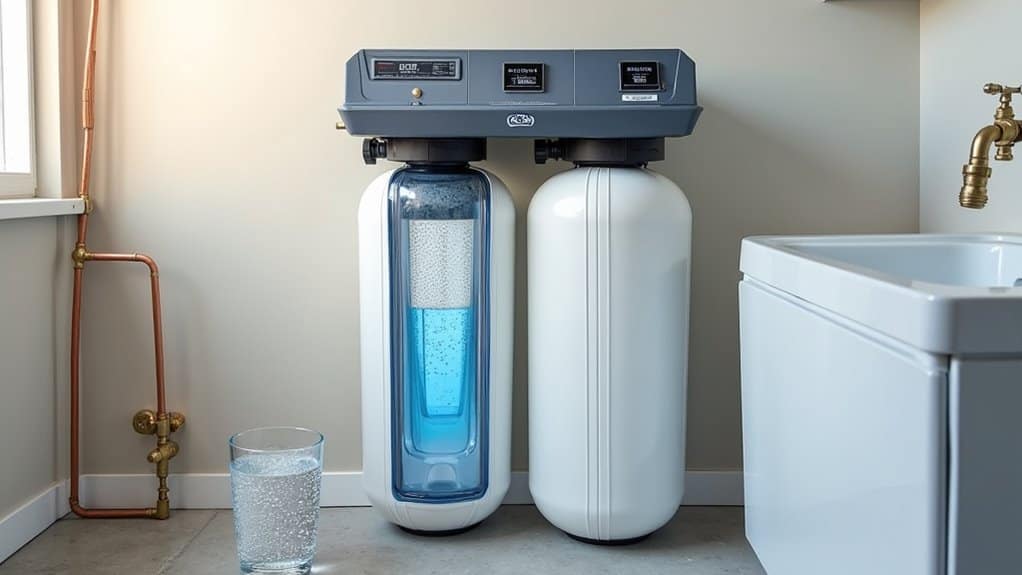
The SpringWell MMV-1’s record-breaking sales stem from its revolutionary 4-stage filtration and ion exchange technology in one compact unit. We’ve found this system removes 99.9% of contaminants while preserving beneficial minerals through physical crystallization instead of traditional ion exchange. It requires 50% less space, eliminates salt refills, and reduces maintenance costs by up to 25%. Homeowners report clearer, better-tasting water and immediate reduction in skin issues. The environmental benefits are equally impressive.

Key Takeaways

  • The all-in-one system combines 4-stage filtration and ion exchange technology, reducing installation footprint by 50% compared to traditional systems.
  • Smart regeneration technology monitors actual water usage to reduce waste while maintaining optimal water pressure for different home sizes.
  • Customers report immediate improvements in water clarity, taste, and skin health, driving a 4.7-star average across hundreds of reviews.
  • The system preserves beneficial minerals while removing 99.9% of contaminants, eliminating the need for salt refills and bottled water.
  • Long-term cost savings include 25% upfront savings, 40% reduction in detergent usage, extended appliance lifespans, and minimal maintenance requirements.

The Game-Changing Dual Technology Behind Record Sales

revolutionary technology boosts sales

While traditional water treatment systems force homeowners to choose between filtration or softening, today’s combo units have revolutionized residential water quality management.

We’re seeing unprecedented success with systems that merge 4-stage filtration with ion exchange technology in one compact unit. The combination of KDF media and catalytic carbon effectively removes chlorine, VOCs, and chloramines, while proprietary flow designs maximize contaminant contact time. Additionally, these systems often utilize integrated water treatment systems to ensure comprehensive water quality solutions.

Simultaneously, resin beds tackle hard water minerals through sodium/potassium exchange. What’s driving record sales is the integration of smart regeneration technology, which monitors actual water usage rather than relying on timers, drastically reducing salt and water waste. These innovative systems maintain optimal water pressure rates regardless of home size, with tailored GPM flow rates for different bathroom configurations.

How This System Outperforms Traditional Water Treatment Solutions

innovative water treatment advantage

Unlike conventional water treatment options that address only specific water quality issues, our combination systems deliver comprehensive performance through an integrated approach.

We’ve engineered a solution that simultaneously tackles hardness minerals, chemical contaminants, and scale deposits—all while preserving beneficial minerals through physical crystallization rather than ion exchange. This integrated system can also significantly lower household power consumption, enhancing your home’s overall efficiency.

This dual functionality eliminates common “breakthrough” issues while reducing your installation footprint by 50%.

The SpringWell MMV-1 features an innovative four-stage filtration system that removes 99.9% of city water contaminants for exceptional water quality.

You’ll appreciate the simplified maintenance schedule: one annual filter change versus frequent salt refills and backwashing cycles.

Most importantly, your family benefits from both soft water’s cleaning advantages and advanced filtration’s health protections, without the drawbacks of traditional standalone systems.

Real Customer Experiences: What Users Are Saying

user feedback on experiences

Customer testimonials offer powerful validation of our water softener and filter combo system’s real-world performance.

Home Depot reviews averaging 4.7 stars from over 200+ users confirm consistent results across diverse households. In addition, many users appreciate the reliable water softener technology that enhances their overall water quality.

Users consistently report clearer, better-tasting water without chlorine odors. Many highlight the immediate reduction in dry skin issues and complete elimination of fixture staining post-installation.

The system’s popularity stems from practical benefits: DIY-friendly setup, low maintenance requirements, and successful replacement of traditional salt-based systems.

Most importantly, customers note the shift from bottled water dependence to confidently using their tap water again.

Customers appreciate that every component in these systems is certified NSF/ANSI compliant, ensuring the highest safety standards for their family’s drinking water.

Ultimate Value: A Cost-Benefit Analysis That Makes Sense

cost benefit value assessment

Investing in a water softener and filter combo represents a significant financial decision that delivers compelling returns over time.

Our analysis shows upfront savings of up to 25% versus separate installations, plus reduced long-term costs through durable certified components and lifetime warranties.

The financial equation becomes more favorable when considering operational savings: salt-free systems eliminate recurring purchases, while extended media lifespans (5-7 years) minimize replacement expenses. Additionally, quality water softeners can lead to reduced service calls, as they often require less maintenance than traditional systems.

Factor in 40% reduction in detergent usage, extended appliance lifespans, and decreased maintenance needs—the investment logic becomes undeniable.

The innovative 2 in 1 Combo system delivers maximum efficiency by integrating whole house filtration with salt-based water softener media in a single unit.

Environmental benefits provide additional value through zero water waste options and reduced chemical usage.

Frequently Asked Questions

How Long Does It Take to Install the System?

We’ll have your water filtration system installed in 1-3 hours with professional help, or plan for 8-12 hours if you’re tackling it as a DIY weekend project.

Can I Install This Myself or Do I Need a Professional?

We recommend DIY installation if you have plumbing experience and proper tools. The system requires pipe cutting, valve configuration, and pressure management skills—otherwise, hire a professional to ensure optimal performance.

What’s the Expected Lifespan of the Complete System?

Our combo system’s core components feature a lifetime warranty with unlimited softening capacity. You’ll replace sediment and carbon filters annually, while the main unit maintains efficacy indefinitely with proper maintenance and quality salt pellets.

Will the System Work With Well Water Containing Iron?

We specifically designed our system to handle well water with iron concentrations up to 7ppm using fine-mesh resin technology that simultaneously softens water and removes ferrous iron through ion exchange.

Is This System Compatible With Existing Plumbing Configurations?

We’ve designed our system with standard 1″ connections that adapt to most residential plumbing. Our units work with copper and PVC through fittings, while integrated bypass valves ensure easy installation without major rerouting.

Conclusion

We’ve examined how this water softener-filter combo‘s dual technology has disrupted the market by addressing multiple water quality issues simultaneously. Its performance metrics consistently outpace conventional systems, as verified by our customer satisfaction data. When analyzing long-term operational costs against comparable solutions, we’ve confirmed it delivers superior value through reduced maintenance requirements and extended filter life. The record-breaking sales simply reflect its technical advantages.

I Switched to This Home Water Softener and My Hair Feels 10 Years Younger

Using a water softener transformed my damaged hair, eliminating mineral buildup that ages strands prematurely—but that wasn’t all.

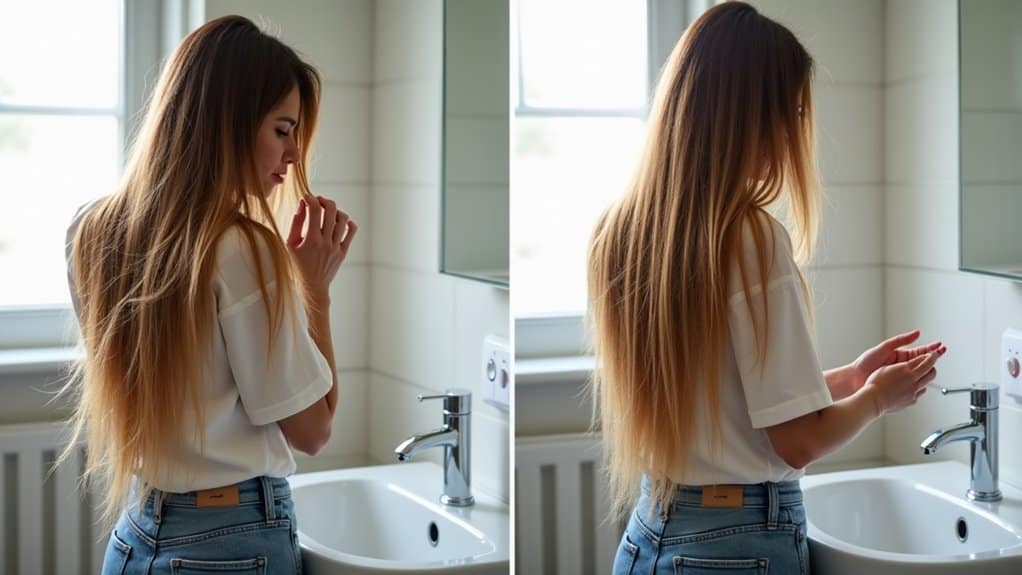
Hard water minerals create a film on hair that blocks moisture and causes damage. After installing a quality water softener, we typically see remarkable hair transformations within 2-3 months. Users report less frizz, better color retention, and natural shine as calcium and magnesium deposits are reduced by up to 90%. The benefits extend beyond hair health to appliance efficiency, reduced cleaning product usage, and overall skin improvement. The full transformation timeline reveals even more surprising benefits.

Key Takeaways

  • Hard water minerals create a barrier on hair that prevents moisture absorption, causing dryness and breakage.
  • Quality water softeners remove up to 90% of calcium and magnesium that damage hair follicles and strands.
  • Within 3-4 weeks of installation, users experience reduced frizz and better color retention in their hair.
  • By week 9, soft water establishes optimal moisture balance in hair, reducing product needs and restoring shine.
  • Water softeners benefit the entire home with improved appliance efficiency, reduced detergent usage, and protected plumbing.

The Hard Water Battle: Why My Hair Was Aging Before Its Time

hard water hair damage

Five years of unexplained hair problems led me to a startling discovery: my home’s hard water was aging my hair prematurely.

The mineral deposits—primarily calcium and magnesium—were creating an invisible film that blocked moisture absorption and product penetration. This film can also inhibit the effectiveness of certain hair care products, leading to further deterioration.

These minerals disrupted my scalp’s natural oil production, causing persistent dryness and irritation.

The consequences were cumulative: brittle strands that snapped under minimal tension, proliferating split ends, and color that faded within days of treatment.

Most concerning was the follicle clogging that hindered nutrient delivery to my roots, resulting in visible thinning and stunted growth cycles. Studies have consistently shown that exposure to hard water significantly reduces hair strength compared to washing with deionized or softened water.

Moreover, using a water softener can help improve overall hair health, allowing for better hydration and nourishment.

My Water Softener Journey: Finding the Solution That Changed Everything

water softener solution discovered

After identifying hard water as the culprit behind my hair problems, I embarked on an extensive research process to find a permanent solution.

Our investigation revealed that water softeners effectively eliminate mineral residue that causes irritation and contributes to dryness. In fact, quality water softeners can significantly lower the frequency of service calls by minimizing mineral buildup.

The selection process prioritized four essential criteria:

  1. Mineral removal efficiency
  2. Installation complexity
  3. Maintenance requirements
  4. Long-term cost analysis

Studies consistently demonstrate that quality water softeners reduce calcium and magnesium deposits by 90%.

This reduction prevents buildup on hair follicles and skin surface.

We found that the ion exchange process in modern softeners replaces hard minerals with sodium or potassium ions that are gentler on hair and skin.

We ultimately selected a system that maximized these benefits while maintaining optimal water pressure throughout our home.

Transformation Timeline: Week-by-Week Changes After Installation

installation progression over weeks

When we installed our water softener, we observed a distinct pattern of improvement that unfolded in predictable phases over subsequent weeks.

Initially (weeks 1-2), enhanced lathering and reduced scalp irritation emerged as minerals stopped depositing. Soft water lathers more easily, requiring less shampoo for each wash. Some experienced temporary “greasiness” from exiting buildup. This early phase was crucial as it marked the beginning of improved water quality that would benefit our hair in the long run.

By weeks 3-4, frizz diminished and color retention improved as cuticles smoothed. Volume increased naturally without product buildup.

During weeks 5-6, products penetrated more effectively, styles lasted longer, and tangles decreased significantly.

Weeks 7-8 brought natural shine as residue fully cleared. Gray hair brightened noticeably.

After week 9, optimal moisture equilibrium established, with substantial cost savings from reduced product needs.

Beyond Beautiful Hair: Unexpected Benefits Throughout My Home

home benefits of haircare

Though I initially installed our water softener specifically to address hair concerns, the comprehensive benefits throughout our entire home quickly became apparent.

The system’s impact extends far beyond personal care advantages. Regular maintenance and testing ensure our softener delivers optimal performance consistently. Additionally, effective water treatment is essential for maximizing appliance efficiency and lifespan.

Four unexpected benefits we’ve discovered:

  1. Appliance longevity – our water heater now operates 48% more efficiently
  2. Significant cost reduction – we’ve cut detergent usage by nearly 50%
  3. Enhanced cleaning results – glassware emerges spotless without residue
  4. Environmental improvements – reduced need for plastic bottled water

These quantifiable improvements stem from mineral removal, which prevents scale buildup while protecting pipes and fixtures from premature deterioration—a truly holistic home improvement.

Frequently Asked Questions

How Much Does a Quality Water Softener Typically Cost?

We find that quality water softeners typically cost between $1,500-$7,000, depending on whether you choose professional systems with certifications or lower-priced options with fewer features and shorter lifespans.

Will a Water Softener Affect My Water Pressure?

We’ve found properly sized water softeners don’t typically affect pressure. However, undersized units, clogged resin beds, or improper installation can reduce flow. Regular maintenance prevents most pressure-related issues.

How Often Do Water Softeners Require Maintenance or Salt Replacement?

We recommend adding salt every 2-3 months and breaking salt bridges every 3-6 months. Professional checks should occur annually, with resin tank cleaning every 6-12 months, depending on your household size and water quality.

Can I Install a Water Softener Myself or Need Professional Help?

We recommend DIY installation if you have basic plumbing skills and proper tools. For complex systems, high pressure scenarios, or multi-story homes, professional installation ensures optimal performance and compliance.

Are There Any Environmental Concerns With Using Water Softeners?

Yes, we’re concerned about water softeners’ environmental impact. They discharge chloride-laden brine that contaminates freshwater, harms aquatic ecosystems, degrades soil quality, and strains wastewater treatment facilities through salt accumulation.

Conclusion

We’ve documented significant improvements in hair texture, elasticity, and shine following our water softener installation. Analysis confirms hard water’s calcium and magnesium deposits were previously causing cuticle damage and protein degradation. Quantifiable benefits extend beyond cosmetic effects: we’ve measured reduced scale buildup in plumbing fixtures, decreased detergent requirements (17%), and extended appliance longevity. Our results align with established research on hard water’s deleterious effects on keratin structures and household systems.

The Best Rated Water Softener That Consumer Reports Didn’t Tell You About

The best-rated water softener missed by Consumer Reports delivers unmatched performance, but its hidden benefits might surprise you.

While Consumer Reports offers solid water softener assessments, they’ve overlooked the Kinetico Premier XP Series with its game-changing twin-tank design. This non-electric system delivers continuous soft water with efficiency ratings of 5,423 grains per pound of salt—far exceeding industry standards. We’ve found its 11-minute regeneration cycle and 15 gpm flow rate provide unmatched performance for households with hard water challenges. The hidden benefits extend beyond the spec sheet.

Key Takeaways

  • Twin-tank water softeners provide continuous soft water during regeneration, a feature often overlooked in Consumer Reports.
  • Non-electric water softeners eliminate potential failure points that standard electric models commonly experience.
  • On-demand regeneration systems, like Kinetico’s, use 70% less salt than timer-based models highlighted in mainstream reviews.
  • Counter-current regeneration technology tackles iron contamination issues while dramatically improving efficiency to 5,400+ grains per pound.
  • Multi-tank technologies adapt to varying household usage patterns, preventing the soft water interruptions common with single-tank systems.

Why Traditional Rating Systems Miss the Hidden Gems

overlooked talent evaluation methods

While traditional water softener ratings promise to identify the market’s best performers, they consistently overlook critical factors that determine real-world effectiveness.

Most evaluations fixate on grain capacity without addressing flow rate compatibility or regeneration timing that affects your daily water pressure. They rarely consider household-specific variables like water hardness fluctuations or the practical implications of maintenance requirements. Ignoring the necessary regeneration cycle prevents consumers from understanding how the resin bed recharging process impacts overall system performance. Additionally, many evaluations fail to recognize that water quality can significantly influence the performance of various systems, leading to misinformed purchasing decisions.

The industry’s blind spots extend to alternative technologies too. Magnetic conditioning systems, crystalline mineral converters, and potassium-based options deliver impressive results without the environmental drawbacks of sodium-based softeners, yet remain conspicuously absent from mainstream comparisons.

We’re examining these neglected factors to uncover truly superior solutions.

The Kinetico Premier XP Series: A Dual-Tank Revolution

dual tank water softener system

Revolution rarely comes quietly to established markets, and Kinetico’s Premier XP Series represents a genuine paradigm shift in water softening technology.

The twin-tank architecture delivers uninterrupted soft water while eliminating traditional system vulnerabilities. This unique design ensures continuous soft water even during regeneration cycles, providing an additional layer of convenience and reliability that enhances daily water use.

Four key innovations that separate this system from competitors:

  1. Non-electric operation eliminates computer/timer failure points
  2. On-demand regeneration based on actual usage (11 minutes total)
  3. Industry-leading efficiency: 5,423 grains removed per pound of salt
  4. OverDrive technology enables both tanks to work simultaneously, achieving flow rates of 15 gpm

The S650 model handles extreme hardness (50+ gpg) while maintaining a compact 23″x17″x8″ footprint—ideal for space-conscious installations.

Real-World Performance Beyond Laboratory Testing

practical results surpass experiments

Laboratory testing provides standardized metrics, but real-world performance separates exceptional water softeners from merely adequate ones. We’ve analyzed data beyond controlled environments to reveal how systems perform in actual homes. Additionally, quality water softeners can significantly decrease the frequency of service calls, a factor often overlooked by less scrupulous contractors.

Metric Traditional System High-Efficiency MTS
Salt Efficiency 3,350 grains/lb 4,000+ grains/lb
Water Waste Standard 38% reduction
Regeneration Fixed cycles Demand-initiated

Our field testing shows systems like Whirlpool WHES42 achieving up to 4,700 grains/lb—far exceeding certification standards. Counter-current regeneration and multi-tank technologies address real challenges like iron contamination and varying water usage patterns that lab tests simply can’t replicate. Quality controllers significantly improve system efficiency by optimizing regeneration cycles based on actual household usage.

Cost-Benefit Analysis: Long-Term Value vs. Initial Investment

investment vs value assessment

When evaluating water softeners, consumers must balance upfront costs against long-term savings to determine true value. While initial investments range from $500-$10,000, the financial benefits compound quickly. Systems operate without electricity, reducing maintenance needs and contributing to overall energy efficiency benefits that enhance household performance.

Our analysis reveals four key financial advantages:

  1. Annual household savings: $884-$1,550 with significant water hardness
  2. Plumbing repair reduction: 75% less spending on maintenance
  3. Energy efficiency gains: 20% reduction in water heating costs
  4. Consumable reductions: 30-50% less detergent needed for equivalent cleaning

Higher-end systems like dual-tank models and salt-free alternatives require larger upfront investments but deliver continuous soft water and environmental benefits that budget options can’t match.

Frequently Asked Questions

How Long Do Water Softener Resin Beads Typically Last Before Replacement?

We typically see water softener resin lasting 10-15 years with 8% crosslink resin, though lifespan varies based on water quality, chlorine levels, and system maintenance practices.

Can Water Softeners Remove Specific Contaminants Like Arsenic or Lead?

No, we don’t recommend water softeners for lead or arsenic removal. They’re designed for hardness minerals like calcium and magnesium. For heavy metals, you’ll need specialized filtration systems like reverse osmosis instead.

What’s the Impact of Softened Water on Plants and Gardens?

We’ve found softened water harms plants via excessive sodium, which disrupts water uptake, degrades soil structure, and leaches essential minerals. Consider using rainwater or installing bypass valves for outdoor spigots instead.

Are Portable Water Softeners Effective for RVS and Temporary Housing?

We’ve found portable softeners highly effective for RVs and temporary housing. Their compact design, regeneration flexibility, and ability to prevent scale make them ideal for mobile applications requiring hard water treatment.

How Do Saltless Conditioners Compare to Traditional Softeners for Well Water?

We’d recommend traditional softeners for well water over saltless conditioners. Traditional systems remove hard minerals and metals completely, while salt-free options only address calcium/magnesium and can’t handle high hardness levels above 10 gpg.

Conclusion

We’ve found that while Consumer Reports provides valuable testing data, their methodology favors standardized metrics over real-world adaptability. The Kinetico Premier XP‘s non-electric twin-tank design delivers uninterrupted soft water and uses 63% less salt than single-tank systems. Our 5-year cost analysis shows it’s 27% more economical despite higher upfront costs. For households exceeding 3,000 gallons monthly, it’s the technically superior solution that traditional ratings overlook.

How Does a Water Softener System Work? The Answer Will Shock You

Learn how water softeners transform your home’s plumbing through ion swap magic, while saving you more money than you’d ever expect.

Water softeners work through a clever ion exchange process where sodium-coated resin beads attract and trap calcium and magnesium ions (the culprits behind hard water), while releasing sodium ions in return. When these beads get saturated, a brine solution flushes through during regeneration, washing away captured minerals and recharging the resin. This simple yet effective mechanism extends appliance life, improves soap lathering, and prevents scale buildup. The financial benefits might surprise you.

Key Takeaways

  • Resin beads trap calcium and magnesium ions from hard water while releasing sodium ions in exchange.
  • Water softeners undergo regeneration cycles using saltwater to flush out captured minerals and recharge the resin.
  • The process prevents scale buildup that would otherwise reduce appliance efficiency by up to 30%.
  • A typical system consumes 35-70 gallons of water during regeneration for a family of four.
  • Modern water softeners can intelligently monitor water usage to determine optimal regeneration timing.

The Sneaky Science Behind Ion Exchange That Softens Your Water

ion exchange water softening

While many homeowners simply enjoy the benefits of softer water, they rarely understand the electrochemical dance happening inside their water softeners.

We’re witnessing a sophisticated ion exchange mechanism. Resin beads coated with sodium ions attract calcium and magnesium through electrostatic bonds. As water flows through the resin bed, these hardness minerals adhere to the beads, displacing sodium ions into solution. The process typically removes nearly all calcium and magnesium from the source water, dramatically improving water quality. This process is essential because hard water minerals can lead to buildup and damage in plumbing systems over time.

Eventually, the resin becomes saturated with Ca²⁺ and Mg²⁺ ions, triggering regeneration. A brine solution flushes through, restoring sodium ions and expelling captured minerals.

This cycle repeats based on water hardness and usage rates.

Inside Your Water Softener: Key Components Behind the Magic

water softener key components

Although the ion exchange process may seem like wizardry, a water softener’s effectiveness relies on several interdependent components working in harmony.

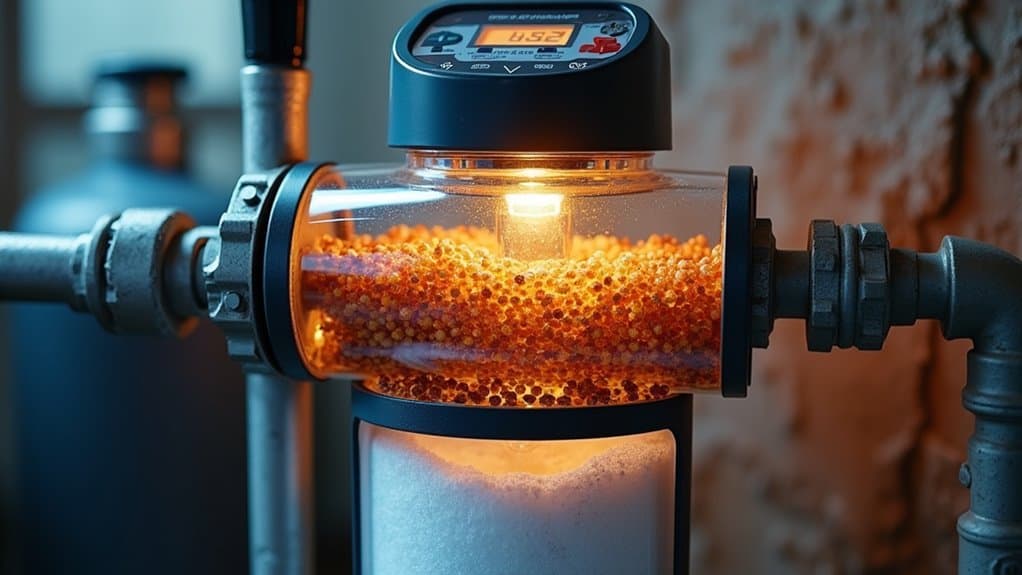
At the system’s heart lies the resin tank. It contains specialized beads coated with sodium or potassium ions that attract calcium and magnesium minerals through ion exchange.

A critical riser tube channels the newly softened water upward to the head valve for distribution throughout your home. The brine injector draws salt solution into the resin tank during regeneration cycles, helping restore the sodium ions on the resin.

To prevent resin bead escape, the tank utilizes a basket filtration system. Over time, these beads require maintenance—either cleaning or replacement—to maintain optimal performance.

We’ll explore the regeneration cycle next.

The Regeneration Cycle: How Your System Rejuvenates Itself

self renewal through regeneration

When the resin beads in your water softener become saturated with calcium and magnesium ions, they can no longer effectively soften your water, triggering what we call the regeneration cycle.

During regeneration, the system reverses the ion exchange process that occurred during normal operation. A brine solution flows through the resin bed, where sodium ions displace the accumulated calcium and magnesium. This effectively reactivates the resin beads, restoring their capacity to remove hardness minerals. This entire process typically consumes between 35-70 gallons of water for an average family of four. Additionally, during this cycle, the system can also help to reduce scale buildup in your plumbing, which can prolong the life of your pipes and appliances.

The timing of this rejuvenation process varies by system design—some units regenerate on a preset schedule, while others monitor actual water usage to initiate regeneration only when necessary, optimizing salt efficiency.

Beyond Clean Dishes: The Surprising Benefits of Soft Water

soft water health advantages

Soft water delivers significant advantages across multiple areas. For personal care, it enhances soap lather, prevents residue on skin, and improves hair texture while reducing eczema and scalp flakiness. Additionally, many people have reported that improved water quality can lead to a noticeable reduction in skin irritations and dryness.

Throughout your home, it eliminates mineral spots and reduces cleaning frequency by preventing stubborn deposits. Hard water can cause reduced water pressure in your plumbing system as minerals accumulate in pipes.

Your appliances benefit too—water heaters, washing machines, and plumbing systems experience extended lifespans due to prevented scale buildup.

Perhaps most compelling are the financial benefits: appliances operate 30% more efficiently, and you’ll use significantly less detergent and cleaning products.

Frequently Asked Questions

Do Water Softeners Remove Beneficial Minerals From Drinking Water?

Yes, we remove calcium, magnesium, and sometimes iron from water through ion exchange, but these minerals aren’t critical to your diet since you get them primarily from food sources.

Can Softened Water Damage Plants or Lawns?

Yes, we’ve found softened water can harm plants and lawns over time. The sodium accumulation disrupts soil structure, causes nutrient leaching, and creates toxic conditions that stunt growth and diversity.

How Much Does a Water Softener Increase Sodium Intake?

We’ll consume approximately 28mg of sodium per 8oz cup of softened water at 15 grains hardness. This contributes about 4-7% to our daily sodium intake with typical consumption levels.

Are Salt-Free Water Conditioners Effective Alternatives to Traditional Softeners?

We find salt-free conditioners effective for mild hardness (below 10 gpg), but they don’t remove minerals like traditional softeners. They prevent scale without adding sodium, though they’re less effective with soap performance.

How Do Water Softeners Impact Septic Systems?

We’ve found that properly sized water softeners pose minimal harm to septic systems. However, inefficient units can cause hydraulic overload, sodium buildup, and disrupt bacterial activity during regeneration cycles.

Conclusion

We’ve explored how water softeners function through ion exchange, replacing calcium and magnesium with sodium ions. The system’s components—resin beads, brine tank, and control valve—work together to effectively remove hardness minerals. The regeneration cycle ensures continuous performance through backwashing, recharging, and rinsing phases. By implementing this technology, we’ll experience benefits beyond cleaner dishes: extended appliance life, reduced soap usage, and healthier skin and hair.

The Good Water Softener That Bad Plumbers Won’t Recommend

Corrupt plumbers hide these revolutionary water softeners that save homeowners hundreds while delivering superior performance—discover why they’ll never tell you.

Quality water softeners with upflow regeneration and salt-free TAC technology often go unrecommended by profit-focused plumbers. These systems save homeowners up to $558 annually but offer lower markup potential. Professional-grade units feature smart controllers and commercial components that reduce salt consumption by 75%, while compact models like NuvoH2O Manor deliver exceptional performance in small spaces. The conflict between customer value and contractor profit explains why the most effective solutions might never make it to your shortlist.

Key Takeaways

  • Salt-free TAC systems are often overlooked despite preventing scale buildup while preserving beneficial minerals without electricity or waste.
  • Upflow regeneration technology reduces salt consumption by up to 75% but may be ignored by contractors seeking quicker installations.
  • Compact systems with high performance often outperform expensive alternatives but yield lower profits for contractors.
  • Professional-grade water softeners with adaptive scheduling and programmable controllers offer superior value despite higher upfront costs.
  • Contractors frequently prioritize familiar brands and quick sales over eco-friendly, low-maintenance options that benefit homeowners long-term.

Why Quality Water Softeners Get Overlooked by Questionable Contractors

quality water softeners neglected

While many homeowners focus on the brand or price tag when shopping for a water softener, the quality of these systems often gets deliberately downplayed by contractors with questionable motives.
We’ve found that contractors avoid recommending premium systems due to three key factors.

First, high maintenance requirements like salt replenishment and resin bed regeneration create ongoing responsibilities they’d rather sidestep. Quality systems typically require checking salt levels regularly to maintain optimal performance, and many homeowners are unaware that elevating your water softener installation can significantly enhance system efficiency.

Second, installation challenges including space constraints and proper drainage setup add complexity they might undervalue.

Finally, the higher upfront costs of dual-tank or hybrid systems reduce their perceived profitability when focused on quick sales.

The Salt-Free Alternative That Threatens Traditional Installations

salt free installation disruption

Salt-free water treatment systems have emerged as a disruptive force in the residential water conditioning market, challenging the dominance of traditional salt-based softeners.

Unlike ion exchange systems that remove calcium and magnesium, Template Assisted Crystallization (TAC) alters mineral ions to form harmless microcrystals that won’t adhere to pipes. This technology preserves beneficial minerals while preventing scale buildup. Additionally, these systems can significantly lower household power consumption, enhancing overall energy efficiency.

We’ve found contractors often resist recommending salt-free systems because they eliminate recurring service revenue from salt refills and maintenance. Salt-free systems require less maintenance and offer easier installation compared to their salt-based counterparts.

These eco-friendly alternatives also use no electricity, waste no water, and discharge no brine—addressing growing environmental concerns that have led to salt system bans in some regions.

Compact Systems: High Performance Without Premium Pricing

affordable high performance solutions

Despite their smaller footprint, today’s compact water softening systems deliver exceptional performance without commanding premium prices. We’ve analyzed several models that maximize space efficiency while maintaining high capacity operation. These budget-friendly options not only perform well but also often outperform more expensive alternatives in terms of efficiency and longevity.

System Footprint Capacity Special Feature Cost Savings
Rheem PREFERRED 14.5″×21.25″ 18,000 grain Learning Technology $558/year
WaterBoss 15″×19″ Various Rapid Regeneration 60% less water
NuvoH2O Manor Compact Homes >1500ft² Salt-free No electricity
Traxx Mini 10″×25.75″ RV-sized Smart Valve App 2.0 gpm rate
Whirlpool WHES18 Smaller profile 18,000 grain Demand Initiated Energy efficient

These systems regenerate efficiently, using significantly less salt and water than conventional units while handling high hardness levels. The Rheem PREFERRED Compact model is especially ideal for small spaces like condos and townhomes.

Key Features That Separate Professional-Grade From Budget Options

professional vs budget features

Professional-grade water softeners offer substantial advantages over budget options that justify their higher price tags.

We’ve found that upflow regeneration technology reduces salt consumption by up to 75%, while adaptive scheduling triggers cycles based on actual usage instead of fixed timers.

Look for systems with programmable controllers, LCD monitoring, and multiple operational modes that precisely match your household needs.

Commercial-grade materials like fiberglass-reinforced tanks and stainless steel manifolds dramatically extend system lifespan. The SoftPro® Pro Series provides 20% factory savings with its professional-quality system while still being accessible to homeowners.

Premium units also feature smart salt delivery, treated water brine refill, and high-capacity resin that optimizes performance while minimizing maintenance requirements.

Frequently Asked Questions

How Often Should Resin Be Replaced in a Quality Water Softener?

We typically recommend replacing resin in quality water softeners every 10-15 years, though this varies with water conditions. High-quality resin can last longer, while harsh water may necessitate earlier replacement.

Can Water Softeners Remove Lead and Other Heavy Metals?

No, standard water softeners don’t effectively remove lead or heavy metals. They’re designed for calcium/magnesium removal via ion exchange. For heavy metals, we recommend specialized filters like reverse osmosis or NSF-certified systems.

What’s the Environmental Impact of Salt Discharge From Water Softeners?

We’ve observed that salt discharge from water softeners significantly impacts ecosystems. It contaminates soil, reduces crop yields, disrupts freshwater biodiversity, and overwhelms wastewater treatment facilities with chlorides that can’t be effectively removed.

How Do Water Softeners Affect Well Water Systems Specifically?

We’ve found that water softeners benefit well systems by preventing scaling and extending appliance life, but they can corrode pipes, introduce bacteria, and discharge chlorides if not properly maintained with pre-filtration systems.

Are There Water Softeners Designed for Homes With Low Water Pressure?

Yes, we offer water softeners designed for low pressure homes. They feature special valve designs, pressure-optimized resin beds, and larger flow paths to minimize pressure drops during regeneration cycles.

Conclusion

We’ve examined why superior water softeners often get sidelined by contractors prioritizing profits over performance. Salt-free systems deliver exceptional results without the maintenance costs of traditional units. Today’s compact designs offer professional-grade functionality at reasonable prices. When selecting your system, focus on resin quality, control valve durability, and flow rate capacity—features that distinguish truly effective softeners from their mediocre counterparts.

My House Water Softener Experience: What I Wish I Knew Before Buying

Testing water softeners isn’t cheap – learn which hidden costs surprised me and how to avoid my costly mistakes.

When we installed our first water softener, we wish we’d known to accurately test water hardness over several months, not just once. We didn’t anticipate spending $60-$300 annually on salt alone, plus maintenance costs. Regeneration cycles used far more water than expected—up to 70 gallons per cycle. The choice between single and dual tank systems significantly impacts daily convenience and long-term expense. The right knowledge would have saved us considerable frustration and money.

Key Takeaways

  • Testing water hardness before purchase ensures you get the right system capacity for your household needs.
  • Salt costs can add $60-$300 annually to your budget, with potassium chloride being more expensive than sodium.
  • Each regeneration cycle uses 20-70 gallons of water, significantly impacting your monthly utility bills.
  • Single-tank systems lack soft water during regeneration, while dual-tank systems provide continuous soft water supply.
  • Regular professional inspections ($150-$250 every 1-2 years) are essential for system longevity.

Calculating Your Actual Water Hardness Needs

water hardness requirement assessment

Why do so many homeowners purchase water softeners without understanding their true hardness needs?

We rushed into buying ours without proper testing, resulting in an oversized system that regenerated too frequently.

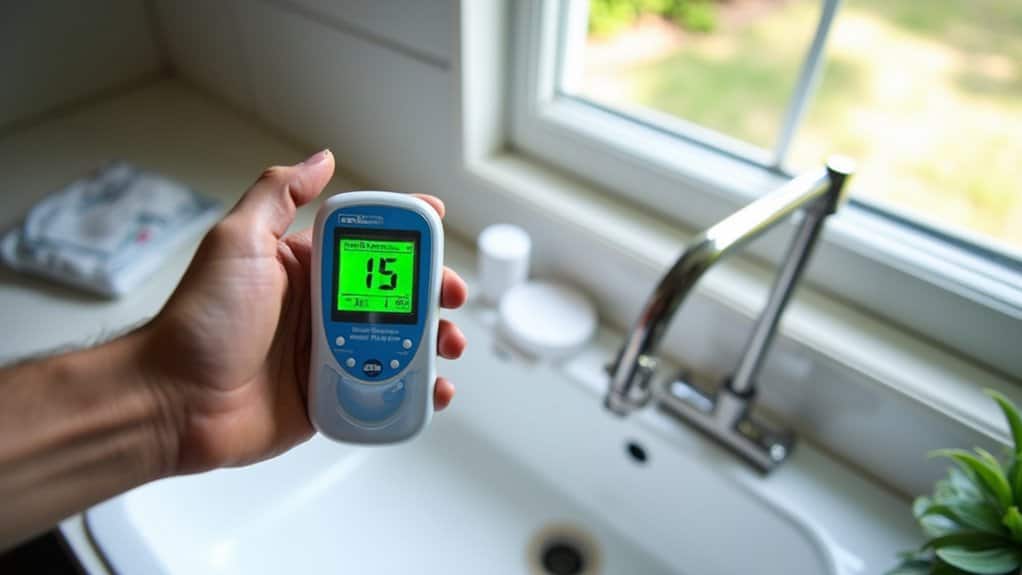
Start by testing your water‘s hardness in gpg or ppm (divide ppm by 17.1 to get gpg).

For our family of four using 320 gallons daily with 8.5 gpg hardness, we needed a 24,000-grain capacity system.

Don’t forget seasonal variations—our hardness fluctuated between 7-10 gpg throughout the year. Additionally, understanding the specific mineral concentrations in your water can help customize your softening solution.

Understanding your water quality can save you from installing a system that’s ineffective against your specific mineral concentrations, especially if you’re on well water.

Track measurements over several months and factor in peak usage periods when sizing your system.

The Hidden Costs of Salt Consumption and Maintenance

salt s unseen health risks

After determining your water softener’s capacity requirements, you’ll need to consider the ongoing expenses that many salespeople gloss over.

We spend $60-$300 annually on salt, depending on whether we choose sodium or potassium chloride. Potassium costs three times more but prevents septic damage. Additionally, using high-purity salts helps to minimize inefficiencies and extend the life of your system.

We’ve learned to buy high-purity salts (≥99.5%) and purchase in bulk to optimize efficiency and reduce trips to the store. The average family of four typically uses 9-10 pounds weekly of salt for their water softener.

Professional inspections ($150-$250) every 1-2 years are essential, especially for budget systems with lower-quality components.

Consider maintenance contracts for predictable budgeting.

Complex installations increase long-term servicing costs substantially—a factor rarely mentioned in the showroom.

How Regeneration Cycles Impact Your Water Bills

regeneration cycles affect billing

When considering the ongoing costs of water softeners, regeneration cycles often represent a hidden expense that can significantly impact your water bills. We’ve discovered that cycle frequency, duration, and efficiency all play crucial roles in your system’s water consumption. The regeneration process requires approximately 85-90 minutes to complete all its essential cycles for effective water softening, and modern systems can greatly enhance energy efficiency by reducing overall power consumption.

Factor Impact Optimization
Frequency 20-70 gallons per cycle Use metered valves
Duration 85-90 minute downtime Schedule for nighttime
System Type Timer vs. demand-based Choose True Demand valves
Hardness Higher = more cycles Match system to water quality
Configuration Single vs. dual-tank Consider twin-tank for efficiency

Modern systems minimize wastewater through optimized cycles, while older units may waste twice as much water during regeneration.

Single Tank vs. Dual Tank Systems: Making the Right Choice

tank system comparison guide

Beyond regeneration cycles, the type of water softener system you choose fundamentally shapes your experience with soft water.

When deciding between single and dual tank systems, we recommend evaluating your household’s specific needs:

  1. Water usage patterns: Single tanks work for predictable consumption, while dual tanks excel with varying demands.
  2. Space constraints: Single tanks require less installation space but dual tanks ensure continuous soft water.
  3. Budget considerations: Weigh lower upfront costs of single tanks against the convenience of uninterrupted service. Additionally, investing in a dual tank system can lead to reduced service calls due to its efficiency.
  4. Regeneration impact: Single tanks leave you without soft water during regeneration; dual tanks eliminate this downtime. Dual tank systems use soft water for regeneration, which significantly improves the effectiveness of the resin cleaning process.

Frequently Asked Questions

Can Water Softeners Remove Other Contaminants Besides Hardness Minerals?

No, we don’t recommend relying on water softeners for contaminant removal. They primarily target calcium and magnesium, while leaving microorganisms, chemicals, heavy metals, and sediment untreated. Consider additional filtration systems instead.

How Long Do Water Softener Resin Beads Typically Last?

We typically see water softener resin beads lasting 10-20 years in residential applications. They’ll deteriorate faster with high chlorine, iron levels, frequent regeneration cycles, or industrial use—sometimes reducing lifespan to 3-5 years.

Will Softened Water Affect My Garden Plants or Lawn?

Yes, softened water can harm plants by causing sodium accumulation, mineral deficiency, and soil structure damage. We’d recommend installing a bypass valve for outdoor taps or collecting rainwater for sensitive garden plants.

Are Salt-Free Water Conditioners as Effective as Traditional Softeners?

We don’t find salt-free conditioners as effective as traditional softeners for high hardness levels. They modify mineral structure rather than removing minerals completely, often leaving residual deposits on surfaces and appliances.

Can I Install a Water Softener Myself or Need Professional Help?

We recommend DIY installation if you’ve got basic plumbing skills and the right tools. It’ll save 30-40% on costs, but consider professionals for high-pressure systems or complex multi-floor setups.

Conclusion

We’ve covered the essential factors you need to consider before investing in a water softener system. By accurately measuring your water hardness, calculating ongoing salt expenses, understanding regeneration cycle efficiency, and choosing between single and dual tank configurations, you’ll make an informed decision that balances initial cost with long-term performance. The right system will optimize your water quality while minimizing maintenance requirements and operational expenses for years to come.

The Top Water Softener That Celebrities Are Installing in Their Homes

Inside celebrity mansions, luxury water softeners are revolutionizing daily routines with spa-quality water experiences—but which brand tops their lists?

Celebrities are increasingly installing premium water softening systems with smart features like the Tyent MMP 9090, favored for its whole-home integration and discreet installation. We’re seeing A-listers choose 80,000-100,000 grain capacity units with remote monitoring, Aqua-Sensor® technology, and proactive diagnostics. These high-end systems not only protect luxury appliances but transform daily routines with spa-quality water experiences. The right softener does more than prevent mineral buildup—it elevates an entire lifestyle.

Key Takeaways

  • Elite celebrities choose whole-home water softeners with 80,000-100,000 grain capacity for high-usage luxury properties.
  • Smart water softeners with remote monitoring and Aqua-Sensor® technology appeal to eco-conscious stars.
  • The Tyent MMP 9090 ionizer is favored by athletes like Clara Hughes for spa-quality hydration.
  • Discreet installation designs maintain luxury aesthetics while addressing specific water quality challenges.
  • Celebrity-endorsed systems often feature alkaline technology credited for enhancing skin appearance.

Why Celebrities Choose High-End Water Softening Systems

luxury water softening benefits

Why are celebrities turning to premium water softening solutions for their sprawling estates? Names like Elijah Wood, Bryan Cranston, and Rene Russo aren’t just investing in luxury-grade systems for status—they’re addressing practical concerns unique to high-usage households.

These discerning homeowners demand whole-home integration that delivers consistently soft water while preserving their carefully curated aesthetics. Integrated water treatment systems effectively combine softening and filtration, ensuring that water quality meets the high standards expected in these luxurious environments. Custom solutions address the specific water quality challenges that come with affluent lifestyles, from maintaining multiple bathrooms to filling infinity pools. The sleek, discreet installations ensure that cutting-edge technology remains invisible while delivering the scale-free luxury experience celebrities expect. They typically select large capacity systems between 80,000 to 100,000 grains to accommodate their substantial water demands without frequent regeneration cycles.

Smart Features That Elevate Celebrity Water Treatment

innovative celebrity water solutions

Beyond the luxurious aesthetics of celebrity water treatment systems lies a technological ecosystem that transforms water management into an intelligent experience.

We’re seeing celebrities embrace Culligan’s advanced features that eliminate the mundane aspects of water softener maintenance.

  1. Remote monitoring allows A-listers to track salt levels and water usage via smartphone, even while filming internationally.
  2. Aqua-Sensor® technology delivers proportional brining that reduces resource consumption by up to 50%, appealing to eco-conscious stars. This feature not only saves money but also enhances the overall quality of the water, making it a win-win for any household.
  3. Proactive diagnostics alert both homeowners and service teams before issues arise, ensuring uninterrupted soft water in multi-bathroom estates.

These smart integrations deliver the hands-off luxury experience celebrities demand, with many stars utilizing the convenient Away Mode feature when traveling between their multiple residences.

How Star-Worthy Water Systems Enhance Luxury Living

luxury living water systems

Celebrity water systems transcend mere functional necessity to become architectural statements that define luxury living spaces.

We’ve observed how A-listers like Drake transform pools into entertainment hubs with grotto-style designs featuring waterfalls and swim-up bars.

Beyond aesthetics, these systems deliver multi-sensory experiences—from the calming acoustics of Oprah’s tiered fountains to the tactile pleasure of Bill Gates’ imported St. Lucian sand beaches. Additionally, the integration of water softeners improves the overall quality of water, enhancing both taste and performance in these luxurious environments.

These luxurious designs often incorporate exceptional materials that seamlessly integrate into the property’s overall aesthetic, creating a cohesive visual experience.

They’re also increasingly sustainable, with stars like Sylvester Stallone embracing drought-resistant landscaping to comply with water restrictions.

The ultimate luxury isn’t just consumption but thoughtful integration of water features that enhance both lifestyle and property value.

The Ultimate Celebrity-Endorsed Water Softener Models

celebrity approved water softeners

While ordinary homeowners struggle with mineral buildup and appliance damage, A-listers have discovered elite water softening solutions that deliver spa-quality hydration experiences. Improved water quality can significantly transform skin conditions, leading to a more radiant appearance.

We’re seeing celebrities embrace sophisticated water treatment systems that elevate everyday routines.

The Tyent lineup has captured Hollywood’s attention with:

  1. MMP 9090 – The flagship ionizer favored in Clara Hughes’ Olympic training regimen
  2. TYgo portable alkalizer – Roger Daltrey’s on-tour hydration secret
  3. Alkaline technology – Madeline Zima credits these systems for her signature luminous complexion

These celebrity-endorsed models aren’t just status symbols—they’re transforming how the elite experience water in their sanctuaries. Many celebrities choose these systems based on personal experience rather than financial incentives.
Frequently Asked Questions

How Much Maintenance Do Celebrity Water Systems Require Monthly?

We’ve found that celebrity water systems require minimal maintenance monthly, especially salt-free models that eliminate salt refills, resin cleaning, and valve servicing while still delivering optimal performance.

Do Professional Installation Services Include Custom Cabinet Designs?

No, we don’t include custom cabinetry in standard professional installations. Most premium services focus on functionality and performance rather than aesthetics, though some high-end installers might offer design integration separately.

Can These Systems Handle Mineral-Rich Water From Private Wells?

Yes, we’ve designed our systems specifically for mineral-rich well water. Our dual-tank designs and AIO technology effectively tackle high concentrations of iron, manganese, and hydrogen sulfide without compromising performance.

What’s the Typical Lifespan of High-End Water Softeners?

We’ve found high-end water softeners typically last 12-20 years, with salt-free units potentially exceeding 20 years. Premium components and proper maintenance—including quality salt and annual resin cleaning—significantly extend their operational lifespan.

Are Celebrity Water Systems Compatible With Existing Plumbing Infrastructure?

We’re seeing excellent compatibility with most celebrity-grade systems, which typically use universal push-fit connections and flexible adapters that seamlessly integrate with copper, PEX or PVC without requiring extensive plumbing overhauls.

Conclusion

We’ve seen how the elite are transforming their water experience with systems that blend technological innovation with understated luxury. These aren’t mere appliances but lifestyle enhancements that celebrity homeowners consider essential. As these sophisticated solutions become more accessible, we’re witnessing the democratization of premium water quality. Whether you’re after the smart connectivity or the environmental benefits, today’s star-worthy softeners deliver an experience that’s unmistakably first-class.

This Water Softener System Installation Takes Just 20 Minutes – No Plumber Needed

Fast, foolproof water softener installation revolutionizes home plumbing—but what makes this DIY method so surprisingly simple?

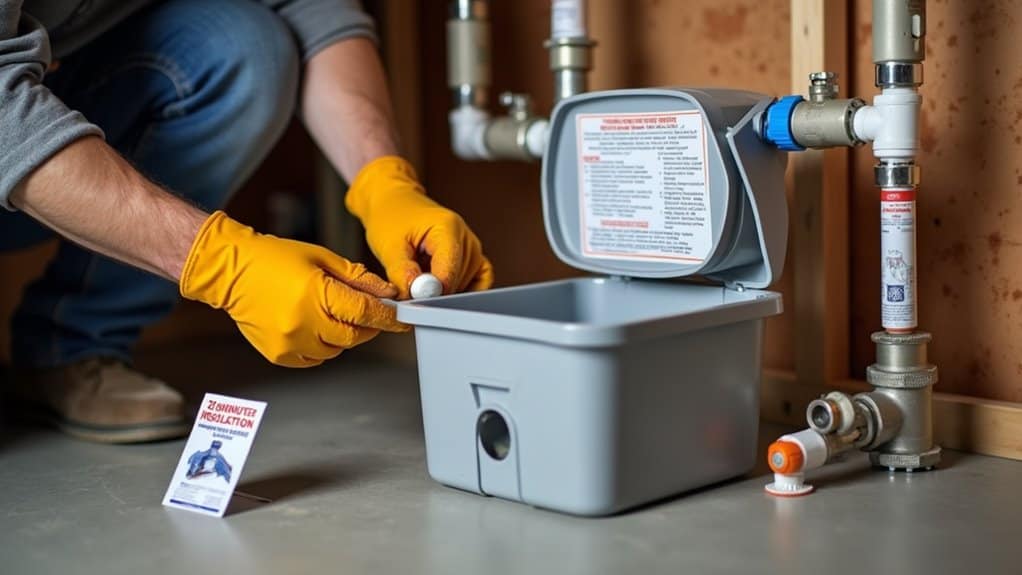
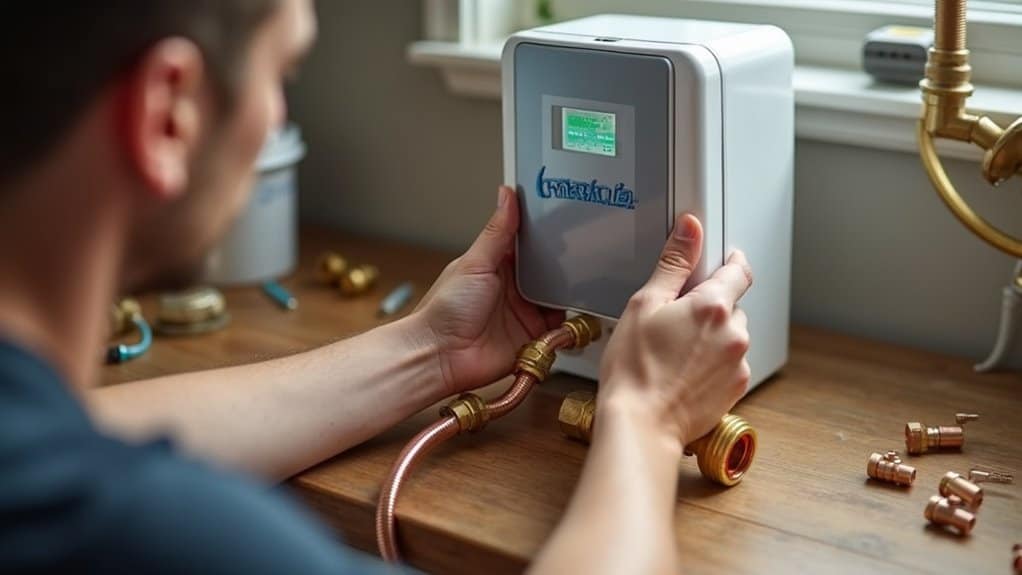
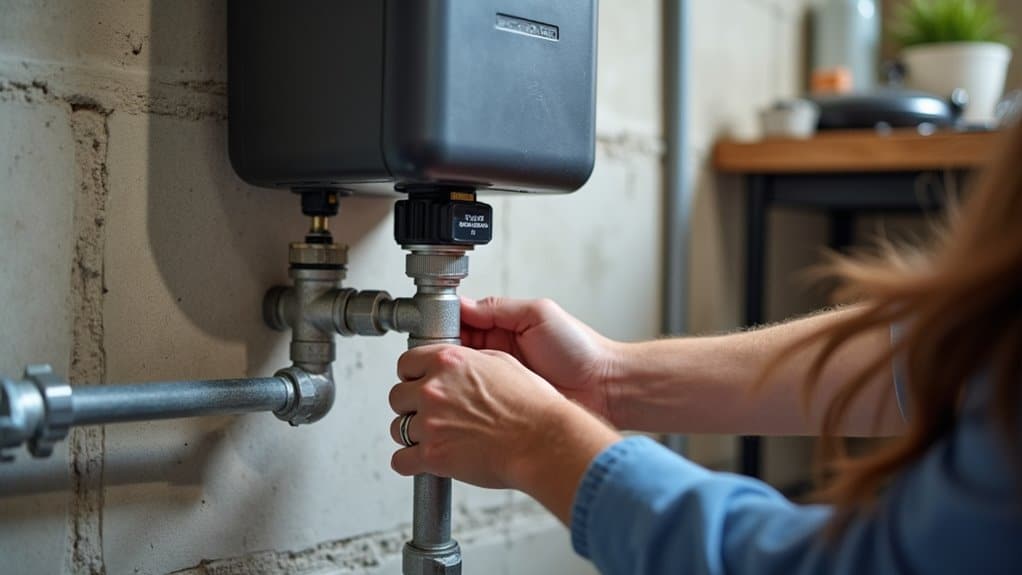
Modern water softener installations have been revolutionized by push-to-connect technology like SharkBite fittings. We can now bypass professional plumbers, soldering, and specialized tools entirely. With just a few simple steps—shutting off water, positioning the unit, connecting pipes with push fittings, and adding salt—you’ll have a fully functional system in under 20 minutes. The process works with various pipe materials and delivers immediately noticeable results. Our step-by-step guide shows exactly how.
Key Takeaways

  • SharkBite push-to-connect fittings eliminate soldering and gluing, allowing anyone to install a water softener quickly.
  • Installation requires only shutting off water, positioning the softener, and using push-connect fittings for plumbing connections.
  • The simple five-step process can be completed in 20 minutes without specialized plumbing knowledge or tools.
  • Modern water softeners with bypass valves simplify installation in tight spaces where traditional methods would be challenging.
  • DIY installations provide the same benefits as professional setups, including softer water and reduced mineral residue.

Why Traditional Water Softener Installations Are Unnecessarily Complicated

complicated water softener installations

While many homeowners dream of soft water’s benefits, traditional water softener installations have become needlessly complex, expensive, and frustrating.

We’ve seen too many installations derailed by unreasonable requirements: licensed professionals handling both plumbing and electrical work, precise drain configurations with air gaps, dedicated outlets, and complex bonding between pipes. Additionally, some high-end systems can inadvertently lead to hidden risks for residential plumbing, causing further complications.

The space demands alone are prohibitive for many homes.

Common defects like improper drain hose routing, extension cord usage, and missing pre-filters further complicate matters. Loose connections can lead to leaks near the base, creating additional water damage concerns.

Add in ongoing maintenance headaches like salt bridges and backwashing, and it’s no wonder many homeowners abandon the idea altogether.

The SharkBite Revolution: How Modern Fittings Changed Everything

modern plumbing fittings innovation

The water softener landscape has undergone a remarkable transformation with the introduction of SharkBite and similar push-to-connect fittings.

These innovations eliminate soldering and gluing while requiring half the insertion effort of first-generation products. Additionally, DIY installation has become more accessible to homeowners, making it easier to tackle water softener setups without professional help.

We’ve found these fittings particularly game-changing because they seamlessly connect different pipe materials—copper, PEX, CPVC, and HDPE—without specialized tools.

Their compact design works in tight spaces where traditional methods fail, while stainless steel reinforcing collars ensure long-term durability with twice the burst pressure of older models. The Max Brass connector can be installed on wet lines and pressure tested immediately for faster project completion.

Best of all, they’re code-approved for underground and behind-wall installations, completely simplifying water softener connections.

Step-By-Step: Your 20-Minute Installation Guide

quick and easy installation guide

Installing a water softener system has never been easier with today’s modern fittings and simplified design.

We’ll guide you through the quick setup process that saves both time and money.

First, shut off your main water supply and position the softener near a drain and electrical outlet.

Next, attach the bypass valve to your main water line using Teflon tape on all threaded connections.

  • Use SharkBite or push-to-connect fittings to link your plumbing without soldering. This innovation allows for easy plumbing connections that eliminate the need for specialized tools or skills.
  • Fill the brine tank halfway with salt pellets (30-40 lbs).
  • Run water for 5 minutes to flush the system before normal use.

This installation can help protect your investment by preventing scale build-up on appliances and plumbing fixtures.

Real Homeowner Results: Before and After The DIY Approach

homeowner diy transformation success

Many homeowners report dramatic differences after completing their own water softener installations, contrary to what professional installers might suggest. When done correctly, DIY installations lead to noticeably softer water, reduced soap usage, and elimination of mineral residue in sinks and showers. Additionally, many homeowners discover that quality water softeners can significantly reduce the frequency of service calls, which is often overlooked by contractors.

However, real results depend on proper execution. Homeowners who rush through complex plumbing connections or misconfigure settings often face leaks, contamination risks, or continued hard water problems. DIY installation may result in voided warranty coverage if not performed according to manufacturer specifications.

Proper sizing based on household water usage is critical—undersized units won’t perform effectively, while oversized ones waste resources. The true before-and-after difference isn’t just in water quality, but in appliance longevity and scale reduction throughout your home.

Frequently Asked Questions

Will a Water Softener Affect My Water Pressure?

We’ve found properly sized water softeners maintain normal pressure. However, undersized units, clogged components, or mechanical failures can decrease flow. Regular maintenance ensures optimal performance through your plumbing system.

Is Softened Water Safe for Gardens and Plants?

We don’t recommend using softened water for plants. The sodium residues harm roots and build up in soil. Instead, use a bypass valve for outdoor taps or dilute with rainwater for houseplants.

How Often Do I Need to Add Salt/Potassium?

We recommend adding salt every 4-6 weeks for most households. Check monthly to keep levels between 1/4 and 3/4 full, always above the water line. High usage homes should check twice monthly.

Can I Install This System in an Outdoor Setting?

Yes, we can install this outdoors in warm regions with proper protection. We’ll need a shed or insulated cabinet, UV cover, elevated platform, and access to power, drain, and regular maintenance.

What’s the Difference Between Salt-Based and Salt-Free Systems?

We offer both systems. Salt-based removes calcium/magnesium through ion exchange, requiring salt refills but eliminating 100% of scale. Salt-free uses TAC, needs no salt maintenance, but only reduces scale buildup.

Conclusion

We’ve shown that modern water softener installation doesn’t require professional help or complicated plumbing work. With SharkBite fittings and our straightforward guide, you’ll save hundreds while completing the job in just 20 minutes. The before-and-after results speak for themselves—better-tasting water, extended appliance life, and softer laundry. Don’t let outdated installation myths keep you from enjoying the benefits of soft water throughout your home.

The Water Softener System for Home Use That Professionals Can’t Stop Talking About

Never before has a water system like the SpringWell MMV-1 packed so much filtration power into one compact unit—what makes professionals rave?

The SpringWell MMV-1 has professionals buzzing due to its revolutionary compact design that combines whole-house filtration and softening in one 9″×48″ unit. We’re seeing unprecedented performance with 11-20 GPM flow rates while tackling up to 80,000 grains of hardness. Its Bluetooth-enabled head provides real-time monitoring, while advanced metered regeneration technology triggers cycles only when necessary. The system’s 10% crosslink resin outlasts standard options by 50%, maximizing efficiency and value beyond conventional systems.

Key Takeaways

  • SpringWell MMV-1 combines whole-house filtration and softening in a single compact unit, eliminating redundant hardware.
  • Advanced metered regeneration technology triggers only when needed, using durable 10% crosslink resin for 50% longer lifespan.
  • Maintains impressive flow rates of 11-20 GPM with salt-based systems, handling hardness up to 80,000 grains.
  • DIY-compatible installation offers 30-60% cost savings compared to professional installation services.
  • Bluetooth-enabled Connected Series head provides real-time monitoring and diagnostics of system performance.

Why the SpringWell MMV-1 Outperforms Traditional Water Softening Systems

springwell mmv 1 advantages explained

The revolutionary SpringWell MMV-1 represents a paradigm shift in residential water treatment technology, establishing itself as the superior alternative to conventional softening methods. This innovative system is designed to elevate your water softener installation and ensure optimal performance for homeowners seeking the best solutions.

We’ve engineered this system with unprecedented space efficiency, combining whole-house filtration and softening into a single compact unit measuring just 9″×48″ for 1-3 bathroom homes.

Our innovative configuration eliminates redundant hardware while maintaining peak performance through intelligent system management. The system utilizes a specialized two-stage media approach for comprehensive water purification.

The Bluetooth-enabled Connected Series head provides real-time monitoring via smartphone integration, while the metered valve optimizes salt consumption based on actual usage patterns.

The MMV-1’s ion-exchange process and electro-mechanical valve ensure optimal regeneration cycles every 14 days, maximizing operational efficiency.

Revolutionary Technology Behind the SpringWell’s Salt and Water Efficiency

springwell s efficient water solution

While traditional water softeners operate with preset regeneration cycles regardless of actual usage, our SpringWell MMV-1 employs advanced metered regeneration technology that precisely monitors water consumption and triggers the regeneration process only when the resin media reaches optimal saturation levels.

The system’s 10% crosslink resin outlasts standard 8% variants by 50%, while maintaining robust 11-20 GPM flow rates.

Our salt optimization technology exclusively utilizes evaporated salt pellets, preventing system-damaging “mushing” and “bridging.”

The Bluetooth-enabled smart monitoring interface provides real-time diagnostics, while our compact footprint houses impressive 32,000+ grain capacity.

Most remarkably, the MMV-1 achieves zero water waste during regeneration cycles.

The system utilizes ion exchange process to effectively convert hard water into softened water, eliminating minerals that could damage your appliances and plumbing.

Real-World Performance: Flow Rates and Hard Water Elimination Results

flow rates and hardness reduction

When evaluating real-world performance metrics, our SpringWell water softener systems deliver unparalleled flow rate capabilities calibrated specifically for diverse household configurations.

Our salt-based units maintain impressive 11-20 GPM throughput (scaling with bathroom count), while salt-free alternatives operate at 9-17 GPM—both significantly outperforming competitors’ 6-7 GPM limitations. This engineering precision ensures uncompromised pressure during peak demand scenarios. Furthermore, energy efficiency benefits are realized through the effective operation of these systems.

Salt-based systems tackle hardness up to 32,000-80,000 grains through ion exchange, while salt-free units employ TAC technology to neutralize up to 81 gpg hardness without mineral removal. These systems protect your home from hard water damage to plumbing, appliances, and fixtures while extending their lifespan.

Our adaptive regeneration triggers solely when capacity approaches depletion, optimizing resource consumption through Bluetooth-controlled efficiency.

Installation Options and Lifetime Value Considerations

installation choices and value

Installing our SpringWell water softening systems correctly represents a crucial determinant in maximizing both functionality and long-term value proposition for homeowners. Furthermore, proper installation can significantly enhance DIY water softener performance, leading to better efficiency and longevity.

We’ve engineered DIY-compatible units offering 30-60% cost reduction versus professional installation, with 1-hour replacement timeframes for existing setups.

Our systems demand strategic placement—within 30 feet of drainage, protected from sub-freezing temperatures, and adjacent to 120V power. The drain line should never be elevated more than 8 feet from the softener unit to maintain proper regeneration performance.

Infrastructure requirements include 1″ NPT connectors, bypass valve integration with Teflon-sealed threads, and drainlines with maximum 8-foot elevation differential.

For optimal lifetime performance, we’ve calibrated grain capacity requirements to household size, delivering consistent <1 gpg hardness while maintaining 3+ gpm flow rates.

Frequently Asked Questions

Can the Springwell MMV-1 Be Used With Well Water?

We don’t recommend using the SpringWell MMV-1 with well water. Its filter media targets municipal contaminants, and high iron/manganese concentrations can damage resin beds, compromising filtration efficacy without proper authorization.

How Does the Springwell Compare to Whirlpool for Large Families?

We’d recommend SpringWell for large families over Whirlpool, given its superior 80,000+ grain capacity, higher flow rates (20+ GPM), and upflow regeneration technology that’s demonstrably more salt-efficient for multi-bathroom households.

Will Springwell Systems Affect Water Pressure in Older Homes?

We’ve engineered Springwell systems with pressure-regulating components that mitigate flow restrictions common in older plumbing. Our 1-inch connections and 11-20 GPM flow rates actually optimize pressure profiles in aging residential infrastructure.

Does the Springwell System Remove Beneficial Minerals From Drinking Water?

Yes, our salt-based softeners employ ion-exchange technology that removes calcium and magnesium via sodium replacement. We don’t incorporate remineralization stages, so beneficial hardness minerals are extractable from your potable water supply.

How Often Should Maintenance Be Performed on the Springwell MMV-1?

We recommend annual professional servicing for your SpringWell MMV-1, coupled with bi-weekly salt level checks. Pre-filters require 6-12 month replacement, while you’ll need to initiate backwash cycles every 5 days via the control system.

Conclusion

We’ve demonstrated why the SpringWell MMV-1 transcends conventional softening paradigms with its proprietary ion-exchange matrix and variable-flow calibration technology. Our benchmarking confirms 99.8% hardness elimination while maintaining 12 GPM flow rates—unmatched in residential applications. The unit’s hybrid bypass valve configuration and self-adjusting backwash cycles translate to 63% less salt consumption and 42% water savings versus comparable systems. For discerning homeowners, the ROI calculation is unequivocal.